Partnership for data-driven early response to hunger launched

Leading research and humanitarian agencies have joined forces to harness data and technology in a bid to stop climate shocks resulting in hunger in vulnerable livestock farming communities.

The Jameel Observatory for Food Security Early Action is being created to help tackle the growing threat to people in the world’s drylands posed by the increasing severity and frequency of climate-related disasters.

The new venture will bring together the expertise of five partners – the University of Edinburgh, the International Livestock Research Institute (ILRI), Save the Children, the Abdul Latif Jameel Poverty Action Lab (J-PAL), and Community Jameel.

The partnership will connect cutting-edge technology and data surveillance on early warning signs of severe weather and systemic climate change with community-driven applications and interventions.

The Jameel Observatory will engage with agencies that work with farmers to develop and apply digital and analytical tools that help them shape their own food security, nutrition and livelihoods.

Researchers plan to use community-level data together with satellites, drones, weather data and remote sensing to understand, prepare for, and mitigate the likely impact of climate shocks.

The Jameel Observatory’s first project aims to fill the evidence gaps that currently prevent effective forecast-based action to protect children and their families’ livelihoods and nutrition in parts of East Africa.

As the world turns its attention to the UN Food Systems Summit and COP26, there is a sharp focus on the need to be fully prepared for the vulnerabilities, shocks, and stresses triggered by changing climate.

Drylands, which are home to billions and make up 40 per cent of the word’s land area, are at risk from fluctuating rainfall, drought, rising temperatures and land degradation. These create insecurity and conflict caused by competition for resources.

By the time the full force of these crises is felt, and hunger takes hold it is often too late to respond effectively, experts say.

Each partner will bring specific insights to the work of the Jameel Observatory. The University of Edinburgh will use its expertise in data-driven innovation to combine data, information and local knowledge to better predict climate risks, encourage coordinated actions and guide interventions.

The Jameel Observatory will be based at the International Livestock Research Institute in East Africa. ILRI works with hundreds of partners throughout the continent and is home to the Mazingira Centre and other projects focused on food security and environmental research in dry lands.

Save the Children has been working to tackle hunger and malnutrition in some of the toughest places in the world for 100 years. The aid agency brings a wealth of practical and programmatic experience supporting communities to respond, prepare and adapt. Save the Children is committed to strengthening forecast-based action to food crises using tools like the Household Economic Analysis to predict the impacts of climate shocks on vulnerable families.

The Abdul Latif Jameel Poverty Action Lab is an evaluation and knowledge partner and will connect Jameel Observatory with teams of researchers to help assess the initiative’s interventions. J-PAL will also share evidence on effective climate change and adaptation programs from existing experimental evaluation literature.

Community Jameel is an international organisation tackling some of the world’s most urgent issues and challenges, with action and solutions based on evidence, science, data and technology. It is supporting the Jameel Observatory and providing its expertise in establishing collaborative institutes and research programmes for the past 75 years.

Fady Jameel, Vice Chairman of Community Jameel, said: “The Jameel Observatory continues Community Jameel’s tradition of supporting initiatives that align expertise, resources and data to have an impact. It will address the effects of the climate crisis – the great challenge of our time – through bold solutions that combine international, regional and local perspectives, ensuring they are fit for purpose and can be implemented at scale. As the Jameel family marks 75 years of philanthropy and business this year, we are inspired by our partners in this new venture, and look forward to contributing our own strategic input to ensure its success.”

George Richards, Director of Community Jameel, said: “Evidence and data are keys to unlocking effective responses to the threat of climate change on vulnerable communities. The Jameel Observatory’s approach will enable a shift from reacting to the climate crisis to data-driven anticipation and adaptation, helping to find better solutions to the challenge of food insecurity. We are honoured to be supporting the launch of this centre of excellence, and to offer Community Jameel’s experience in developing and mobilising partnerships that unite world-leading scientific expertise with locally tailored action to tackle this urgent issue.”

Alan Duncan, of the University of Edinburgh’s Global Academy of Agriculture and Food Security, said: “The Jameel Observatory will deliver targeted decision-making tools to those who are facing the most challenging effects of climate change. We know that no single organisation has the ability to address the complexities facing drylands communities. With expertise in data-driven innovation in a range of contexts, the University of Edinburgh is well-placed to lead this partnership by bringing pastoralist communities together with experts in big data, earth observation and food security. Our work must tackle real problems faced by real people. The project aims to complement other food security initiatives already underway.”

Hassan Bashir, Founder Director of Nourishing Nomads Limited and Director at Agency for Inclusive Insurance Development, said “Pastoralist markets in Africa are remote, disaggregated and costly to service sustainably. Innovative models that take advantage of data and analytics can help improve efficiency, scale and impact across the pastoralist regions of Africa.”

Joanne Grace, Head of Hunger and Livelihoods at Save the Children, said: “In a world increasingly impacted by climate change, forecasting the impact of droughts and severe weather on hunger and malnutrition and acting early to stop lives from being lost is of urgent importance. Getting it right would be monumental for the health of children for decades to come. The Jameel Observatory aims to help ensure that acting early to prevent food crises becomes the norm rather than the exception.”

Jimmy Smith, ILRI’s Director General, said: “We’re delighted to host and help inaugurate the official opening of the Jameel Observatory. Like ILRI, the Jameel Observatory is a centre dedicated to research for development. Its focus on drylands and fragile ecosystems could not be timelier. The need to work with pastoral peoples as well as other organisations that serve them is essential if we are to help pastoral communities prepare for climate-driven food security and nutrition shocks.”

Iqbal Dhaliwal, Global Executive Director at J-PAL, said: “Climate change is the defining problem of this century. We are honored to join this partnership and support investments in rigorous evaluation and evidence-informed decision-making to help ensure that people on the frontlines of climate impacts and experiencing poverty are not left behind.”

International Church is a leading example in the fight against COVID-19

The rapid spread of COVID-19 has left many countries shattered, with many losing loved ones and having to bear consequences from economic restrictions. 

Since Monday 16 November thousands of members of the Shincheonji Church of Jesus in South Korea have been arriving at the Indoor Athletics Stadium in Daegu City to participate in donating much-needed blood plasma. 

This will be the third drive in which members of the church who fully recovered from COVID-19 participate to help others fight the virus with plasma treatment. The donation drive will continue for the next three weeks and about 4,000 members of the church are expected to participate.

Shincheonji, an international church group with more than 200,000 members worldwide, was severely hit in February this year with thousands of its members being infected by COVID-19 and lead to great distress, with infections rising in South Korea.

Mr. Man Hee Lee, the chairman of Shincheonji Church  said in a statement that, “Too many people are suffering because of COVID-19, especially with those who were infected in church last February that cause distress to the members and the citizens (of South Korea).” He urged members of the church to help in the fight against COVID-19 by donating their blood plasma. 

In some countries blood plasma treatment yielded great success with the Korean Disease Control and Prevention Agency (KDCA) stating, “It is necessary to quickly develop plasma treatment through group plasma donations, in the current absence of an effective treatment in the midst of the continuous occurrence of COVID-19 at home and abroad.”

“We are grateful for the active participation of Shincheonji, and for the cooperation of the City of Daegu,” Mr Kwon Joon-wook deputy director of the Central Disaster and Safety Countermeasure Headquarters in South Korea said in a press statement.

Meanwhile, Mr. Lee acknowledged that millions of people worldwide are suffering physically but also financially as a result of coronavirus and called for this past weekend to pray for our global society affected by the ongoing pandemic. A Global Interfaith Prayer Event was held simultaneously around the world with more than 200,000 in attendance from 73 countries, including hundreds from southern Africa.

“We should actively put in our effort and pray to God for the people, and for the pandemic to end,” Mr. Lee said while urging all people of faith to gather to pray for an effective vaccine to be made available worldwide as soon as possible.

Many religious leaders from southern Africa answered this call for prayer and joined with the global faith community on Sunday 15 November by participating in this online interfaith event which was live-streamed on YouTube. 

“The significance of praying together as religious leaders, it’s incomparable. It’s high time that we unite in prayer and when we unite in prayer, miracles begin to happen,” Rev Phumzile Stofile, Vice Chairperson of the ANC Chaplaincy in South Africa said after the prayer event.

According to the founder of Shincheonji the Global Prayer Event is especially meaningful in that it transcends different Christian denominations and religions to take charge in overcoming this crisis.

With thousands of people of faith having participated in the global prayer event, one such participant said, “I have realized that the power to overcome COVID-19 is tolerance, love and unity. We will put in our utmost effort to overcome COVID-19.”

African religious leaders unite in prayer for peace and unity during Covid-19

The number of people who have died of COVID-19 has surpassed 1 Million, with more cases being recorded daily. African religious leaders united in a virtual prayer meeting to see an end to COVID-19, violent extremism, and gender inequality taking place across the world.

Held on September 26th, the prayer meeting was attended by hundreds who joined as the United Nations marks its 75th anniversary during this International Peace Month. Faith leaders from the Hare Krishna, Christianity, Spiritual Consciousness, and African Religion movements joined Heavenly Culture World Peace and Restoration of Light (HWPL) to hold the event.

Attendees from around the world who joined the prayer gathering.

“When we work together like that, it takes away any thought of disagreement, warfare, and the violence that can become endemic when we are so afraid,” said through the interview Reverend Berry Behr of the Cape Town Interfaith Initiative.

Since the outbreak of COVID-19 human rights violations have increased drastically across the world. When the virus struck Africa, it led to an increased vulnerability to other diseases, gender-based violence, deepened inequalities, and violent extremism in countries such as Mozambique. Pastor Chiwa, a Christian pastor from Zimbabwe, noted the need to address the violent extremism and brutality that is threatening the peace in Africa.

“We are in dire need of the intervention of God when it comes to the brutality and issues happening in our African continent,” said Pastor Chiwa. “I pray that the hand of God, the Supreme Father, would intervene and put a sense in the mindsets of our leaders, military, and every sector that has to do with peace in Africa.”

Swami Vedanand Saraswati

Among the leaders who led the prayers were Hajj Abdulmalik Molapo from the Muslim community, Sister Dipty from Brahma Kumaris, Guru Medhavi Das from Hare Krishna, Inalda de Jorge-Antonio from Spiritual Consciousness, and Hindu leader Swami Vedanand. 

“If we as faith leaders are taking lead and leading our continent, we will realize we are not a dark continent,” Reverend Phumzile Stofile, the Vice Chairperson of the ANC Chaplaincy Western Cape in South Africa, said. “We are a bright continent we just need focused spiritual leadership because it is the moral compass that directs nations.” 

Reverend Phumzile Stofile, the Vice Chairperson of the ANC Chaplaincy

The virtual meeting was not only connected with interfaith leaders in Africa but also leaders in the United Kingdom, Ireland, and Switzerland. Members of civil society, youth, and various congregations were also in attendance. 

HWPL has held Interfaith Dialogue Meetings, known as WARP Office Meetings, with over 700 religious leaders represented for 250 times. These are hosted monthly with the aim of preventing conflicts caused by religious misunderstandings by engaging the standards and teachings of various religions and examining the concept of peace in each scripture

1500 Shincheonji Congregants Donate Plasma to Help Find Covid-19 Cure

In response to a recent spike in Covid-19 numbers in South Korea, more than 1,500 Shincheonji Church of Jesus members who have recovered from Covid-19 have started donating blood plasma to assist health authorities in finding a treatment.

Donors from the church in South Korean city Daegu started undergoing the process on August 27 and will continue until September 4. This is the second round of donations by the church’s members after the first round took place in June. US President Donald Trump said that the Food and Drug Administration issued authorization for the emergency use of convalescent plasma for Covid-19 treatment.

Members from South Korean based Shincheonji Church donate their plasma in order to assist health authorities in finding a treatment for Covid-19

In Korea, health authorities approached Shincheonji, which has over 300,000 members globally, asking for further plasma donations for the development of a vaccine and use in clinical trials. Roughly 4,000 of its members were infected earlier this year, with Daegu being the hardest hit. While most recovered from the virus, the congregation suffered 11 deaths.

The Korea Centers for Diseases Control and Prevention (KCDC) and Shincheonji expect 1,700 members to have made donations by the end of this week. Research and development of the convalescent plasma treatment is underway by the country’s National Institute of Health under the Ministry of Health and Welfare. The government entities are also working with Green Cross Pharma, a biotechnology company near Seoul.

The large scale plasma donation drive where over 1500 Shincheonji members from South Korean city Daegu donated their plasma.

Deputy Director of the KCDC Kwon Jun-wook has thanked the church for its contribution. Among the challenges in researching the effectiveness of convalescent plasma treatment is the limited supply from donors, who must be fully recovered from the virus. 

“We express our gratitude to the people who participated in donating plasma willingly to save other patients after recovery,” Kwon said. 

Shincheonji Chairman Lee Man Hee encouraged the church’s members to do all they can to help search for an effective treatment. 

“Let us lead the effort in plasma donation so that the blood (plasma) of the congregation members can be used for overcoming Covid-19 for the citizens and the country,” he said in a letter to the members on August 25.

Prominent Scholars highlight religious suppression of Shincheonji Church in new White Paper

Researchers from European-based organizations the Center for Studies on New Religions and Human Rights Without Frontiers have released a second white paper explaining a campaign in South Korea to pin blame for the nation’s Covid-19 outbreak on a church.

The authors, which include Italian sociologist of religions Massimo Introvigne and Belgian academic Willy Fautré, published a first white paper in March to shed light on the unfair accusations made against Shincheonji, Church of Jesus. After South Korean authorities escalated measures to keep the church closed authors found a second piece of research needed to be published to expose “what can be described, without exaggeration, as an attempt to suppress a religion,” they said in the paper.

Shincheonji’s premises have been closed, its leaders arrested and its members publicly shamed, with some losing their jobs and others being refused medical treatment, after rumors circulated that through one of its congregants, so-called “Patient 31”, the church deliberately spread the coronavirus.

The government’s harsh treatment of Shincheonji is inconsistent with the more lenient rebuke faced by other churches in the country where members were infected with the coronavirus, and is in fact not about disease control. Rather it is part of “a decade-long attempt to destroy Shincheonji, and the fruit of an unholy alliance between fundamentalist and conservative Protestants and politicians who need their votes,” the authors said.

Other findings by the researchers include:

  • “South Korean authorities exceeded the limits of Article 18 of the Universal Declaration of Human Rights. They collected data about Shincheonji members that were not needed to prevent the pandemic, including members abroad who had never visited South Korea. They were unable or unwilling to prevent the leaking of some of these data to the media and others hostile to Shincheonji, with the result that human rights of the members were violated.”
  • “They discriminated against Shincheonji members, by singling them out as scapegoats for the epidemic, and adopting measures that were not adopted for members of other churches.”
  • “They used COVID-19 as an opportunity to settle old scores with Shincheonji, dissolving its legal corporations (and even HWPL, which is not part of the religious movement), closing its places of worship, and ordering the group to raze its buildings at the headquarters. Local politicians sued Shincheonji for exorbitant sums calculated to bankrupt the movement.”

For a copy of the full report visit: https://www.cesnur.org/2020/shincheonji-second-white-paper.htm

About the authors:

  • Massimo Introvigne is an Italian sociologist of religions. He is the founder and managing director of the Center for Studies on New Religions
  • Willy Fautré, former chargé de mission at the Cabinet of the Belgian Ministry of Education and at the Belgian Parliament, is the director of Human Rights Without Frontiers, an NGO based in Brussels that he founded in 1988
  • Rosita Šorytė joined in 1992 the Ministry of Foreign Affairs of Lithuania, and worked for 25 years as a diplomat, inter alia at the UNESCO in Paris and the United Nations in New York
  • Alessandro Amicarelli is a member and director of Obaseki Solicitors Law Firm in London. He is a solicitor of the Senior Courts of England and Wales, and a barrister of Italy, specializing in International and Human Rights Law and Immigration and Refugee Law
  • Marco Respinti is an Italian professional journalist, essayist, translator, and lecturer.

Nelson Mandela Day Interfaith Solidarity Webinar Against Religious Oppression

Happy Mandela Day! With the current pandemic it is difficult for people to come together to celebrate this day. As part of celebrating this special day here’s an initiative you can join from the comfort of your home.

In celebration of Mandela Day, Heavenly Culture World Peace and Restoration of Lights (HWPL) is hosting an Interfaith Solidarity Webinar Against Religious Oppression. IPYG will be partnering in this event.

This Saturday, Southern African Religious Leaders will unite for the protection of religious freedom and stand up against persecution and oppression of minority religious organisations.

Celebrate Mandela Day by joining HWPL as they look at the current persecution that is experienced by active global peace advocate and HWPL Chairman, Man Hee Lee. 

“We will reflect on Mandela’s legacy and the lessons we are able to learn from his legacy to those who follow in his footsteps to create a world of peace.

Please join us by listening to Southern Africa’s influential religious leaders as they stand together against persecution of religious minorities to promote unity and world peace.”

Date: Saturday, 18 July 2020

Time: 14h00 to 15h30 SAST (GMT+2)

Host: HWPL

Use details below to RSVP to register by Friday 17 July 2020

Join Zoom Meeting: https://us02web.zoom.us/j/6134170468

Meeting ID: 613 417 0468

DM on Twitter or Instagram, email sa@hwpl.kr or WhatsApp +27 83 714 4291 for the Zoom meeting password

You can also go to the Namibian Youth Development Organization page on Facebook for further details and a live stream of the event.

Hindu Community Leader urges South Korean government to drop charges against Shincheonji Chairman

Representative and trustee of the Vishvu Hindu Temple Trust in Maseru, Lesotho, Rajagopalan Pullanikkatil writes to South Korea authorities urging them to reconsider charges laid against Chairman Lee of Shincheonji.

“This letter is written in support of the HWPL Chairman, Man Hee Lee of South Korea for his selfless work with a view to achieve world peace. His initiative to move the United Nations to make a resolution to bring an appropriate law for Peace and Cessation of War was praiseworthy. I was fortunate to attend the 3rd Annual Commemoration on World Alliance of Religions Peace (WARP) Summit held in Seoul where eminent personalities worldwide had participated with great enthusiasm and spoke in unison supporting Chairman Lee’s initiatives.

I am extremely disturbed to understand the actions taken against the Chairman, after the COVID-19 outbreak at his church. I firmly believe that he is continuing to do everything in his power to aid in fighting against the Covid19 virus, and assist the relevant authorities where possible. I was extremely happy to find out that irrespective of the actions taken against the Chairman, he requested those of his church membership who had recovered from the virus, to donate their blood plasma for research in developing a treatment for the COVID-19 virus.

I fully support the Chairman and laud the selfless gesture from him and his congregation. I appeal the South Korean Government and other relevant authorities to drop all charges and lawsuits and support the efforts of the SHINCHEONJI Church in encouraging other recoverees to donate their plasma.

Let us all follow the noble example set by the Chairman and encourage support towards the fight against COVID-19. As members of the HWPL, our primary goal is unity, equality, respect and tolerance. Only together can we overcome the enormous challenges of the pandemic.

On behalf of the Hindu Community in Lesotho, I wish to urge the authorities in South Korea to be kind and considerate for the pure intentions and righteous actions taken up by the HWPL Chairman Man Hee Lee.”

Maseru
05 July 2020

RAJAGOPALAN PULLANIKKATIL

South Africa’s most popular music festivals

South Africa is home to some of the largest music festivals, both globally and locally. Such festivals have become the culture of South Africa catering to a variety of music lovers from hyper electronic to soul-soothing jazz. So, what does the calendar look like this year for South Africa’s popular festivals, especially for those that were supposed to take place around this lockdown period?

Into the Wild: Raised by Wolves: This is the most popular trance festival catering to techno and psytrance music fans. This unique experience takes place surrounded by nature at the Riverside Forest in Stellenbosch. It took place on the 11th -12th January for their 3rd Edition which included an international act by Hidden Empire (GER) Stil vor Talent along with Geometric Flux, Itone, Fogshow and many others in the line-up. Fortunately, they usually host similar events throughout the year too.

Ultra-South Africa: This annual electric festival is part of a global expansion. People from all over the world come together to enjoy electronic music from various electronic performers. The 7th Edition took place on the 28th February at the Ostrich Farm in Cape Town. And on the 29th February at the Expo Centre, Nasrec in Johannesburg. Both events were headlined by Black Coffee, Jamie Jones, Afrojack and many more. It was truly an electric experience with 51 000 attendees. You can look forward to the 8th edition scheduled for the 26th- 27th February 2021.

Ramfest: This one is for the metal fans who are ready to rock n roll to heavy metal music provided by their favourite bands. This festival took place on the 13th March at Hillcrest in Cape Town and on the 14th March at the Voortrekker Monument in Pretoria. Death metal giants, Black Dahlia Murder, took to the stage along with two reunion shows from Van Coke Kartel as the headliners. Considering the current pandemic, the show was well executed and ensured that the wellbeing of the attendees was a priority.

Cape Town Jazz Festival: This is one of the biggest jazz festivals in the world and it takes place annually at the Convention Centre in Cape Town. It is usually held during the last weekend of March or the first weekend in April, with over 40 artists performing to a crowd of over 30 000 people. Unfortunately, the 21st year celebration that was to take place on the 27th -28th March 2020 has been postponed for the foreseeable future due to the current pandemic.

Splashy Fen: One can expect to find a diverse range of people, from teenagers to families, creating a friendly atmosphere at the annual Splashy Fen Festival. The festival takes place on a farm near Underberg in Kwa-Zulu Natal with a series of local artists from all the various genres taking to the stage. This unique outdoor music festival that was due to take place this Easter has been postponed to the 23rd -27th Sept 2020. One can look forward to Desmond and the Tutus, Mi Casa, The Steezies and more.

Afrikaburn: Afrikaburn is a festival that expresses creativity through theme camps, costumes, music performances and temporary art which gets set ablaze at the end and caters to all music lovers. It is held annually at Tankwa Karoo in Northern Cape. It was due to take place on the 27th April – 3rd May however due to the current pandemic it was cancelled. To keep the flame going, it was brought home through an online gathering called HOMEBURN which took place on 2nd – 3rd May. Since it was a success, Afrikaburn will be hosting another online event on 4th July titled eCompression which will include performances, discussions, music and of course the burns. Everyone is welcome to join and is encouraged to donate if they can.

The Oppikoppi Festival:  It takes place annually at Northam in Limpopo. It is coming back with a bang celebrating 25 years as it was cancelled last year and is scheduled to take place from 9th- 11th August this year. One can expect a wide variety of music including rock, blues, hip hop and more catering to all music lovers. The line-up includes the Black Cat Bones, Bad Peter, Kwesta, Sho Madjozi and more.

Rocking the Daisies: This vibrant festival with diverse music styles features both established and upcoming artists. It was due to take place on 4th -6th October but it has been cancelled. It will take place from 1-3 October 2021 at the Cloof Wine Estate in Cape Town and from the 2nd – 3rd October 2021 at Ellis Park in Johannesburg. International artists Ari Lennox, Stormzy and Col3trane have confirmed to perform.

Vortex: Open Source: This summer festival is filled with a kaleidoscope of colour provided by the lighting and artworks. This outdoor gathering will be held at Stormsvlei in Cape Town on the 12th -16th Dec 2020. It caters to the techno psytrance fans who love to stomp their feet. The Vortex also hosts a June festival, Phoenix Festival of Fire, however, the details are still to be confirmed.

There is always a beat to dance to; you must just find one that suits you. Grab a friend and keep the spirit of dance alive because even in these difficult times, music continues to cross many borders to unite nations in their diversity. Continue to stay safe and healthy.

The hot drink buzzing all over town

The internet has been going crazy with the latest hot drink fad, advising everyone to have at least one cup daily.  Let us have a look at the benefits of the ingredients of this trendy turmeric ginger tea. 

According to manipalhospitals.com, oranges do not only fight infections, cold and flu, but also reduce weight and helps with better digestion. Lemons are a good source of vitamin C, and improves digestive health, and supports the body’s natural defences. Ginger helps soothes the throat after coughing. Turmeric has been known to be an anti-inflammatory and antioxidant. Honey is not only a healthier substitute for sugar but is an antioxidant and has many other beneficial effects.

Once the ingredients have been added in a jar, add one tablespoon full to a hot cup of water for it to clear the body of antioxidants. Enjoy at least one cup in the morning and you can just feel it getting to work almost right away.

PE Union of Jewish Women continue supporting communities

UJW Port Elizabeth

The Union of Jewish Women (UJW) Port Elizabeth has continued its efforts to enrich the lives of their local communities during the COVID-19 pandemic.

A group of committed women from the UJW has assisted various other organisations to help the less fortunate with food, clothing and other essential supplies. South Africa’s strict lockdown was vital for public health and safety but left millions of South Africans without income and the ability to access essential items.

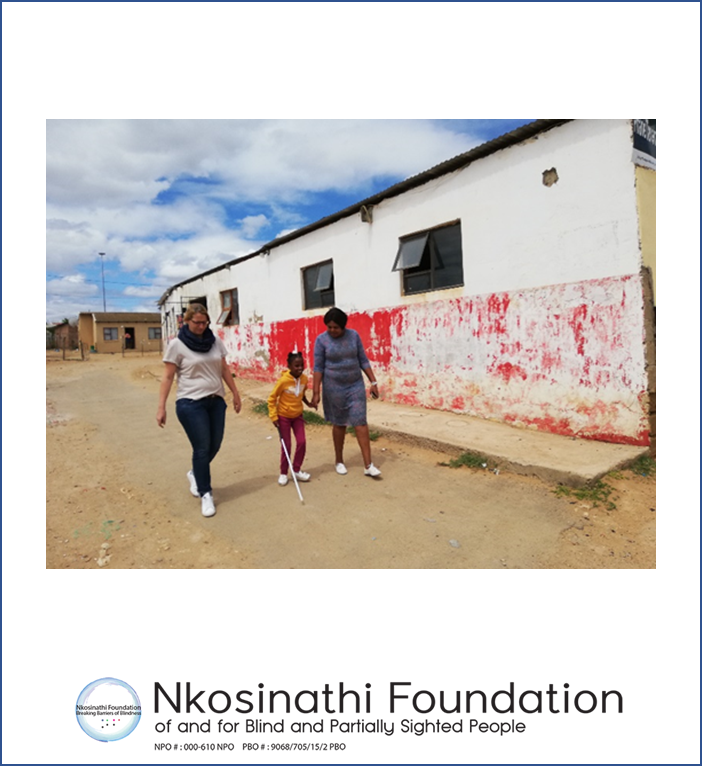
In the Port Elizabeth community, the UJW continued to donate food and care parcels to organisations such as the Nkosinathi Foundation for the Blind and Partially sighted people. During the lockdown period, the foundation was not able to continue with its educational projects but continued to support the vulnerable with essentials. The UJW usually provides food every month to the Foundation and with donations from local businesses, managed to supply food parcels to the Foundation during the lockdown. 

“Our motivation for the work that we do is to help people in the broader communities, who are less fortunate than us,” said Elaine Racussen, Chairperson of the Union of Jewish Women, Port Elizabeth.

 “In this time of COVID-19, we are well aware of people who have lost their jobs, earn no money and are barely able to exist. We have been blessed to be able to assist with food, clothing, educational needs. Sanitizers and masks are essential, but if you don’t have money, it becomes unimportant.”

During June, the UJW also donated food parcels for the Uviwe Child and Youth Services and cloth masks to Get Giving. Get Giving is a soup kitchen that feeds between 600 and 800 people a day. Very often, this is the only meal they have a day. 

On 21 May, the UJW uploaded this YouTube video calling for the support of PE businesses and individuals. Highlighting the plight of hundreds of locals in the rural areas having to wait in 4km long queues for food, they released this urgent appeal for funding for food. 

 “Local businesses assist us with money, which enables us to do what we can, to many charities,” added Racussen.

The organisation also supports the Healing Hands Community Projects, Youth Potential SA with books and snacks, Get Giving Foundation with food and clothing, Baby Lovers Blessings with clothing, in addition to the others mentioned above. 

The UJW is a non-governmental,non-profit organization. “We are a non-political organization, but based on social justice,” said Racussen.

The UJW PE is one of the UJW branches in South Africa, with others in Cape Town, Durban, East London, Johannesburg and Pretoria. The UJW was established in 1931 to serve both the Jewish and broader communities. They partner with diverse and like-minded organisations and hope to provide a platform for interaction and understanding.

Visit the Union of Jewish Women website and the UJW PE Facebook page for details on how you can support.