The case of Chairman Lee Man-hee before the Human Rights Council
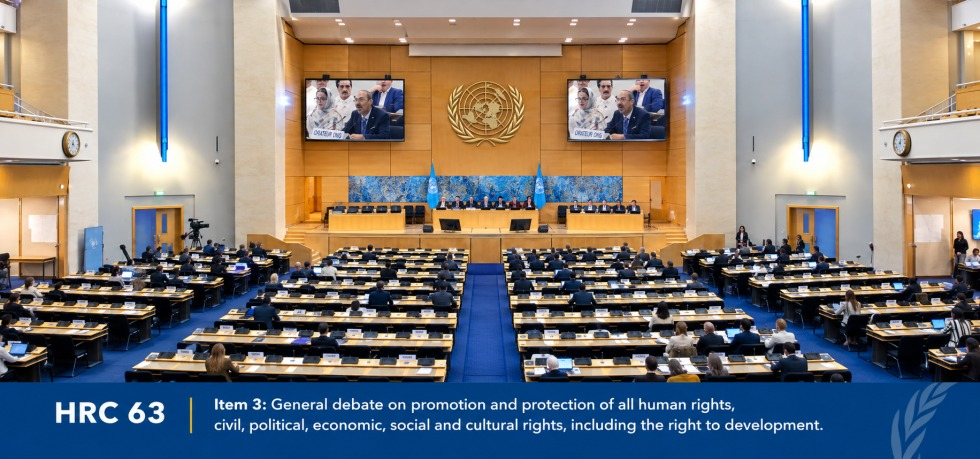
On 18 September 2026, CAP Freedom of Conscience delivered an oral statement during the general debate under Item 3 of the 63rd session of the UN Human Rights Council, devoted to the promotion and protection of all human rights.
The statement raises the case of Chairman Lee Man-hee, the 95-year-old founder and leader of the Shincheonji Church of Jesus and a veteran of the Korean War, who is currently held in pretrial detention at the Seoul Detention Center in the Republic of Korea on non-violent charges.
CAP Freedom of Conscience expresses serious concern regarding what appears to be a politically driven and discriminatory investigation targeting a religious minority, as well as the conditions of detention. Despite his fixed residence and the absence of any flight risk, Chairman Lee was held in cells without air conditioning during Seoul’s most severe heatwave, raising grave concerns for the health of a 95-year-old detainee.
The statement recalls that such treatment runs counter to the Republic of Korea’s international obligations: Article 9 of the ICCPR requires detention to be necessary and proportionate; Article 10 guarantees humane treatment; the Nelson Mandela Rules entitle detainees to healthcare equivalent to that available in the community; the Tokyo Rules make pretrial detention a measure of last resort; and Article 18 protects freedom of religion or belief — a right CAP Freedom of Conscience considers disregarded in this case.
CAP Freedom of Conscience urges the Council to call on the Republic of Korea to honour its treaty obligations by offering alternatives to detention, allowing an independent medical assessment, and ensuring a fair and impartial trial.
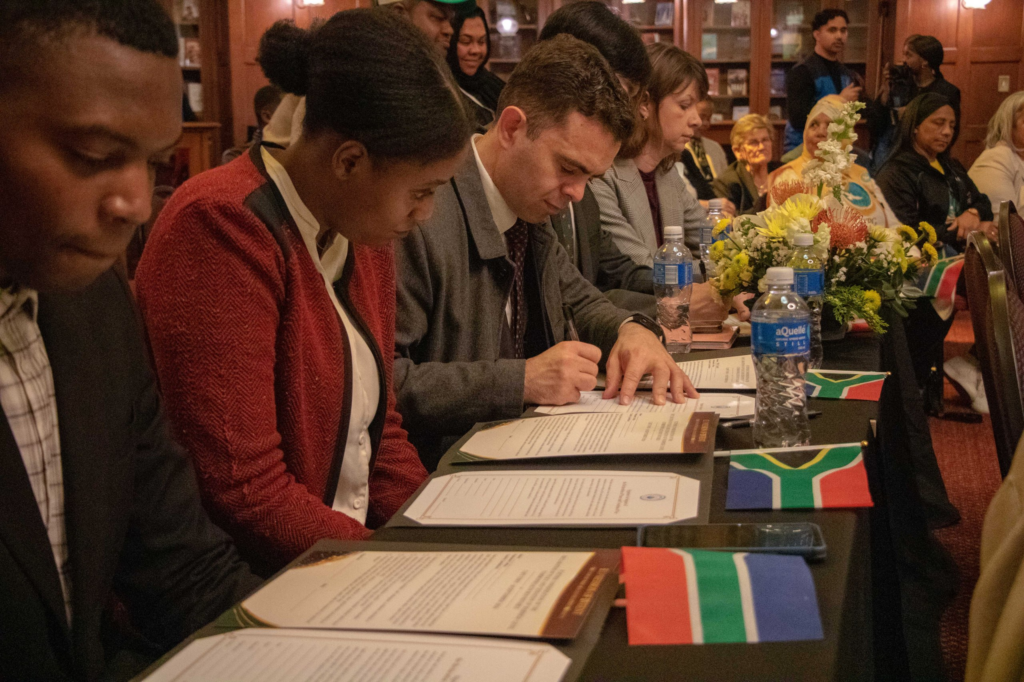
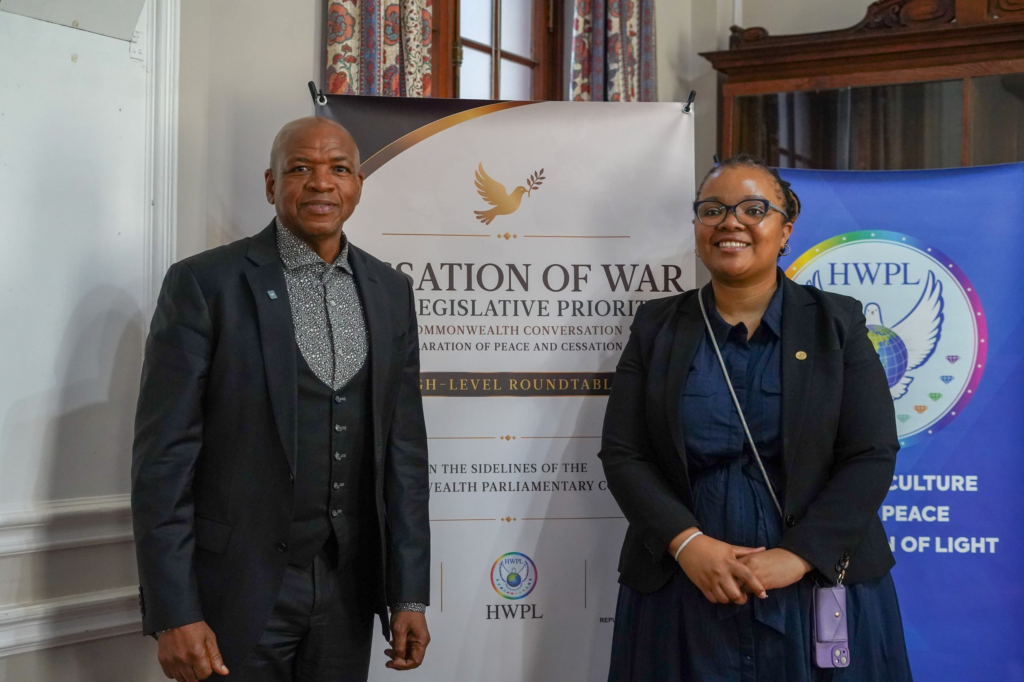
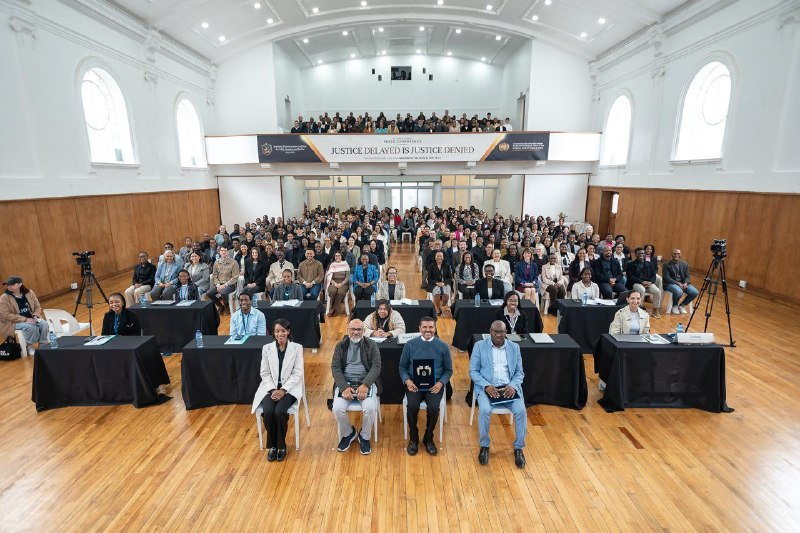
CAPE TOWN, SOUTH AFRICA — 18 September 2026: During the 69th Commonwealth Parliamentary Conference (CPC), a high-level roundtable examining ‘Cessation of War as a Legislative Priority’ was held at the Centre for the Book in Gardens, Cape Town.
Co-hosted by Heavenly Culture, World Peace, Restoration of Light (HWPL) and the Office of the Presidency of South Africa, the event was attended by approximately 150 people, including eight parliamentarians from five countries—Tuvalu, Northern Ireland, Seychelles, Pakistan, and South Africa—as well as youth representatives, religious leaders, civil society stakeholders, and journalists.
The roundtable focused on the Declaration of Peace and Cessation of War (DPCW) proposed by HWPL, addressing legal and institutional frameworks for conflict prevention and peace maintenance. Participants discussed the role of parliamentarians in formulating national laws and policies.
Hon. Clifford Elford, Deputy Speaker of the National Assembly of Seychelles, mentioned that “budgets should be prioritized for education and health sectors rather than post-war reconstruction costs.” Hon. Sir Iakoba Taeia Italeli, Speaker of Parliament of Tuvalu, stated that “the DPCW is a tool for transitioning armed conflict into dialogue and cooperation,” noting the necessity of its implementation.
Participating parliamentarians discussed ways to reflect the DPCW within their national legal systems. A total of 12 Letters of Support for the DPCW were submitted at the venue. Furthermore, all attending parliamentarians authored a ‘Commitment Statement’ declaring their intention to continue DPCW-related discussions and initiatives in their respective countries.
This roundtable was conducted as part of global solidarity peace activities marking the anniversary of the ‘9·18 HWPL World Peace Summit’ (September 18). During the same period (September 17–19), the ‘Global Youth Peace Program’ was held in the Republic of Korea under the theme “We Are the Living Heritage.” Youth participants from around the world visited historical sites, engaged in cross-cultural dialogue, and discussed practical peace initiatives.
In connection with this, it was highlighted that Cape Town is locally operating the ‘Peace My City’ initiative involving residents, youth, schools, and religious leaders. Activities include environmental clean-ups, stakeholder dialogues, recycled art competitions, HWPL Peace Education workshops, and monthly interfaith gatherings.
Meanwhile, according to HWPL, as of August 2026, the organization has approximately 630,000 members worldwide. Individuals and organizations interested in participating in HWPL’s peace initiatives and international campaigns commemorating the September 18th World Peace Summit, or wishing to become members, can find more information and apply for membership through HWPL’s official website (www.hwpl.kr).
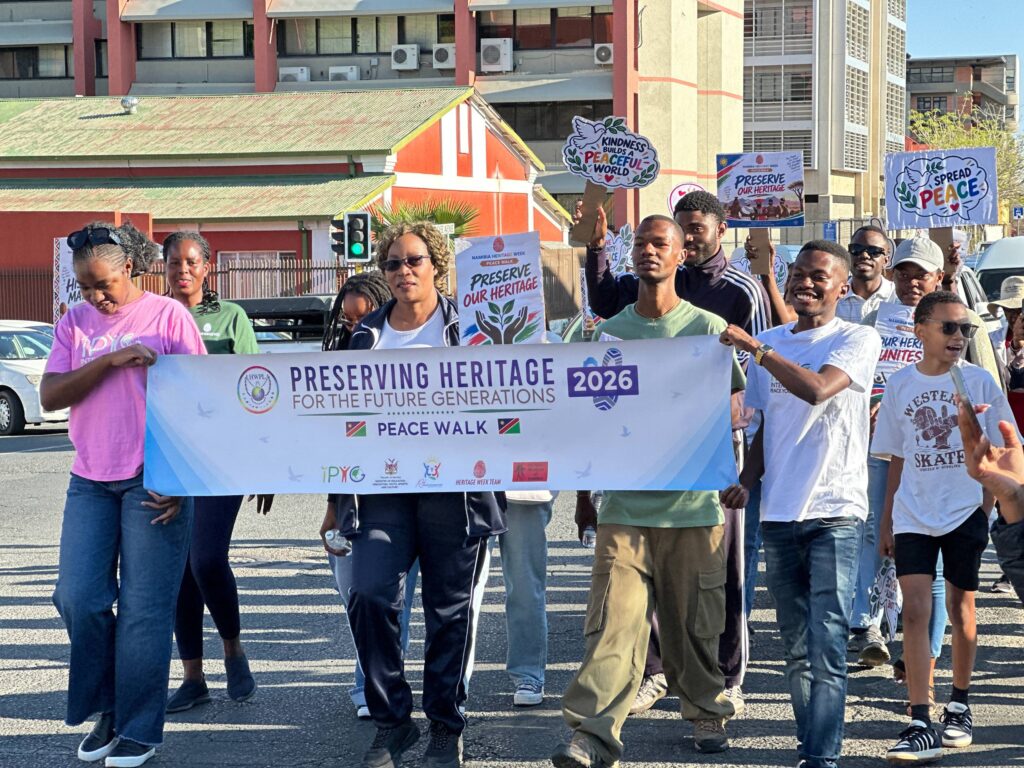
WINDHOEK, NAMIBIA — September 18, 2026 — Namibia Heritage Week 2026 was commemorated from September 17 to 18 at the National Museum of Namibia and surrounding historical sites in Windhoek.
The two-day event was co-hosted by Heavenly Culture, World Peace, Restoration of Light (HWPL), the International Peace Youth Group (IPYG), Rob Youth Foundation, the Ministry of Education, Innovation, Youth, Sports, Arts and Culture (MEIYSAC), and the National Museum of Namibia. Held under the theme “Preserving Heritage for Future Generations,” the event brought together over 200 participants, including youth, government representatives, heritage institutions, and civil society organizations. The organizers stated that the programme was designed based on the recognition that preserving history and cultural heritage forms the foundation for social integration and sustainable peace.
Heritage Week Peace Walk ~ Preserving heritage for the future generations
The first day, September 17, featured a Heritage, Culture, and Peace Education Programme, including an introduction to the history of Heritage Week, presentations linking peace and heritage, cultural performances, and guided tours of the museum and natural sciences exhibitions. Participants exchanged views on the pivotal role of youth in heritage preservation.
During the event, Mr. Elione Calunga, Namibian Branch Manager of HWPL, emphasized youth engagement, stating, “Young people are not only the leaders of tomorrow, but the custodians of today.” Mr. Boyson Ngondo, Deputy Director of MEIYSAC-EIAC, who served as the Master of Ceremonies, noted, “The peace achieved by our fore-bearers is central to our national identity, and the current generation holds the responsibility to sustain it for future generations.” Hon. Sanet Steenkamp, Minister of MEIYSAC, made a surprise visit to the venue and encouraged participants, highlighting that embracing integrity, compassion, and care while celebrating cultural diversity defines the Namibian identity.
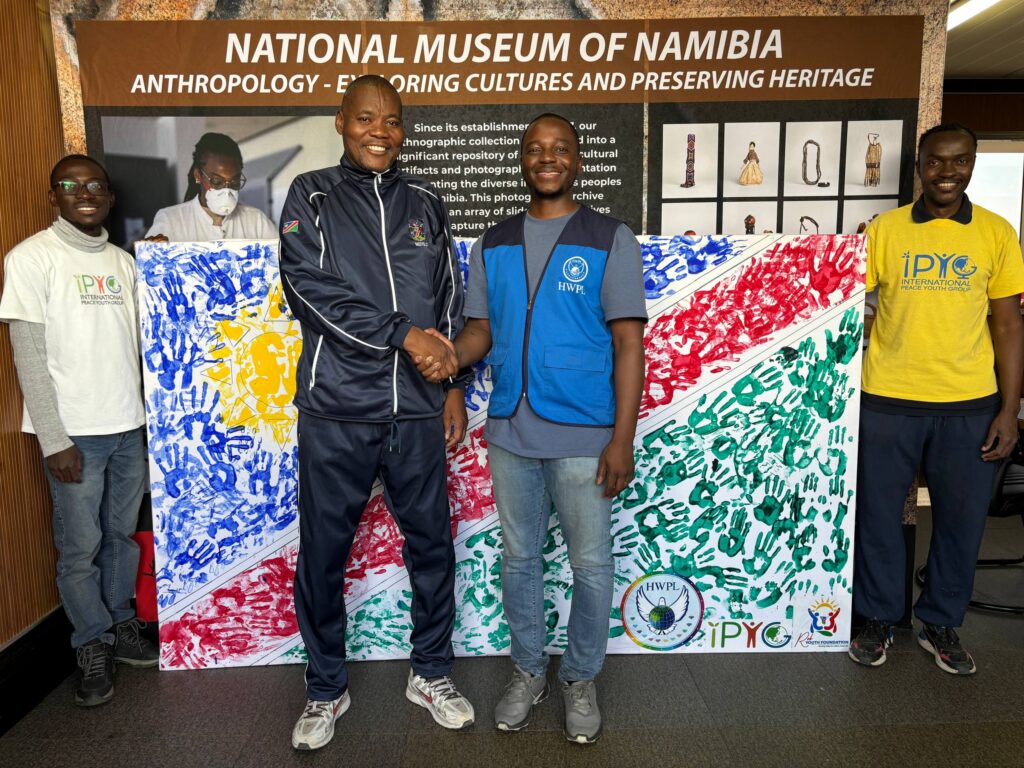
HWPL hands over Namibian Flag Handprint Painting to MEIYSAC
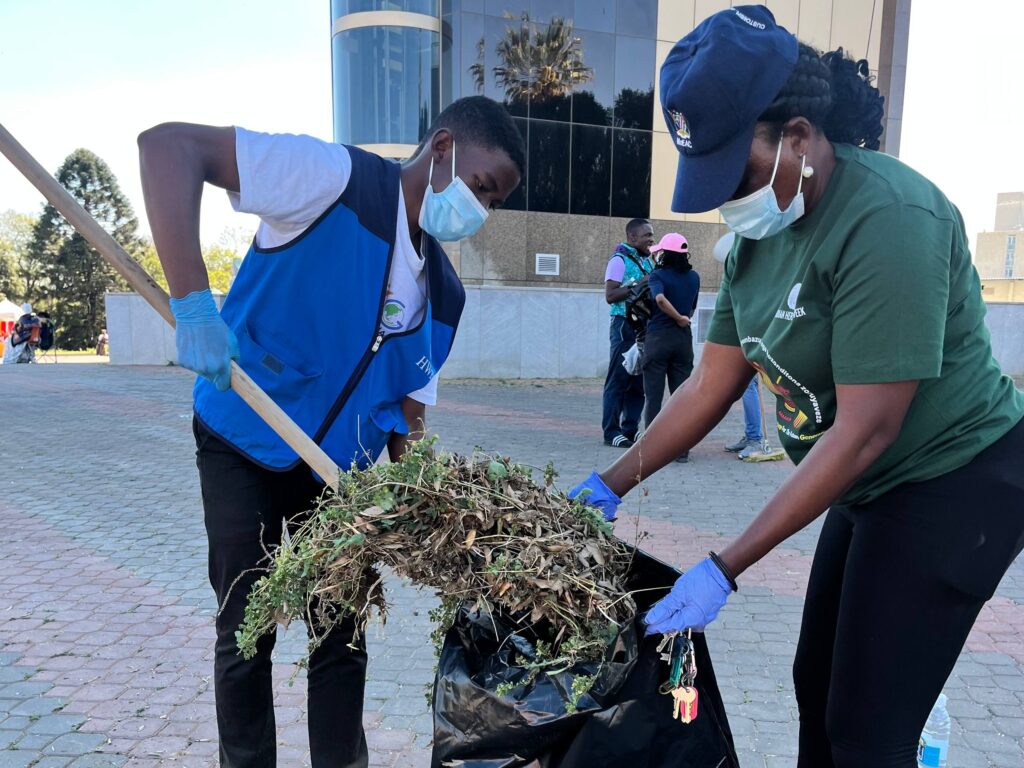
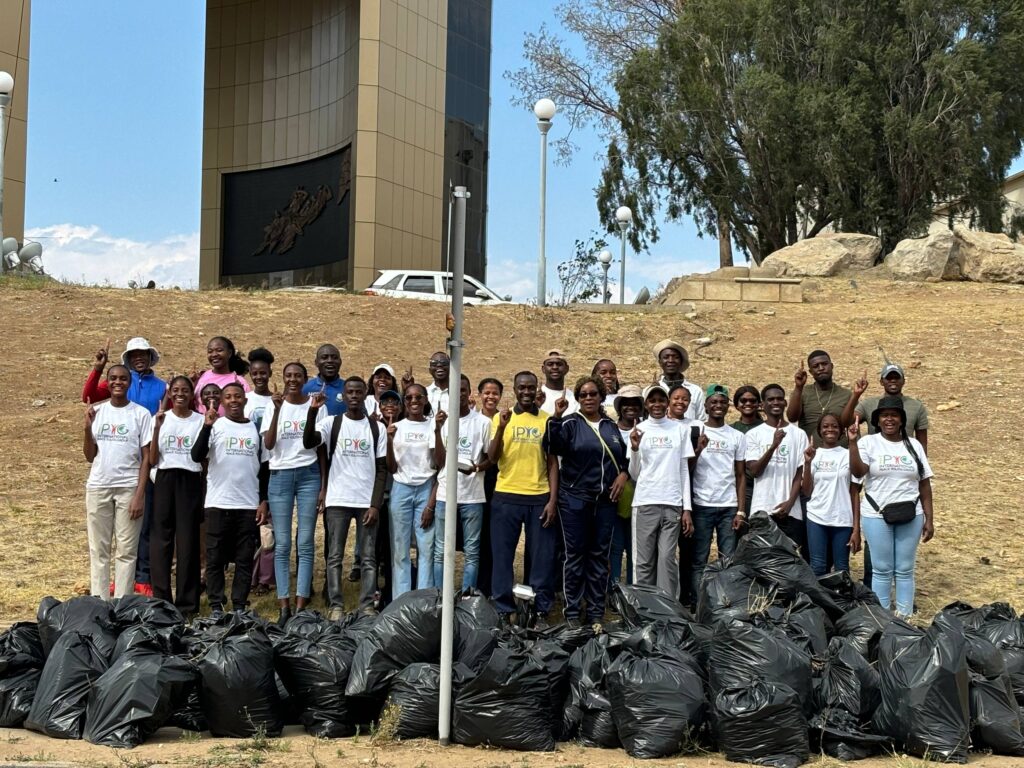
On September 18, the second day focused on practical activities for the youth. Participants took part in a 0.8-kilometer Heritage Week Peace Walk, followed by a cleanup campaign around the Independence Memorial Museum, Alte Feste, and the National Museum of Namibia. They also completed a handprint-painted Namibian flag artwork, which was officially handed over by HWPL to MEIYSAC for display at the National Museum of Namibia as part of the country’s heritage record. Gabriela Jeronimo, Executive Director of Rob Youth Foundation, remarked that the event served as an opportunity for youth to reconnect with their roots and share cultural values.
Members from HWPL and MEIYSAC work together to make the museums cleaner
This event was held as part of global solidarity peace activities commemorating the anniversary of the ‘September 18th HWPL World Peace Summit.’ During the same period (September 17–19), the ‘Global Youth Peace Program’ took place in the Republic of Korea under the theme “We Are the Living Heritage,” where youth participants from around the world visited historical sites, engaged in cross-cultural dialogue, and discussed practical peace initiatives.
Museum Cleanup Campaign carried out by participants from HWPL, IPYG, Rob Youth Foundation, MEIYSAC and the National Museum of Namibia
Meanwhile, according to HWPL, as of August 2026, the organization has approximately 630,000 members worldwide. Individuals and organizations interested in participating in HWPL’s peace initiatives and international campaigns commemorating the September 18th World Peace Summit, or wishing to become members, can find more information and apply for membership through HWPL’s official website (www.hwpl.kr).
WINDHOEK, Namibia – 27 August 2026 — The Southern African Leaders Coalition for Faith, Freedom and Justice (SALC-FFJ) – Namibia hosted a human rights panel discussion at the NUST Hotel School in Windhoek, placing human dignity, proportionality and the protection of vulnerable remand detainees at the centre of the conversation.
Held under the theme “Upholding Human Dignity and the Rights of Remand Detainees: A Local, Regional and International Human Rights Perspective,” the discussion examined remand or pre-trial detention from Namibian, regional and international perspectives. It highlighted the importance of ensuring that people awaiting trial are treated fairly and remain protected by the principle of presumption of innocence until proven guilty.
From the Namibian perspective, panelists considered existing systems protecting remand detainees, challenges in their implementation and opportunities to strengthen oversight. The discussion also considered appropriate alternatives to detention, particularly when dealing with vulnerable individuals. From a regional African perspective, the panel highlighted that similar remand-detention challenges exist across different countries. Participants emphasised that public awareness, responsible media coverage and civil-society advocacy can help bring attention to human-rights concerns and encourage greater accountability.
Internationally, attention was placed on proportionality and the treatment of juveniles, elderly people and other vulnerable detainees. The panel considered alternatives to custodial detention where appropriate, alongside humanitarian considerations and respect for human dignity. The psychological impact of prolonged detention was also highlighted, particularly the possibility of worsening existing mental-health challenges or contributing to additional psychological distress.
Building on these local, regional and international perspectives, the discussion then considered how these human-rights principles apply in practice. An international case involving Chairman Man Hee Lee, an elderly Korean War veteran, founder of Heavenly Culture, World Peace, Restoration of Light (HWPL) and religious leader of the Shincheonji Church of Jesus, was presented to the panel for consideration.
Dr. Christian Harris, a legal academic and Lecturer in Public and Procedural Law at the University of Namibia (UNAM), approached the case from the perspective of balancing the legal process with human-rights and humanitarian considerations. Without commenting on the merits of the case itself, he highlighted Chairman Lee’s advanced age and stressed that human dignity and proportionality should remain important considerations in determining appropriate legal measures.
The discussion also considered whether alternative forms of custody could adequately serve the interests of justice while protecting the dignity and well-being of elderly and vulnerable detainees. Dr. Armas Shikongo, a psychology academic at the University of Namibia (UNAM), stressed the importance of first establishing the facts and seeking the truth before reaching conclusions or deciding what position to support.
In this way, the international case provided a practical point of reflection on the broader issues raised throughout the Namibia panel discussion — particularly presumption of innocence, proportionality, vulnerability and human dignity. The dialogue ultimately reinforced one central message: upholding the rule of law and protecting human dignity should not be competing objectives. Justice should pursue accountability while ensuring that the rights and humanity of every individual are respected.
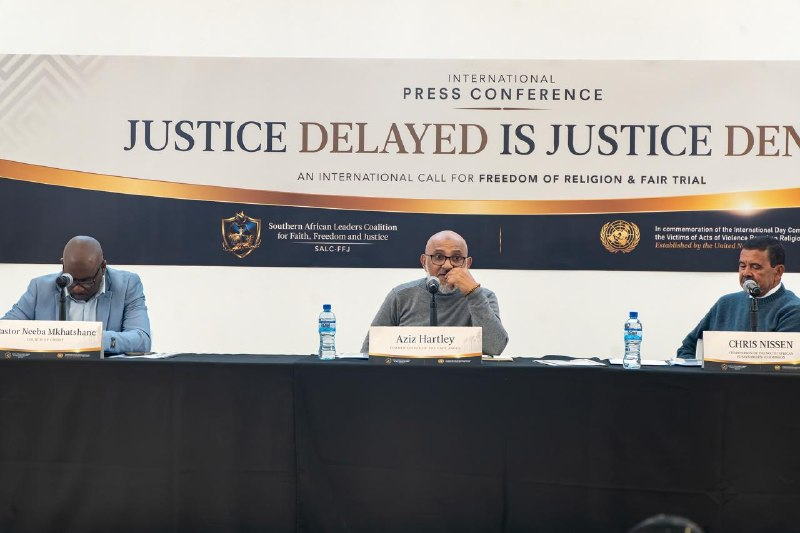
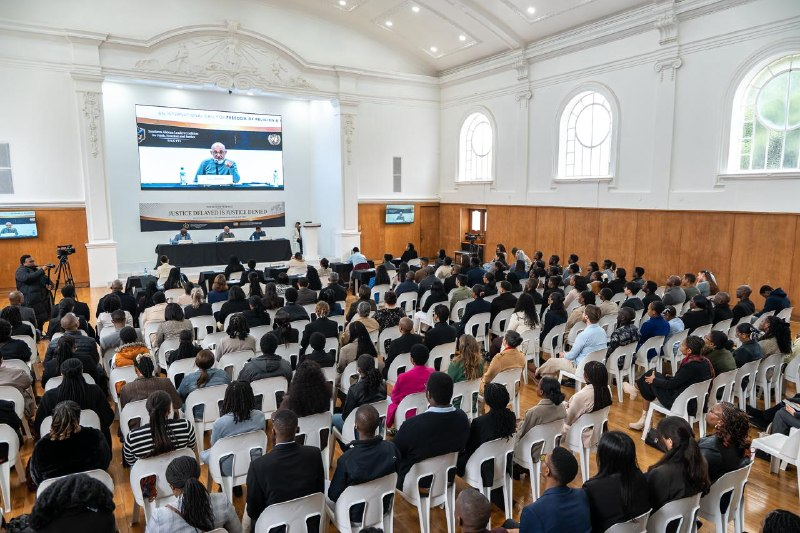
CAPE TOWN, 22 August 2026 — On the United Nations’ International Day Commemorating the Victims of Acts of Violence Based on Religion or Belief, the Southern African Leaders Coalition for Faith, Freedom and Justice (SALC-FFJ) has raised concerns over the continued pre-trial detention of 95-year-old religious leader, war veteran and peace activist Chairman Man Hee Lee.
The Coalition held a press conference in Cape Town today, one day after Chairman Lee’s bail hearing in the Republic of Korea. The outcome of the hearing remains pending. Chairman Lee has been in pre-trial detention since 24 June 2026. He has not been convicted and the presumption of innocence remains intact. SALC-FFJ has raised concerns about his continued detention in light of his age, reported health concerns and cooperation with the judicial process. The Coalition deliberately convened on the UN-designated day to examine what religious freedom, human dignity and fair trial rights mean when a religious leader remains in detention while awaiting trial.
Chris Nissen, Chairperson of the South African Human Rights Commission, drew on South Africa’s own history of detention without trial and the protections provided by human rights law. Referencing the Nelson Mandela Rules, Nissen emphasised that the dignity of people deprived of liberty must remain protected, including those awaiting trial.
“A society is determined by how they look at the most vulnerable and how you treat them.” Nissen also called for solidarity with those whose conscience or religious convictions may place them at risk. “Let no religious person, for the sake of standing up for the truth, standing for justice and righteousness, ever be detained or be charged for their conscience.”
He concluded with a direct call for Chairman Lee’s release: “We’ll use whatever influence, wherever we find influence, we’ll use that influence to say, release, release [him] now.”
For Pastor Nceba Mkatsane of the Church of Christ, the issue extends beyond any single denomination. “When a religious leader is treated unjustly, the body of faith across traditions is wounded. We cannot remain silent.” Mkatsane expressed concern over Chairman Lee’s continued detention, particularly given his age and reported health concerns, and said alternatives to detention should have been considered.
He also challenged journalists to play their part in ensuring the issue receives appropriate attention: “Your voices carry the power to prevent silence from becoming indifference.”
Former Cape Times editor and former group editor-in-chief of Independent Media Aziz Hartley placed the discussion within South Africa’s history of press freedom and political detention. “In any contestation, there are three views: yours, mine, and the truth. Where is it that the media stands?”
Hartley argued that South African journalists have a particular responsibility to scrutinise power and give space to voices that may otherwise be unheard. “Our own history is a mirror for us when it comes to defending the people’s rights.”
SALC-FFJ co-founder and Established Africa Managing Editor Magdalene Govender said South Africa’s experience of receiving international solidarity during the struggle against apartheid creates a responsibility to speak up when fundamental rights are at stake elsewhere. “If we had external voices helping us to have this type of liberation, then it is our moral right and responsibility to speak up for others as well. Right now, South Korea needs those voices.”
More than 220 organisations and leaders across the region have endorsed the Coalition’s joint statement calling for proportionality, fair trial guarantees and the protection of religious liberty. SALC-FFJ said its position is not based on denomination or political affiliation, but on the principle that human rights and dignity must apply to everyone, regardless of nationality, age or faith.
As the world commemorates victims of violence based on religion or belief, the Coalition is calling for continued attention to religious freedom, the presumption of innocence, fair trial rights, proportionality and human dignity.
There’s a wall in Port Elizabeth Central that most people have passed a hundred times without really seeing. For years, it was just noise — layers of tags, half-finished scrawls, the kind of surface the eye slides off without registering. Then, one day, it wasn’t. Somebody picked up a brush instead of a can, and the noise became a picture. Same wall. Same city. A completely different reaction from everyone who walked past it.
So, what actually separates “graffiti” from “art”? Is it the image itself — or is it who gave permission for it to be there?
Port Elizabeth has lived this exact story before. Back in 2013, a group of local artists — Nathan Sanan, Steven Carter, Paolo Maneli and Quintin Weyer — approached the developers behind the Something Good roadhouse overlooking Pollok Beach with an idea: take a wall that had become a magnet for graffiti, and turn it into a proper mural. Sanan, an architect by trade, said the goal was simple — to share their love of urban art and “instil a sense of pride” in residents, using colour and craft to push back against the tagging that had taken over the space.
What stands out in that story isn’t really the mural itself. It’s the admission buried inside it: the wall was already a canvas. People were already using it to say something. The artists didn’t introduce art to a blank space — they replaced one form of expression with another, one the city was willing to call legitimate.
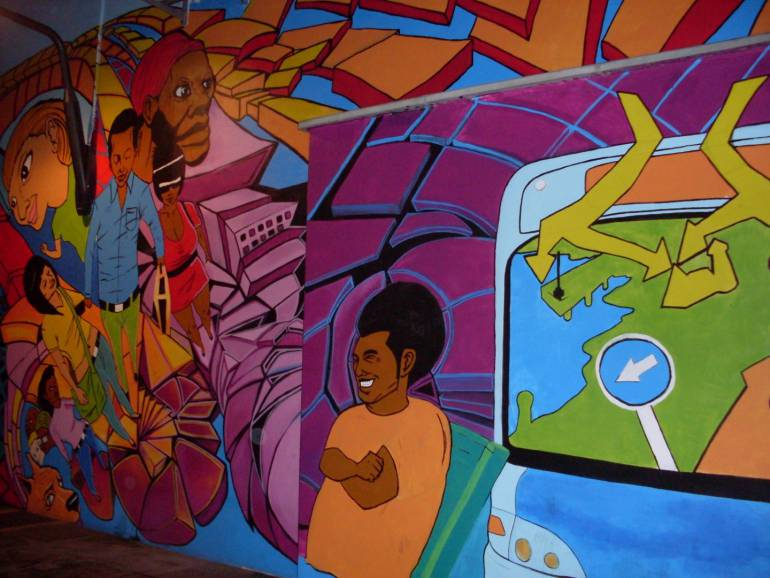
A few streets over, Central has its official answer to that question, unmissable and fully sanctioned: Route 67, the public art trail that winds up toward the Donkin Reserve through 67 individual works — murals, mosaics, sculpture — each one marking a year of Nelson Mandela’s public life. The Bus Station Mural alone, painted by the collective 4 Blind Mice, was designed specifically to celebrate the everyday commuters who pass through it. It’s vivid, civic-minded, and it was commissioned by the Mandela Bay Development Agency on behalf of the municipality.
This mural by 4 Blind Mice is a carefully constructed design that celebrates public transport and the daily journeys undertaken by the people of Port Elizabeth. Source: Graffiti in Port Elizabeth
Nobody debates whether Route 67 is “art.” It has a plaque. It has a budget line. It has permission. And that is arguably the actual dividing line in most people’s minds — not talent, not colour, not even permanence. Permission. The same aerosol can, the same wall, the same skill with a spray nozzle can be called vandalism or heritage depending entirely on whether someone in an office signed off on it first. Here’s the part more interesting than the semantics: how many people actually stop for any of it anymore?
MBDA’s Route 67 consists of 67 Public Art Works symbolising Nelson Mandela’s 67 years of work dedicated to the Freedom of South Africa
Route 67 was built to be walked slowly — to draw a pause at the Voting Line sculpture, an exchanged word with a stranger, a moment to listen for the Campanile’s bells. But most of Central moves past its own art at commuter speed. People will queue for a gallery opening and not glance twice at a mural they drive past every single day. Somewhere along the way, “art” became something you go and see, on purpose, in a building designed for the purpose — and everything else became scenery.
Maybe that’s the real question hiding behind “art or graffiti.” It isn’t really about definitions. It’s about attention. A tag gets read as vandalism partly because no one was invited to slow down and look at it. A mural gets read as art partly because someone put a frame around the moment — a plaque, a launch event, a story in the newspaper — and declared it worth a second look.
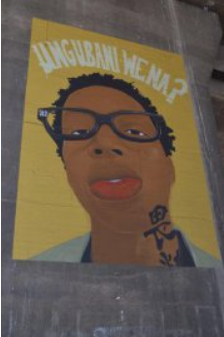
Painting in Norwich, Gqeberha
Looking at the paintings in Central, the point isn’t to settle on a label before looking closely. It’s what happens in the half-second before that decision gets made. Is it intention, or intrusion? Craft, or clutter? And if the answer changes once the question of permission comes up — what does that say about what “art” actually means?
Because if Port Elizabeth’s own walls can flip from vandalism to civic pride with nothing but a fresh coat of paint and a press release, maybe the line was never about the image at all.
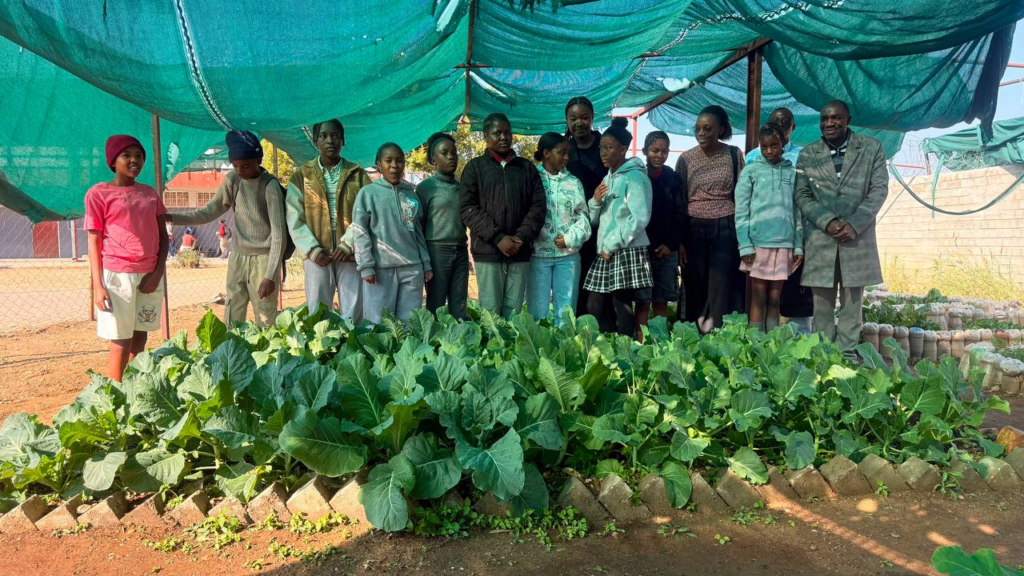
7 AUGUST 2026 — Ahead of International Youth Day on 12 August, the International Peace Youth Group (IPYG), affiliated with Heavenly Culture, World Peace, Restoration of Light (HWPL), partnered with Moses Van Der Byl Primary School to implement the Peace My Namibia: A Bowl of Peace, a Patch of Garden initiative.
Held on Friday, 7 August 2026, the initiative brought together learners, educators, and volunteers to establish a vegetable garden designed to support the school’s feeding programme and provide practical life skills training for learners.
The project addressed inconsistent access to food by establishing a school-managed garden. Participants prepared garden beds, planted seedlings, and engaged in activities focused on cooperation, responsibility, and environmental care.
Teacher Mr Simeon Kamati stated, “Most of our learners come from home with empty stomachs, but with this garden, we can ensure they are fed and ready to concentrate in class. It directly aligns with Namibia’s national vision for food security—whenever government supplies lag, this garden directly sustains our children’s minds and learning.”.
One participating student, Haihwema Twapewoshali, said, “Through this garden, we didn’t just learn how to care for plants—we learned responsibility and the joy of working together with our friends to help each other. I hope our vegetables keep growing, and that our garden becomes even bigger in the years to come.”
The initiative is part of IPYG’s global Peace My City campaign, which involves youth in addressing local community challenges through volunteer action. The project highlighted youth participation in community development ahead of International Youth Day on 12 August.
Meanwhile, HWPL carries out various initiatives aimed at ceasing war and achieving world peace through peace education, interfaith harmony, advocacy for international peace law, and the establishment of youth, women, and media networks. As of September 2025, HWPL’s global membership exceeded 580,000, and updates on HWPL’s peace initiatives and campaigns are available through membership registration on the official website.
18 AUGUST 2026 — Approximately 3,000 Christian leaders from around the world, including pastors from Southern Africa, joined the Joint Assembly of World Pastors on 13 August to raise concerns about religious freedom, human rights and due process following the detention of 95-year-old religious leader and war veteran Chairman Man Hee Lee in South Korea.
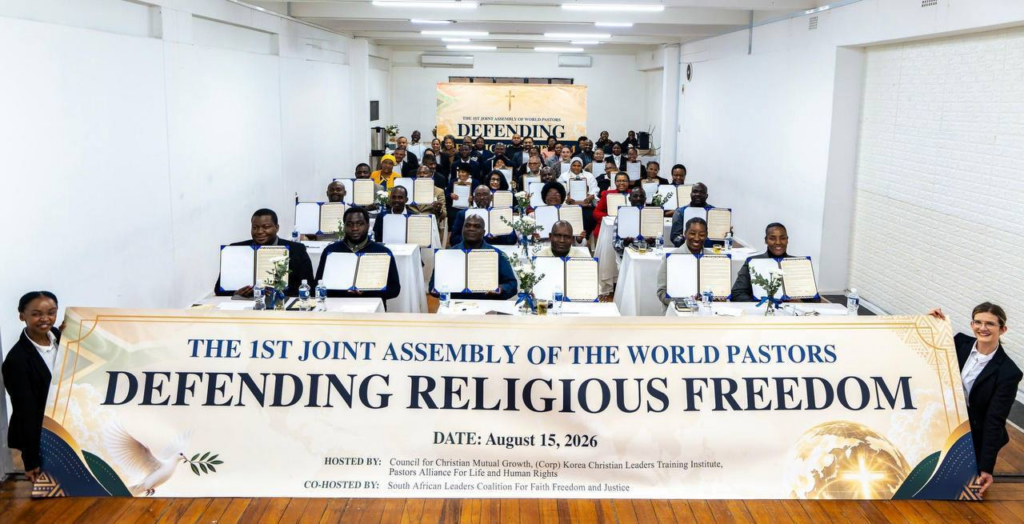
23 local pastors sign a petition in support of religious freedom and the protection of human rights
The international assembly brought together pastors through online and in-person participation from countries including Zambia, Rwanda, Russia and others. Religious leaders examined concerns surrounding religious freedom and the separation of church and state in South Korea, as well as the principle that judicial proceedings should be determined by evidence and due process rather than public opinion.
The gathering concluded with a joint statement calling for the protection of religious freedom, respect for the presumption of innocence and an end to trials influenced by public opinion. The statement also called for consideration of bail for Chairman Lee in light of his advanced age and circumstances.
Two days later, on 15 August, pastors in Cape Town continued that call at an International Pastors Conference, where 23 pastors signed a petition supporting religious freedom, fair-trial rights and consideration of Chairman Lee’s circumstances. The Cape Town gathering provided an opportunity for South African religious leaders to reflect on the wider implications of the issues raised internationally and the responsibility of the church to protect human dignity and freedom of religion or belief.
South African pastors join an international pastors’ conference to unite and stand for religious freedom
The local gathering also highlighted how questions of religious freedom and justice can extend beyond national and denominational boundaries, with pastors considering their responsibility to speak on issues affecting human dignity and fundamental rights.
Pastor Aime Enyeka, said the age of Chairman Lee was an important consideration when discussing his detention and the wider question of human rights.
“That is not fair, it’s not right. I think that is against human rights. What happened to Mandela in those times, is starting to happen now in South Korea,” said Pastor Enyeka.
The reference to South Africa’s own history brought a local dimension to the discussion, with the pastor emphasising that the treatment of elderly people in detention should remain a human-rights concern regardless of where it occurs.
For Anetta Barnes Mangxaba, Chairperson of the Association of Independent Publishers, the discussion highlighted the responsibility of religious leaders to recognise that questions of religious freedom can have implications beyond national borders.
“This is not a country issue, it’s a global issue,” said Mangxaba.
She also emphasised the importance of pastors understanding the legal and constitutional frameworks of the countries in which they serve saying, “Pastors need to empower themselves. We need to know the laws of the country, it’s to know the Constitution, it’s to know the acts and how to apply that and how to empower the ones that we lead as pastors.”
For Pastor Philip Bahama, the gathering demonstrated the importance of unity among Christians across different churches and backgrounds.
“The thing that I have learned from today’s gathering was that as the church we need to stand, because when we stand together, there is power,” Pastor Bahama said. All of us, as the leaders, pastors, we need to know our rights and we need to defend our rights. We need to speak the same language and we need to be together to fight injustice.”
The participation forms part of the wider international response by Christian leaders who say that questions of religious freedom, human dignity and due process should be addressed beyond national and denominational boundaries. The Cape Town gathering reinforced the call for religious leaders to stand together in defence of justice, truth and the fundamental rights of all people.
On the 13th, seven religious organizations — including the Council for Christian Mutual Growth, the Korea Christian Leaders Training Institute, the Pastors Alliance for Life and Human Rights, the Russian Evangelical Alliance, and the Thai Evangelical Alliance Association — held the “1st Joint Assembly of World Pastors” and sharply criticized the violations of religious freedom and the undermining of the principle of separation of church and state now taking place in the Republic of Korea. Some 3,000 pastors from major countries around the world attended online and offline.
At this assembly, not only Korean presenters but also overseas pastors from countries such as Russia and Zambia took the podium themselves, examining from an international perspective the reality of religious freedom under threat beyond any single denomination or nation. The presenters spoke with one voice: “What is happening in the Republic of Korea today is not the problem of one denomination or one country.”
The first presenter, Rev. Im Young-woong, senior pastor of Saehimang (New Hope) Church of the Presbyterian Church of Korea, raised the dangers of the debate over dissolving religious corporations in an international context. Rev. Im Young-woong asked, “If the state can dissolve a single religious organization, exactly how far should that standard reach — and who can guarantee that the standard created today will not be applied to another church tomorrow?”
Citing the case in which the Tokyo District Court issued a dissolution order in March 2025 against the former Unification Church (the Family Federation for World Peace and Unification) and the Supreme Court of Japan finalized it in June 2026, he explained, “What was dissolved in Japan was not the faith itself but its legal status as a religious corporation; yet the practical impact on the religious community — loss of tax benefits, liquidation of assets and more — is by no means small.”
Rev. Im Young-woong then pointed to Article 38 of Korea’s Civil Act, which allows a corporation’s establishment permit to be revoked for “acts that harm the public interest,” calling it the core problem: “Who decides what harms the public interest, and by what standard?” Citing the 2020 case in which, during the COVID-19 pandemic, the Seoul Metropolitan Government revoked the establishment permit of an incorporated association linked to Shincheonji and also began revocation proceedings against HWPL, as well as the December 2025 case in which the President, referring to Japan’s Unification Church dissolution at a Cabinet meeting, ordered a review of the possibility of dissolving domestic religious organizations, he warned that “our concerns are becoming reality.”
Rev. Im Young-woong stressed, “If there are allegations, they must be investigated, and if a crime is proven, one must be held accountable. But investigating an individual’s criminal allegations and making an entire religious community of hundreds of thousands of members a target for survival-or-dissolution are matters on entirely different levels,” adding, “The most dangerous thing is that it is not objective criminal facts but ‘social unpopularity’ that operates as grounds for dissolution. If we tolerate this logic today because it targets a religion we dislike, there is no guarantee the same logic will not be applied to our own church tomorrow.” He further invoked Article 18 of the International Covenant on Civil and Political Rights (ICCPR): “Religious freedom must not vary according to whether a religion is old or new, a majority or a minority, or socially popular or condemned.”
Rev. Vitaly Kirillovich Vlasenko, General Secretary of the Russian Evangelical Alliance, presented on the theme “Public opinion cannot be a verdict.” He said, “Is it truly just that the legal standard applied to a religion and its leader should change simply because that religion has become an object of social hatred?” and, “The fact that hundreds of thousands condemn someone and that countless media reports follow cannot justify declaring a person guilty before the court has even handed down its judgment.”
General Secretary Vlasenko stressed, “The stronger the social pressure, the more fair and neutral the trial must be; and the stronger the religious hostility, the more strictly the state must supervise whether the law and due process are being observed.” Referring to the situation in 2020 when Shincheonji was linked to the spread of COVID-19 in Daegu and a national petition demanding its forced dissolution surpassed 500,000 signatures within two days and later exceeded one million, he said, “An atmosphere formed as if society had already handed down its verdict before the court had even held a trial.”
He continued, “Yet the Supreme Court of the Republic of Korea ultimately acquitted Chairman Lee Man-hee of the charge of violating the Infectious Disease Control and Prevention Act, while upholding guilty verdicts on some other charges,” and, “A court is not an institution that judges a person wholesale as a ‘good person’ or a ‘bad person’; it is a place that examines the evidence for each specific charge and distinguishes guilt from innocence. Herein lies the essential difference between public opinion and judicial judgment.” Turning to the current situation in which Chairman Lee Man-hee has again been detained on charges of violating the Political Parties Act, he urged, “Whether or not one agrees with the doctrine, the legal standard must be applied equally to everyone.”
Bishop Elias Elijah Changa, founder and president of the Zambia-based Missionary Ambassadors for Global Evangelism (MAGE) in Lusaka, raised the questions of due process and human dignity based on his prison-ministry experience. He opened, “The administration of justice and the protection of human dignity must go together.”
Rev. Changa said, “Acknowledging that Chairman Lee Man-hee has long worked for peace-building and interfaith dialogue through HWPL’s international activities means neither innocence nor exemption from the law,” but added, “The judgment concerning him must be made by the courts on the basis of law and evidence alone, and disagreement over his beliefs must not determine how he is treated.”
In particular, through his prison ministry he said he had confirmed that “detention causes especially serious and harsh hardship for the elderly,” and asked, “Age gives no one the right to stand above the law, but to protect life and humanity, I ask the competent authorities to carefully consider lawful alternatives such as bail, residence restriction, or medical accommodation.” He stated, “We are not demanding that Chairman Lee Man-hee receive special treatment because he is a religious leader; we are asking that the fairness, dignity, and universal rights owed to everyone be extended equally to him.”
The assembly closed with the announcement of a “Joint Statement” adopted with the signatures of Christian leaders from around the world. The statement set out demands that:
The government and political circles immediately cease using specific religions, including Shincheonji, as tools of political strife and suppression in violation of the principle of separation of church and state, and fully guarantee universal religious freedom;
the judiciary halt trials by public opinion and witch hunts and uphold the presumption of innocence for the very elderly religious leader; and
the court grant the bail request of the very elderly leader, whose life is under threat, and release him immediately.
The organizers stated, “The cases presented here are not the problem of one denomination alone but a grave warning signal spanning religious freedom in the Republic of Korea as a whole,” and, “Until the government and judicial authorities return to fair justice and the principle of separation of church and state, we will continue our response in solidarity with international human-rights organizations and the churches of the world.”
DURBAN, South Africa, 13 August 2026 — What does justice mean when the principles of human dignity, liberty and fair trial are put to the test?
For more than 250 leaders, diplomats, faith representatives, legal practitioners, academics and civil-society voices gathered in Durban, the question became particularly urgent through the case of Chairman Man Hee Lee, a 95-year-old war veteran, peace advocate and international religious leader currently being held in detention in South Korea.
Chairman Lee was arrested and placed in pre-trial detention in June 2026 in connection with allegations under South Korea’s Political Parties Act. His detention has raised concerns among supporters and human-rights voices regarding the proportionality of detention given his advanced age, as well as broader questions concerning fair-trial rights, liberty, human dignity and freedom of religion or belief.
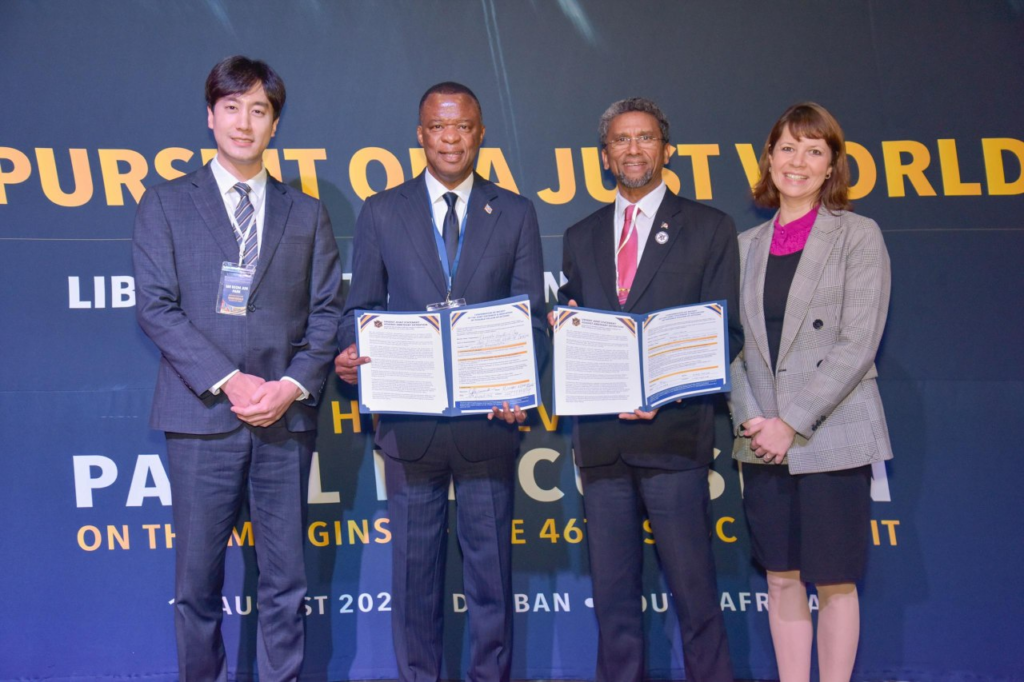
It was against this backdrop that the Southern African Leaders Coalition for Faith, Freedom and Justice (SALC-FFJ) convened the “In Pursuit of a Just World – Liberty, Faith and Institutional Trust in the SADC Region” high-level dialogue in Durban, on the margins of the 46th Ordinary SADC Summit.
The gathering brought the case into a wider regional conversation: What responsibility does a region have when the principles it has committed itself to are challenged in practice?
SALC-FFJ’s Urgent Joint Statement handed over to the SADC Member States present, Ambassador Mutombo Kambila Patrick (DRC) and Foreign Affairs and the Diaspora Minister Barry Faure (Seychelles)
Among those participating were representatives from SADC Member States, including Seychelles’ Minister of Foreign Affairs and the Diaspora Barry Faure and His Excellency Ambassador Mutombo Kambila Patrick of the Democratic Republic of Congo, alongside leaders from the legal, faith, human-rights, academic and civil-society sectors. For Minister Faure, the issue resonated with Seychelles’ own experience.
Having first met Chairman Lee more than ten years ago while in Korea, Minister Faure reflected on a human-rights case in Seychelles that remains under investigation and has heightened his personal concern for the protection of human rights.
“Because of what happened in Seychelles, human rights have become a very important concern for us. When I see what is happening to Chairman Lee, I see those same human-rights concerns. I would really like to support this cause and do everything I can to help.” Minister Faure signed the SALC-FFJ Joint Statement and indicated that he would take it back to Seychelles, signaling his intention to continue engaging on the matter.
Panelists, Swami Vedanand Saraswati and Attorney Simi Sharma, discuss the affects of arbitrary detention on religious freedom
The discussion placed Chairman Lee’s circumstances within the context of Southern Africa’s own history and regional commitments. SADC has articulated commitments to democracy, human rights, justice, peace and good governance through instruments including the SADC Treaty and RISDP 2020–2030, while the African Charter on Human and Peoples’ Rights provides continental protections relating to human dignity, liberty, fair trial and freedom of conscience and religion.
Participants were therefore challenged to consider how these principles can inform constructive engagement when fundamental rights are under question beyond the region. For faith leaders, this also raised the responsibility to defend religious freedom beyond one’s own community. Swami Vedanand Saraswati, Spiritual Leader of Arya Samaj South Africa and Convenor of the Sanyasi Council of South Africa, expressed particular concern about Chairman Lee’s treatment given his age, history as a war veteran and work for peace.
“I really cannot accept what is happening to Chairman Lee. I cannot comprehend how a 95-year-old person can be treated this way. He is a peace activist and a war veteran, and he deserves to be treated with humanity and dignity.” Swami Vedanand also emphasised that the event should not be viewed as an endpoint, stressing the importance of continued action and follow-up.
The most tangible outcome of the gathering came at its conclusion, when the SALC-FFJ Joint Statement was formally presented to and received by SADC Member States present, namely the Minister from Seychelles and the Ambassador of the Democratic Republic of Congo. The Statement calls for greater attention to fair-trial rights, human dignity, liberty and freedom of religion or belief. It has received the endorsement of 220 organisations and leaders across the SADC region, including faith communities, legal professionals, human-rights advocates and civil-society representatives.
The formal handover placed the Coalition’s concerns directly before the regional institution at the centre of the Summit taking place in Durban. The event also highlighted the relationship between justice, religious freedom and institutional trust. Participants considered how confidence in institutions can be weakened when people perceive legal processes as unfair, disproportionate or inconsistent with fundamental rights, and how such concerns can ultimately affect social cohesion and confidence in governance.
For SALC-FFJ, the significance of the dialogue extends beyond Chairman Lee’s individual case. The gathering sought to demonstrate that Africa can contribute to global conversations on justice and human rights from the strength of its own history, institutions, experiences and values.
SADC Member States Representatives record the follow up actions they will consider
Southern Africa does not have to choose between defending its sovereignty and defending universal principles. Constructive regional dialogue can allow both to coexist. The participation of diplomatic representatives, religious leaders, legal professionals, academics and civil-society voices demonstrated an appetite for continued engagement, while participants expressed a willingness to remain involved beyond the event.
As the SADC Summit continues, SALC-FFJ believes the conversation should continue beyond Durban. If justice, liberty, religious freedom and human dignity are principles worth defending, the real test is not whether we affirm them in principle, but what we do when those principles are challenged.