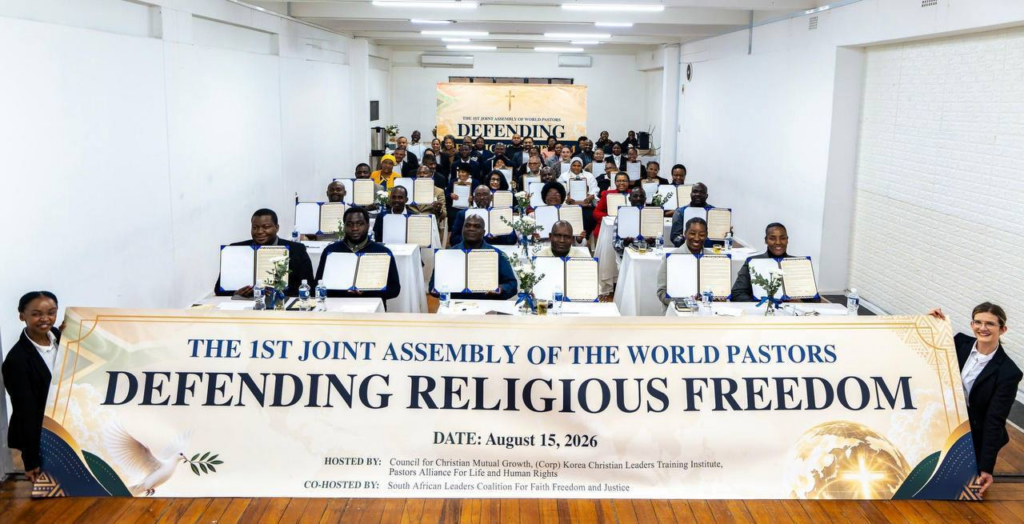
As SADC Leaders Gather in Durban, Over 250 Convene Around the Detention of a 95-Year-Old War Veteran and the Wider Question of Justice

DURBAN, South Africa, 13 August 2026 — What does justice mean when the principles of human dignity, liberty and fair trial are put to the test?

For more than 250 leaders, diplomats, faith representatives, legal practitioners, academics and civil-society voices gathered in Durban, the question became particularly urgent through the case of Chairman Man Hee Lee, a 95-year-old war veteran, peace advocate and international religious leader currently being held in detention in South Korea.

Chairman Lee was arrested and placed in pre-trial detention in June 2026 in connection with allegations under South Korea’s Political Parties Act. His detention has raised concerns among supporters and human-rights voices regarding the proportionality of detention given his advanced age, as well as broader questions concerning fair-trial rights, liberty, human dignity and freedom of religion or belief.

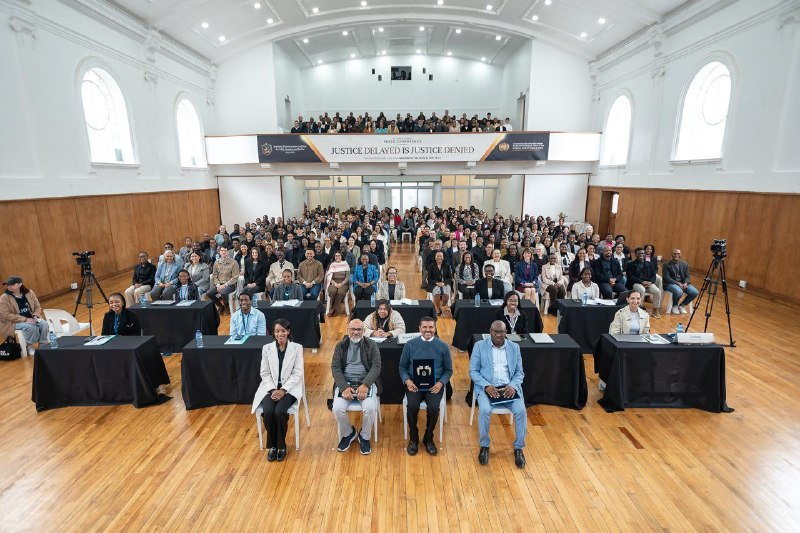
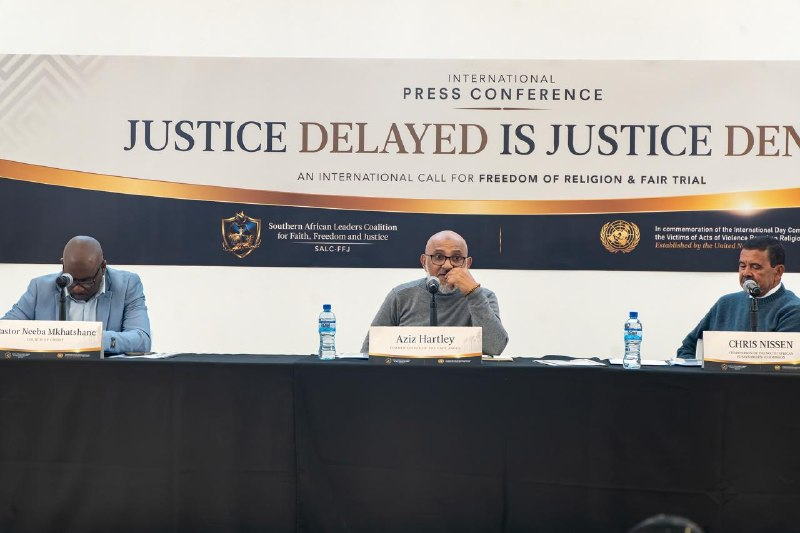
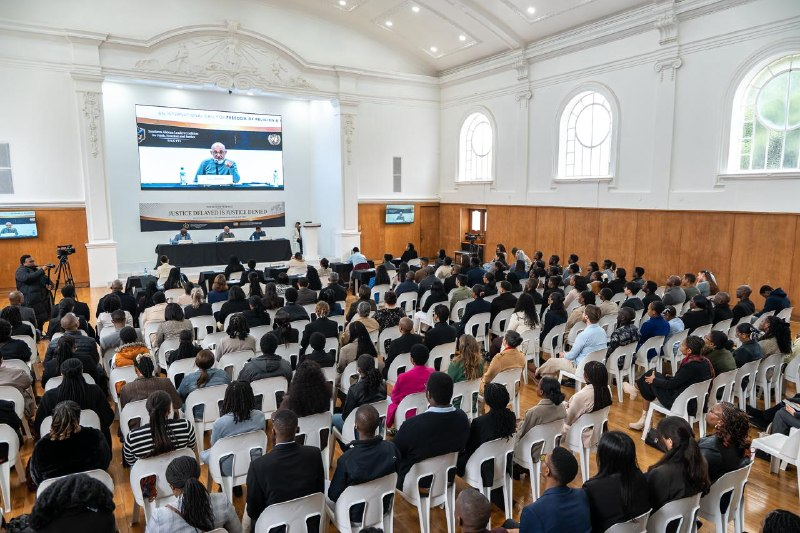
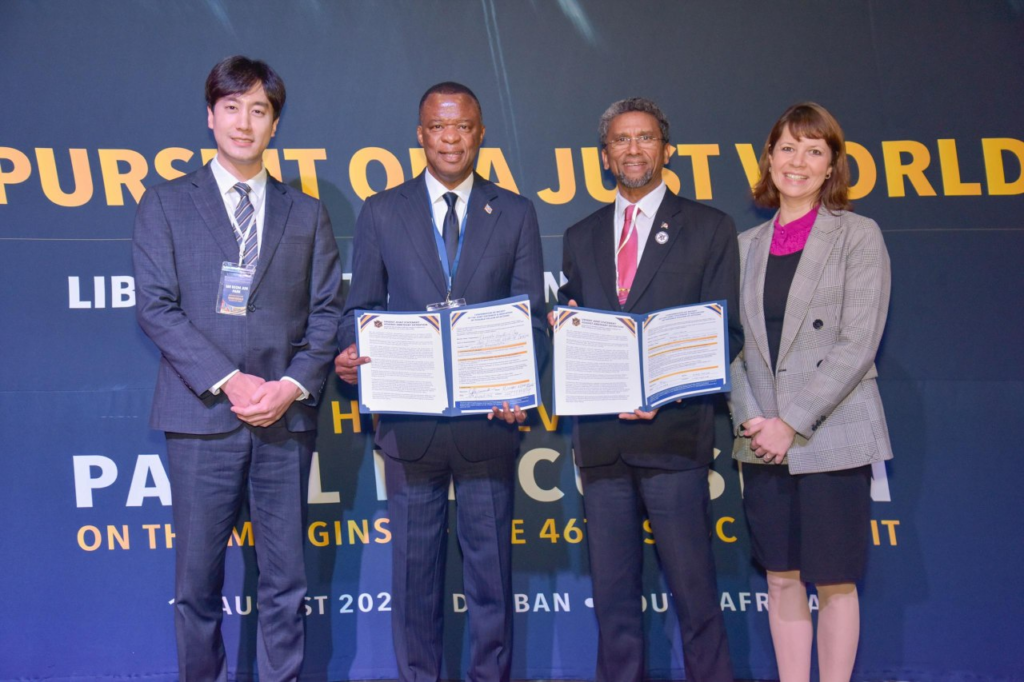
It was against this backdrop that the Southern African Leaders Coalition for Faith, Freedom and Justice (SALC-FFJ) convened the “In Pursuit of a Just World – Liberty, Faith and Institutional Trust in the SADC Region” high-level dialogue in Durban, on the margins of the 46th Ordinary SADC Summit.

The gathering brought the case into a wider regional conversation: What responsibility does a region have when the principles it has committed itself to are challenged in practice?

SALC-FFJ’s Urgent Joint Statement handed over to the SADC Member States present, Ambassador Mutombo Kambila Patrick (DRC) and Foreign Affairs and the Diaspora Minister Barry Faure (Seychelles)

Among those participating were representatives from SADC Member States, including Seychelles’ Minister of Foreign Affairs and the Diaspora Barry Faure and His Excellency Ambassador Mutombo Kambila Patrick of the Democratic Republic of Congo, alongside leaders from the legal, faith, human-rights, academic and civil-society sectors. For Minister Faure, the issue resonated with Seychelles’ own experience.

Having first met Chairman Lee more than ten years ago while in Korea, Minister Faure reflected on a human-rights case in Seychelles that remains under investigation and has heightened his personal concern for the protection of human rights.

“Because of what happened in Seychelles, human rights have become a very important concern for us. When I see what is happening to Chairman Lee, I see those same human-rights concerns. I would really like to support this cause and do everything I can to help.” Minister Faure signed the SALC-FFJ Joint Statement and indicated that he would take it back to Seychelles, signaling his intention to continue engaging on the matter.

Panelists, Swami Vedanand Saraswati and Attorney Simi Sharma, discuss the affects of arbitrary detention on religious freedom

The discussion placed Chairman Lee’s circumstances within the context of Southern Africa’s own history and regional commitments. SADC has articulated commitments to democracy, human rights, justice, peace and good governance through instruments including the SADC Treaty and RISDP 2020–2030, while the African Charter on Human and Peoples’ Rights provides continental protections relating to human dignity, liberty, fair trial and freedom of conscience and religion.

Participants were therefore challenged to consider how these principles can inform constructive engagement when fundamental rights are under question beyond the region. For faith leaders, this also raised the responsibility to defend religious freedom beyond one’s own community. Swami Vedanand Saraswati, Spiritual Leader of Arya Samaj South Africa and Convenor of the Sanyasi Council of South Africa, expressed particular concern about Chairman Lee’s treatment given his age, history as a war veteran and work for peace.

“I really cannot accept what is happening to Chairman Lee. I cannot comprehend how a 95-year-old person can be treated this way. He is a peace activist and a war veteran, and he deserves to be treated with humanity and dignity.” Swami Vedanand also emphasised that the event should not be viewed as an endpoint, stressing the importance of continued action and follow-up.

The most tangible outcome of the gathering came at its conclusion, when the SALC-FFJ Joint Statement was formally presented to and received by SADC Member States present, namely the Minister from Seychelles and the Ambassador of the Democratic Republic of Congo. The Statement calls for greater attention to fair-trial rights, human dignity, liberty and freedom of religion or belief. It has received the endorsement of 220 organisations and leaders across the SADC region, including faith communities, legal professionals, human-rights advocates and civil-society representatives.

The formal handover placed the Coalition’s concerns directly before the regional institution at the centre of the Summit taking place in Durban. The event also highlighted the relationship between justice, religious freedom and institutional trust. Participants considered how confidence in institutions can be weakened when people perceive legal processes as unfair, disproportionate or inconsistent with fundamental rights, and how such concerns can ultimately affect social cohesion and confidence in governance.

For SALC-FFJ, the significance of the dialogue extends beyond Chairman Lee’s individual case. The gathering sought to demonstrate that Africa can contribute to global conversations on justice and human rights from the strength of its own history, institutions, experiences and values.

SADC Member States Representatives record the follow up actions they will consider

Southern Africa does not have to choose between defending its sovereignty and defending universal principles. Constructive regional dialogue can allow both to coexist. The participation of diplomatic representatives, religious leaders, legal professionals, academics and civil-society voices demonstrated an appetite for continued engagement, while participants expressed a willingness to remain involved beyond the event.

As the SADC Summit continues, SALC-FFJ believes the conversation should continue beyond Durban. If justice, liberty, religious freedom and human dignity are principles worth defending, the real test is not whether we affirm them in principle, but what we do when those principles are challenged.

International Rights Groups Raise Alarm Over Freedom of Religion and Expression in South Korea

SEOUL, South Korea, 7 August 2026 — Human Rights Without Frontiers (HRWF), together with CAP Liberté de Conscience (CAP LC), which has accredited ECOSOC status at the United Nations, FOREF, CESNUR and Bitter Winter, held a press conference today at the Seoul Foreign Correspondents’ Club on Freedom of Religion or Belief and Freedom of Expression in South Korea. The issues addressed included concerns about the treatment of elderly religious leaders in pretrial detention, including questions of proportionality, humanitarian considerations, and due process. The organizations called on South Korean authorities to review the detention of 95-year-old Shincheonji Chairman Lee Man-hee and to ensure that the legal and administrative response to religious minorities remains neutral, proportionate, and consistent with South Korea’s international human-rights obligations, including with respect to 83-year-old Mrs. Hakja Han Moon of the Family Federation.

Press Conference Freedom of Religion and Expression Statement

The issues discussed today form part of a broader pattern of Freedom of Religion or Belief
concerns in South Korea. Concerns have also persisted regarding Segero Church in Busan,
which has reportedly continued to face harassment and official scrutiny even after Pastor Son Hyun-bo was released from detention.

Reporting has also raised questions about conscientious objection, public hostility toward a
mosque project in Daegu, and religious accommodation in educational settings. Over the past decades, HRWF has documented the imprisonment of hundreds of Jehovah’s Witnesses in South Korea as conscientious objectors, and although alternative civilian service was later introduced, critics maintain that it has been implemented in a punitive manner rather than as a genuine rights-respecting alternative, notably because it requires 36 months of service in correctional facilities, twice the length of regular military service. Recent court decisions have also upheld key features of that system against constitutional challenge.

Press Conference Freedom of Religion and Expression

Opening the conference, Hans Noot, Associate Director of HRWF, said the issues at stake “lie at the heart of democratic society,” warning that when religious communities are stigmatized, peaceful gatherings are restricted, and dissent is treated as a problem to be contained, the consequences “extend far beyond any single group or case.” He said the conference was not about defending any one theology or movement, but about “defending a principle: that fundamental rights apply equally to all.”

Thierry Valle, President of CAP Liberté de Conscience, addressed the legality of Chairman
Lee’s detention under international law. Referring to South Korea’s ratification of the
International Covenant on Civil and Political Rights in 1990 and the Convention against Torture in 1995, he questioned whether placing a 95-year-old in pretrial detention is consistent with those obligations. He stressed that the presumption of innocence must prevail over any presumption of guilt.

Press Conference Freedom of Religion and Expression Hans Noot

There are alternative more proportionate and more humane measures respecting the
presumption of innocence and human dignity in democratic countries. And he cited precedents including Cardinal Joseph Zen’s 2022 release on bail in Hong Kong and Vietnam’s decision to place Buddhist Patriarch Thich Quang Do under house arrest rather than in prison.

Michael Langhans, Executive Director of FOREF Germany, presented a legal analysis
questioning whether pretrial detention for Chairman Lee of the Shincheonji Church was
necessary given evidence already sufficient for an indictment, and whether that evidence was gathered neutrally rather than through a narrative framing the defendant’s community as a “sect” or “cult.” He argued that the case raises a broader question for lawmakers: whether measures meant to protect fair elections can be applied without nullifying the constitutionally and internationally guaranteed right to freedom of religion.

Márk Nemes, Deputy Director of CESNUR, shared his thoughts on the effects of ongoing
persecution and its possible ramifications for minority faiths. He noted three recent scholarly investigations conducted in selected Shincheonji congregations in Europe, Argentina, and Australia, each finding worrisome increase in hostility toward the otherwise peaceful and cooperative religious movement. He stressed that Shincheonji is not simply a South Korean minority church but a global religious movement with congregations worldwide. The disproportionate persecution in South Korea affects the lives of those congregants abroad, whose freedoms for expressing and practicing faith, enshrined in ICCPR Articles 18 and 19, are inalienable rights and must be considered during this current process.

Massimo Introvigne, Managing Director of CESNUR and Editor-in-Chief of Bitter Winter, said South Korea “has crossed a worrying line” by arresting Chairman Lee, arguing that international standards such as the Mandela Rules would call for house arrest rather than imprisonment for a 95-year-old accused of a non-violent offence. He said the charges, tied to ordinary political participation by members of a religious minority, “appear legally and conceptually overstretched,” and warned that the case fits a broader pattern of pressure against minority faiths in the country.

The organizations called on South Korean authorities, the media, and the international
community to examine these developments with close attention to due process,
proportionality, and the equal protection of fundamental rights, and made further
documentation available to support continued reporting.

European Human Rights Group Petition to the National Human Rights

At the conclusion of the press conference, the scholars in attendance signed an official letter calling on the Government of the Republic of Korea to immediately release Chairman Lee from custody.

Bonteheuwel Peace Garden Plaque Unveiled as Community and Global Peace Leaders Celebrate Grassroots Peacebuilding

Cape Town, South Africa — Beneath the winter sun in Bonteheuwel, a simple plaque was unveiled, but it represented something far greater than stone and metal. It stands as a lasting tribute to years of unwavering commitment by the Bonteheuwel Walking Ladies, the International Women’s Peace Group (IWPG) Peace Committee, and community partners who have transformed a once-neglected space into a living symbol of hope, healing, and peace.

The special ceremony welcomed the IWPG Global Region 6 leadership delegation from South Korea alongside local community leaders, residents, faith representatives, and the Bonteheuwel Walking Ladies. The programme began with a Peace Committee meeting before guests gathered at the Peace Garden for a morning filled with reflection, celebration, and shared purpose.

The event opened with a warm welcome from Soraya Salie, founder of the Bonteheuwel Walking Ladies, followed by interfaith prayers led by Christian and Muslim faith representatives, reflecting the community’s commitment to peace across cultures and religions. Councillor Mzwakhe Nqavashe joined the celebration and commended the Bonteheuwel Walking Ladies for their unwavering dedication to serving their community through peacebuilding, environmental stewardship and creating safe spaces where residents can come together. He praised the initiative as a shining example of how local leadership and ordinary citizens can build a more peaceful society.

Representatives from IWPG shared words of encouragement before the official unveiling of the commemorative plaque by the IWPG Global Region 6 delegation and the IWPG Peace Committee. The unveiling marked a significant milestone in recognising years of grassroots peacebuilding led by the Bonteheuwel Walking Ladies and their collaboration with IWPG.

Throughout the morning, many laughs and tears were exchanged as residents reflected on years of perseverance, shared stories of hardship, remembered loved ones, and celebrated the transformation that the Peace Garden has brought to the community. Visitors witnessed not only a beautiful garden, but a space that has become a sanctuary for healing, dialogue, learning and reconciliation. Guiding guests through the Peace Garden, Soraya Salie shared the vision that continues to inspire the project, “I want this garden to become a mini Kirstenbosch, so that many young people may learn and grow through this garden.”

Her vision reflects the Bonteheuwel Walking Ladies’ commitment to nurturing both the environment and the next generation. More than a place of beauty, the Peace Garden has become a living classroom where children, families and neighbours come together to learn about food security, environmental responsibility, community service and peaceful coexistence.

Following the tour, So Young Park, Director of IWPG Global Region 6, reflected on the significance of seeing the project firsthand, “We always knew of the work done by the Bonteheuwel Walking Ladies and the collaboration of IWPG. However, today we got to see the depth of the work of peace happening in Cape Town through them and the impact of the work.”

Her remarks highlighted one of IWPG’s core principles, that lasting peace is not only achieved through international dialogue, but through communities choosing every day to care for one another, restore dignity and create environments where peace can flourish. IWPG Southern Africa Branch Manager Faith Van Wyk praised the Bonteheuwel Walking Ladies for demonstrating what community-led peacebuilding looks like in practice, “I will take this example of the work and share with the people of Johannesburg what the Bonteheuwel Walking Ladies are doing in Cape Town.”

Her words reflected IWPG’s vision of sharing successful peace initiatives across communities, ensuring that inspiring local models can encourage similar efforts throughout Southern Africa. The morning concluded with a heartfelt vote of thanks before the Bonteheuwel Walking Ladies celebrated the occasion through song and dance, bringing smiles to guests from South Africa and South Korea alike. Volunteers then worked together to carefully clean and restore the garden, demonstrating that service to the community continues long after ceremonies have ended.

The unveiling of the plaque represents far more than the recognition of a garden. It celebrates years of women quietly choosing peace over division, compassion over conflict and action over despair. It honours a partnership between local residents and IWPG that continues to prove that sustainable peace begins in neighbourhoods, through everyday acts of kindness, shared responsibility and collective hope.

As flowers continue to bloom within the Peace Garden, the newly unveiled plaque will serve as a permanent reminder that peace is not merely spoken about, it is planted, nurtured and lived. In Bonteheuwel, the Bonteheuwel Walking Ladies have shown that when communities come together with purpose, even the smallest seeds can grow into lasting symbols of peace for generations to come.

NICSA Submits International Humanitarian Appeal Urging Fair and Dignified Treatment for 95-Year-Old Peace Leader Lee Man-Hee

An international humanitarian appeal submitted by the National Interfaith Council of South Africa (NICSA) has been submitted to the Judiciary of the Republic of Korea, calling for careful consideration of the age, health, and due process rights of Chairman Lee Man-Hee, the 95-year-old founder of Shincheonji Church of Jesus and representative of Heavenly Culture, World Peace, Restoration of Light (HWPL), amid ongoing legal proceedings.

The petition expresses full respect for the independence of the Korean judiciary while urging that humanitarian principles remain central to the proceedings. It asks the Court to ensure that Chairman Lee can participate meaningfully in his defense and that any measures taken reflect his advanced age, reported need for medical care, and longstanding public identity.

Chairman Lee was taken into custody in June 2026 in connection with allegations that Shincheonji members were mobilized to join the People Power Party between 2021 and 2024. Media reports state that the court cited concerns over possible evidence destruction when issuing the arrest warrant, while Shincheonji has denied wrongdoing and stated that Lee and the church representatives cooperated with investigators throughout the process.

The humanitarian concern has gained wider international attention because the case involves non-violent allegations and an elderly religious figure whose health may be placed at risk by prolonged detention. Religious freedom observers and scholars have raised questions about proportionality, particularly where pre-trial detention affects a person of advanced age and where less restrictive alternatives may still protect the integrity of legal proceedings.

Beyond the courtroom, the petition highlights Lee’s role in international peacebuilding through HWPL, an international peace NGO registered in the Republic of Korea and associated with the United Nations Department of Global Communications, with Special Consultative Status at the United Nations Economic and Social Council. HWPL’s work includes peace education, interfaith dialogue, youth engagement, and advocacy for a culture of peace across national, cultural, and religious boundaries.

A central example cited in the petition is the civilian-led peace initiative in Mindanao, Philippines. In January 2014, HWPL facilitated a peace agreement involving Catholic and Islamic representatives in a region affected by decades of conflict. The initiative helped inspire continuing commemorations such as HWPL Peace Day and remains a symbolic example of interfaith cooperation, civic peacebuilding, and reconciliation.

The appeal does not ask the Court to disregard the law or evidence. Instead, it calls for a balanced approach: one that protects the integrity of the judicial process while also safeguarding human dignity, health, and the right to a full and effective defense.

This petition respects the authority and independence of the Korean judiciary. At the same time, it appeals for humanitarian consideration so that age, health, dignity, and due process are fully protected while the legal process continues.

Detention of a 95-Year-Old Religious Leader Damages Korea’s Reputation: European Scholars of Religion Call for the Release of Chairman Lee Man-hee

Concerns Raised at European Academy of Religion’s International Conference Held in Rome—Strong Appeals Over Violation of International Law

European scholars of religion are making strong appeals to the South Korean government to release Lee Man-hee, the 95-year-old Chairman of Shincheonji Church, who remains in detention.

Religious scholars signing an appeal requesting an end to Chairman Lee’s detention

Chairman Lee was detained on 24 June on charges including violations of the Political Parties Act and was indicted on 29 June. The Joint Police–Prosecution Investigation Headquarters alleges that, between July 2021 and January 2024, he directed the mass registration of approximately 50,000 church members into a particular political party.

In response, Shincheonji Church stated that individual members freely participated in political activities and that both Chairman Lee and the church have faithfully cooperated throughout the entire investigation process, including the searches and seizures. The church also expressed deep regret, stating that detaining Chairman Lee, an elderly man aged 95, amounts in effect to a form of physical punishment.

Dr. Introvigne as a speaker at the European Academy of Religion’s international conference held on 3 July

The European Academy of Religion (EuARe), a non-profit academic network connecting scholars and institutions of religious studies across Europe, held its Ninth Annual Conference in Rome, Italy, on 3 July, where the circumstances surrounding Shincheonji Church were addressed. During the session titled “Shincheonji, a Korean New Religion in Global Context,” European scholars of religion presented their respective academic papers on Shincheonji Church. The recent situation in South Korea, including the detention of Chairman Lee, was also shared with participants.

At the conference, Dr. Massimo Introvigne, a sociologist of religion and the Founder and Managing Director of the Center for Studies on New Religions (CESNUR), commented on the detention of Chairman Lee as follows:

Dr. Massimo Introvigne, the Founder and Managing Director of CESNUR

“In all European Union countries, legislation mandates that, those older than 80, only exceptionally, should be put in jail; they should be under house arrest if needed, and only for violent crimes, if there is a risk of actual violence connected with blood crimes. Here, of course, there are no blood crimes, and the accusations are violations of electoral law.”

“And what Korea is doing to this elderly religious leader is in violation of international law, including the United Nations’ so-called Mandela Rules, which mandate that preliminary detention should be, in general, not the rule, and only in an extremely limited number of exceptional cases may be applied to elderly prisoners. So what is happening is an unmitigated scandal, which hides a political and religious vendetta.”

Eric Roux, an interfaith advocate and President of the European Interreligious Forum for Religious Freedom (EIFRF), who also participated in the session, reiterated the injustice of detaining an elderly person.

Eric Roux, President of EIFRF

“A man of 95 years old being put in jail is not something that you can reconcile with the objective of respecting human dignity. Even if what you pretend he has done is true, you would not put a man of this age in prison as is the case now. So I would suggest that this be reviewed very fast to avoid something that would be very detrimental to the reputation of South Korea, which is please, get that man out of jail and do it now.”

Human rights lawyer Alessandro Amicarelli expressed concern, citing South Korea’s democratic tradition. He is a solicitor of the Senior Courts of England and Wales, a barrister in Italy, and Chairman of the European Federation for Freedom of Belief (FOB).

Alessandro Amicarelli, Chairman of FOB

“As a human rights lawyer, I always considered South Korea a true democracy where human rights are upheld like a foundation of the democracy. Unfortunately, what’s happening now is truly shocking. … We cannot accept that a religious leader in a democratic country, at the age of 95, has to be under this kind of pressure.”

“What we’re seeing right now, … it looks like South Korea is departing from its own Constitution, its own human rights foundation. For this reason, I’m very happy to support Shincheonji in your fight against abuse and persecution in South Korea and anywhere in the world.”

Shincheonji Church emphasized that the detention of Chairman Lee has gone beyond academic interest and is now being raised as an international human rights issue.

The international human rights organizations United for Human Rights and Coordination des Associations et des Particuliers pour la Liberté de Conscience (CAP-LC; Coordination of Associations and Individuals for Freedom of Conscience) submitted a joint written statement on the human rights issues faced by Shincheonji Church to the 62nd session of the United Nations Human Rights Council (UNHRC) on 25 May (Document No. A/HRC/62/NGO/236; circulated on 10 June). In the statement, the two organizations assessed that “the situation has intensified” in South Korea and noted that framing members’ registration with a political party as evidence of “religion–politics collusion” is inconsistent with the International Covenant on Civil and Political Rights (ICCPR), which guarantees every citizen the right to participate in political life.

The two organizations further stated: “In December 2025, the President ordered the creation of a joint police–prosecutor task force explicitly targeting Shincheonji… Senior officials have publicly referred to Shincheonji as a ‘criminal organization,’ statements incompatible with the presumption of innocence.” They also added, “We [urge] the Government of the Republic of Korea to reaffirm its commitment to freedom of religion, non-discrimination, and state neutrality.”

Shincheonji Church noted that “As support and petitions from prominent figures in the international community continue to grow regarding the detention of Chairman Lee Man-hee, pressure on the South Korean government and the judiciary is also mounting.” It further said, “The prompt release of Chairman Lee is a matter of safeguarding freedom of religion and human rights, which are core values of democracy.”

Detained at 95: South Korea’s Prosecution of a Religious Leader Draws International Alarm

SEOUL, South Korea — International criticism is mounting over the detention and prosecution of Chairman Lee Man-hee, the 95-year-old leader of Shincheonji Church of Jesus, and over recent public remarks by South Korea’s Minister of Justice, Jeong Seong-ho.

On June 30, Minister Jeong announced on his social media account that Chairman Lee had been indicted while in detention, writing that “strict criminal punishment corresponding to its responsibility is inevitable.” He closed the post by quoting Matthew 7:15: “Beware of false prophets.” Shincheonji Church of Jesus is a Christian denomination founded in South Korea in 1984.

Chairman Lee Man-hee, 95, was taken into custody on June 24 on political party charges involving no violence — drawing sharp condemnation from international religious freedom organizations.

Dr. Massimo Introvigne, an Italian sociologist of religion, has published two articles in the religious-freedom and human-rights outlet Bitter Winter addressing this situation: the first on June 24, 2026, criticizing the detention of Chairman Lee at the time of his arrest; and a second on July 2, 2026, raising detailed criticism of Minister Jeong’s public remarks.

Chairman Lee was taken into custody on June 24 on charges including violation of the Political Parties Act, and was formally indicted while still in detention on June 30. Investigators allege that between July 2021 and January 2024, Lee organized the enrollment of roughly 50,000 Shincheonji members into the People Power Party (PPP) in an effort to influence the party’s presidential and parliamentary primaries.

Dr. Introvigne argued that placing an elderly religious leader in detention over a case that does not involve violence or other serious crimes falls short of the proportionality standards required under the UN Standard Minimum Rules for the Treatment of Prisoners (the “Mandela Rules”) and the principles articulated by the UN Working Group on Arbitrary Detention.

Sociologist Dr. Massimo Introvigne, writing in Bitter Winter, described the situation as
“a stain on South Korea’s democratic credentials.”

He linked the case to that of Han Hak-ja, the 83-year-old leader of the Unification Church (the Family Federation for World Peace and Unification), who was being held in a separate case, warning that “this is not an issue confined to a single religious group — a pattern is emerging in which physical detention is repeatedly used against elderly religious leaders.”

Immediately after the detention, Shincheonji Church of Jesus responded that “Chairman Lee and the church have fully cooperated with every stage of the investigation, including the search and seizure operations,” calling the detention “in effect a physical punishment imposed on a 95-year-old suspect.”

What Dr. Introvigne found particularly troubling was the timing of Minister Jeong’s statement. Jeong made his public call for “strict criminal punishment” on the very day Chairman Lee was formally indicted while in detention. Introvigne noted that when the official who oversees the justice and prosecution system publicly declares the need for punishment just as a case is beginning, it risks being seen as prejudging the outcome.

Dr. Introvigne also pointed out that a public official’s use of a Bible verse that could cast the defendant in a negative light may conflict with the state’s principle of religious neutrality. Because a sitting Minister of Justice’s public statements are likely to be read as more than personal opinion — effectively as the government’s official position — he argued that such remarks warrant far greater caution.

The legal question at the heart of the case is not that members joined a political party, but whether they were coerced into doing so. Prosecutors say the evidence points to an organized, forced-enrollment campaign, while Shincheonji Church of Jesus maintains that members were not compelled by force or directive.

Dr. Introvigne predicted that the trial will hinge on what evidence and legal reasoning are used to prove coercion. He argued that “these charges risk criminalizing ordinary civic participation simply because the individuals belong to a religious minority,” adding that “Shincheonji members, like any other South Korean citizens, have the right to join a political party and support a candidate.”

Dr. Introvigne said the case is being closely watched in international religious-freedom circles not simply as a question of guilt or innocence for one religious group, but as a test of “whether a democratic state applies the same standards of rule of law and human rights to religious groups that are controversial or classified as minorities.”

If statements by senior government officials appear to influence judicial independence, a defendant’s right to a defense, or the political freedom of believers, the damage extends beyond the fairness of a single case — it can undermine confidence in the state’s commitment to the rule of law and human rights. A genuine democracy, he said, must guarantee the same procedures and rights to minority groups as to everyone else.

Dr. Introvigne described the situation as “a stain on South Korea’s democratic credentials” and said it is “a matter the world should pay attention to.”

HWPL Hosts Forum for ‘Creating a Culture of Peace in Schools’ in Southern Africa

HWPL, an international peace organization, held an online ‘School Leaders Forum’ on June 6 with education experts from Southern Africa to establish a culture of peace within schools. This forum was organized to provide a platform for field experts to gather and derive sustainable action plans.

First, event participants watched a past presentation video of Uzair Rossier, a student from Bonteheuwel High School in Cape Town, an area where violence and shootings are frequent. In the video, Rossier shared his experience of losing a friend to a past shooting and said, “Through HWPL peace education, I realized the value of myself and others, and my perspective on my surroundings has changed. I hope that through a culture of peace within the school, violence and drugs will disappear,” garnering significant empathy from the participants.

Next, a case study on establishing a culture of peace at Morifi Community High School was introduced. This presentation drew attention by presenting an excellent precedent: moving away from a fragmented approach that relies on a few teachers, the positive changes in students become more certain when all school members share and regularly practice peace education.


The case presentation by Fazlin Kola, the Vice Principal of Zinniaville Secondary School, showed how the school took its first steps with a peace club. She expressed her determination stating that, “The biggest change since the introduction of peace education is the strong bond between teachers and students. As teachers have come to deeply understand students’ family environments, difficulties, and interests, student guidance and problem-solving within the school have become much easier. Furthermore, students’ enthusiasm for participation and their confidence have noticeably increased, and it is greatly contributing to the prevention of bullying and school violence. Based on these positive changes, we will expand participation so that more teachers can join us in the future.”


HWPL presented ‘principal leadership’ and ‘consistent messages from teachers’ as the key elements for creating a culture of peace in schools. The organization announced that it will continue to provide multifaceted support through the ‘Principal-led PET (Peace Education Training)’ course, which helps independent educational operations, and an upcoming ‘Advanced Programme’ in July. An HWPL official stated, “In the second half of the year, we will continue to host regular exchange platforms to share the actual growth stories of each school.”

Youth Mark Africa Day and HWPL Founding Day Through “Peace My Namibia” Community Campaign

Windhoek, Namibia – 6 June 2026 — Youth organisations, community members, and volunteers gathered today at the Otjomuise Informal Settlement for the “Peace My Namibia: Clean Environment, United Africa” Clean-Up and Awareness Campaign held in commemoration of Africa Day and the 25th of May Proclamation of the Declaration of Peace and founding day of HWPL (Heavenly Culture, World Peace, Restoration of Light).

Hosted jointly by HWPL, the International Peace Youth Group (IPYG), and Rob Youth Foundation Namibia, the campaign promoted peacebuilding, environmental sustainability, volunteerism, and active citizenship through practical community service.The event reflected the significance of the 25th of May not only as Africa Day, but also as a meaningful day for HWPL, marking the proclamation of the Declaration of Peace and the organisation’s continued commitment to fostering peace through community engagement and cooperation.

Volunteers participated in large-scale clean-up activities, environmental awareness engagements, and community discussions encouraging responsible waste management, unity, and sustainable development within local communities.

Peace My City initiative underway

In interviews conducted during the event, participants highlighted the importance of community unity and collective action in creating cleaner and safer communities. Alex Moses from the City of Windhoek’s Waste Management Department shared, “This cleanup is about working together as a community and taking responsibility for the waste that we generate. By joining hands, we can help keep our surroundings clean and create a healthier environment for everyone.” Siena Rautenbach, the Constituency Development Committee Leader for the Khomasdal Constituency, remarked, “What happened here today is truly historic. For a very long time, we have never had a cleanup campaign of this kind in our area.” She further praised the strong participation, adding, “I was truly impressed by the dedication of the youth volunteers.”

Honourable Cllr Wayne Sissing, Celine Mpereka of HWPL and Mr Alex Moses captured at the cleanup.

Participants also expressed that initiatives such as these encourage responsibility, cooperation, and a stronger sense of belonging among young people while demonstrating how collective action can positively impact communities.

Organisers highlighted that peacebuilding is not limited to conferences or dialogue alone, but can also be demonstrated through practical acts of service that improve communities and bring people together.

The campaign successfully strengthened youth participation, civic engagement, and environmental awareness while reinforcing the shared responsibility of building peaceful and sustainable communities across Namibia and the African continent.

For media enquiries:

Celine Mpereke
HWPL Coordinator Namibia
+264 81 428 3600

The Sacred Space of the “Pause”: Finding Peace in the Next Generation

There is a specific kind of magic that unfolds when women gather to protect the dreams of the next generation. It is what many describe as the “Maternal Heart” — not simply the act of motherhood, but the instinct to nurture, to shield, and to lead with a love that looks far into the future.

When Advocate Geraldine Dunn (Rotary Peace Fellow (Cohort 10), Makarere University 2026) first envisioned the Kimberley Girls Leadership & Peacebuilding Workshops as part of her Rotary International Peace Fellowship Social Change Initiative, her goal was to create a reflective space for young women from Kimberley Girls’ High Schools. The intention was to move beyond the theory of constitutional values and mediation and instead explore the heart of personal agency and positive peace.

To bring this vision to life, Dunn partnered with the International Women’s Peace Group (IWPG). The collaboration coincided with the organisation’s 4.26 event, a significant initiative created to unite women across the globe in the promotion of peace. What unfolded over the two days became a powerful “planting of seeds.”

With 120 learners from four schools in attendance, the workshops revealed something profound: the awakening of young girls beginning, perhaps for the first time, to believe in their own power.

Part of the programme included watching a deeply relatable video exploring how society subtly teaches girls to “shrink” — to run slower, to speak softer, to appear less confident, and to doubt their own strength. The familiar phrase “run like a girl” became a gateway into a much deeper conversation about identity and self-worth.

The atmosphere in the room shifted during discussions around the concept of the “Redo.” Learners listened as Soraya Williams, who found her voice through the Peace Lecturer Training Education (PLTE), shared her journey of reclaiming her narrative and rewriting her own story. It became more than a leadership lesson; it resonated as a moment of emotional awakening. In the eyes of many of the girls was a shared realisation that they did not have to accept the “noise” of the world as truth.

Among the most impactful moments of the workshops were the “Three Laws of Inner Peace” — practical principles intended to help young women navigate challenges within their communities and personal lives:

  • The Law of the Filter: Not every voice deserves a seat at the table.
  • The Law of the Pause: The sacred practice of creating space between challenge and reaction, allowing room for self-regulation.
  • The Law of Boundaries: The courage to protect one’s future self.

For Dunn, the IWPG 4.26 International Peace Day introduced a mission she had not previously encountered. Through the collaboration, she witnessed firsthand the organisation’s commitment to spreading seeds of peace among young women and future leaders.

The workshops ultimately encouraged the learners to understand that saying “no” to the pressures of today is a gift to the women they are becoming tomorrow. In many ways, this became the ultimate act of prevention — stopping the fires of conflict before they ever have the opportunity to ignite.

Leadership, the workshops demonstrated, is about planting a tree today so that someone else may sit in its shade years from now. Over the course of the initiative, young girls began embracing the idea that their peace is their power and their perseverance is their strength.

Dunn expressed gratitude to IWPG for partnering in the initiative and for contributing principles of peace to the lives of these future leaders. The experience, she reflected, was not simply about teaching peace, but about becoming it. And already, the seeds planted are beginning to bloom.

Gcinibandla Primary School in Majola Opens Technology Lab and Signs MOU for Peace and Digital Education

On April 14, 2026, the official handover ceremony for the Technology Lab was held at Gcinibandla Primary School in Majola, Port St. John’s, South Africa. This project was spearheaded through a public-private partnership involving Honorable Nonceba Mhlauli, Deputy Minister in the Presidency, Heavenly Culture, World Peace, Restoration of Light (HWPL)—an NGO in special consultative status with the UN Economic and Social Council (ECOSOC)—the International Women’s Peace Group (IWPG), and local partners.

The Majola region has long faced economic challenges due to geographical isolation, limited resource accessibility, and a history of local conflict.

In 2024, Deputy Minister Mhlauli, then a community activist, collaborated with both organizations to implement a welfare initiative distributing dignity packs to women and girls in Majola. Reflecting on the impetus behind the project, Deputy Minister Mhlauli stated, “Following the local unrest, I recognized the urgent need to address the aftermath and social responsibilities faced by unemployed women who must care for children in our communities.”

These individual support initiatives have since evolved into the expansion of educational infrastructure, driven by the Deputy Minister’s sustained administrative focus and robust public-private cooperation. This culminated in the inauguration of the Technology Lab at Gcinibandla Primary School on April 14, 2026.

During the ceremony, a Memorandum of Understanding (MOU) was signed to provide ongoing support for the lab’s operation and the integration of peace and digital education. This measure aims to institutionalize the educational system rather than remaining a one-off contribution.

Furthermore, with the administrative support of Mayor Cllr. Cebisa Mazuza of the Port St. John’s Municipality, HWPL’s “Peace Education Curriculum” has been introduced. This program is designed to provide learners in conflict-affected communities with practical tools for conflict resolution and the development of empathy.

Deputy Minister Mhlauli emphasized the importance of sustained partnership, stating, “Change and progress is not an event but a journey. By working together, we can definitely do more.”

In alignment with this vision, a representative from the HWPL South Africa Branch remarked, “Based on active administrative support and policy backing from the government, we will strengthen our public-private cooperation to ensure that the modernization of education and the establishment of peace in the Majola region are implemented effectively.”