Honouring Madiba’s Legacy, One Act of Kindness at a Time

Every year South Africans are reminded that changing the world does not always require grand gestures. Sometimes, it starts with just 67 minutes.
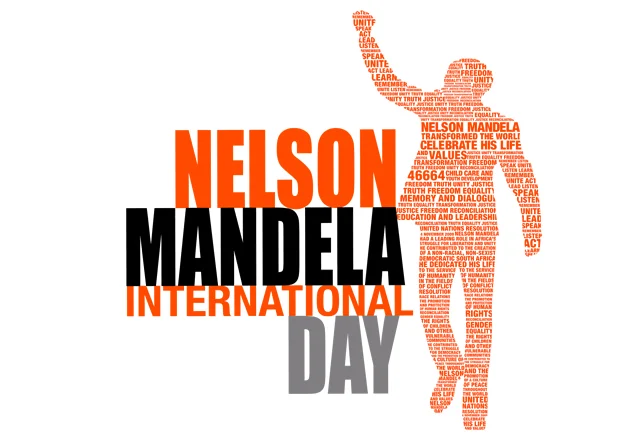
As Nelson Mandela International Day approaches, thousands of people across the country roll up their sleeves to paint classrooms, serve meals, collect blankets, read to children, clean neighbourhoods or simply spend time with those who need companionship. While these acts may seem small, together they represent one of South Africa’s greatest traditions of ubuntu.

Many people know about the tradition of dedicating 67 minutes to community service, but fewer know the story behind it. The 67 minutes symbolise the 67 years Nelson Mandela devoted to public service and the fight for human rights, beginning with his involvement in the struggle for justice in 1942. Throughout those decades, Mandela served as a human rights lawyer, anti-apartheid activist, political prisoner, peacemaker and, ultimately, South Africa’s first democratically elected President. His life’s work inspired people across the world to pursue freedom, equality and reconciliation.

In recognition of this extraordinary contribution, the United Nations General Assembly officially declared 18 July as Nelson Mandela International Day in November 2009. Rather than celebrating Mandela himself, the day calls on ordinary people everywhere to continue his work by serving others and creating positive change in their own communities.

If you’re looking for somewhere to volunteer this Mandela Day, consider supporting one of these organisations making a difference in Nelson Mandela Bay:

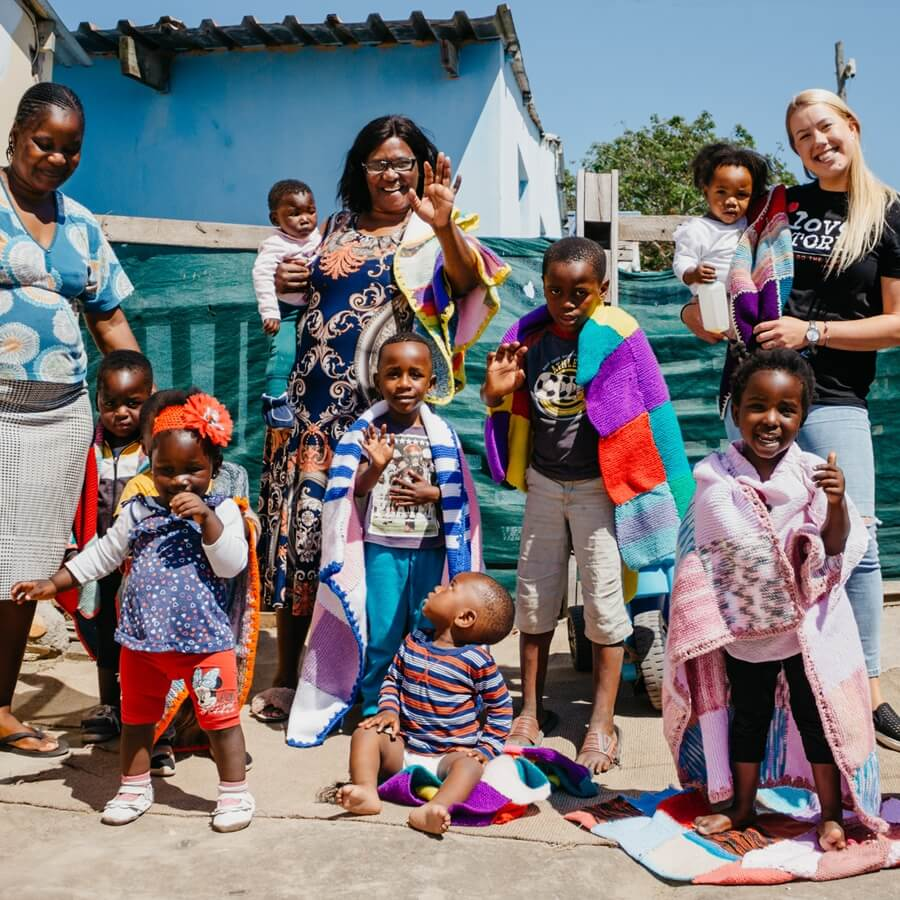
  • Love Story – Provides meals, shelter support and outreach programmes for vulnerable people in Gqeberha. Love Story is a charity aimed at meeting needs and showing love to communities in and around Port Elizabeth, South Africa. The organization is based on 2 Glen Street, Richmond Hill, Port Elizabeth.
  • Animal Welfare Society Port Elizabeth – Founded in 1971 as a result of the difficulty that the municipality in Port Elizabeth was experiencing in coping adequately with the number of stray animals and cruelty cases in the city, the Animal Welfare Society Port Elizabeth (AWS PE) is an open shelter which offers a safe place for unwanted, lost or abandoned animals.  Care for rescued animals in Victoria Drive, Walmer by walking dogs, cleaning facilities or donating food and supplies.
  • Missionvale Care Centre – is a non-profit organisation on 1 Tromp Road, Missionvale, serving the Missionvale community in Gqeberha by addressing poverty through education, healthcare, skills development, youth empowerment and community support. Its programmes focus on helping individuals and families become self-reliant while improving their overall health, wellbeing and quality of life.
  • Zanethemba Charity Foundation – is situated at 21 Albert Road, Walmer and provides temporary safe care for babies and young children (newborn to six years old) who have been abandoned, neglected, abused or orphaned. Working alongside social workers and the Department of Social Development, the organisation offers a safe, nurturing environment while permanent care arrangements are made.

Before visiting, contact the organisation beforehand to find out what assistance is most needed and whether they have specific Mandela Day activities planned.

While Mandela Day shines a spotlight on service every July, Madiba’s legacy was never intended to be limited to a single day. His life reminds us that lasting change is built through consistent acts of kindness, courage and responsibility. The 67 minutes are simply a starting point—a reminder that each of us has the power to make our communities a little stronger than they were yesterday.

This Mandela Day, whether you’re in Central, Motherwell, New Brighton, KwaZakhele, Bethelsdorp, Gqeberha’s northern areas, Kariega, Despatch or elsewhere across the Eastern Cape, take the opportunity to give back.

NICSA Submits International Humanitarian Appeal Urging Fair and Dignified Treatment for 95-Year-Old Peace Leader Lee Man-Hee

An international humanitarian appeal submitted by the National Interfaith Council of South Africa (NICSA) has been submitted to the Judiciary of the Republic of Korea, calling for careful consideration of the age, health, and due process rights of Chairman Lee Man-Hee, the 95-year-old founder of Shincheonji Church of Jesus and representative of Heavenly Culture, World Peace, Restoration of Light (HWPL), amid ongoing legal proceedings.

The petition expresses full respect for the independence of the Korean judiciary while urging that humanitarian principles remain central to the proceedings. It asks the Court to ensure that Chairman Lee can participate meaningfully in his defense and that any measures taken reflect his advanced age, reported need for medical care, and longstanding public identity.

Chairman Lee was taken into custody in June 2026 in connection with allegations that Shincheonji members were mobilized to join the People Power Party between 2021 and 2024. Media reports state that the court cited concerns over possible evidence destruction when issuing the arrest warrant, while Shincheonji has denied wrongdoing and stated that Lee and the church representatives cooperated with investigators throughout the process.

The humanitarian concern has gained wider international attention because the case involves non-violent allegations and an elderly religious figure whose health may be placed at risk by prolonged detention. Religious freedom observers and scholars have raised questions about proportionality, particularly where pre-trial detention affects a person of advanced age and where less restrictive alternatives may still protect the integrity of legal proceedings.

Beyond the courtroom, the petition highlights Lee’s role in international peacebuilding through HWPL, an international peace NGO registered in the Republic of Korea and associated with the United Nations Department of Global Communications, with Special Consultative Status at the United Nations Economic and Social Council. HWPL’s work includes peace education, interfaith dialogue, youth engagement, and advocacy for a culture of peace across national, cultural, and religious boundaries.

A central example cited in the petition is the civilian-led peace initiative in Mindanao, Philippines. In January 2014, HWPL facilitated a peace agreement involving Catholic and Islamic representatives in a region affected by decades of conflict. The initiative helped inspire continuing commemorations such as HWPL Peace Day and remains a symbolic example of interfaith cooperation, civic peacebuilding, and reconciliation.

The appeal does not ask the Court to disregard the law or evidence. Instead, it calls for a balanced approach: one that protects the integrity of the judicial process while also safeguarding human dignity, health, and the right to a full and effective defense.

This petition respects the authority and independence of the Korean judiciary. At the same time, it appeals for humanitarian consideration so that age, health, dignity, and due process are fully protected while the legal process continues.

Detention of a 95-Year-Old Religious Leader Damages Korea’s Reputation: European Scholars of Religion Call for the Release of Chairman Lee Man-hee

Concerns Raised at European Academy of Religion’s International Conference Held in Rome—Strong Appeals Over Violation of International Law

European scholars of religion are making strong appeals to the South Korean government to release Lee Man-hee, the 95-year-old Chairman of Shincheonji Church, who remains in detention.

Religious scholars signing an appeal requesting an end to Chairman Lee’s detention

Chairman Lee was detained on 24 June on charges including violations of the Political Parties Act and was indicted on 29 June. The Joint Police–Prosecution Investigation Headquarters alleges that, between July 2021 and January 2024, he directed the mass registration of approximately 50,000 church members into a particular political party.

In response, Shincheonji Church stated that individual members freely participated in political activities and that both Chairman Lee and the church have faithfully cooperated throughout the entire investigation process, including the searches and seizures. The church also expressed deep regret, stating that detaining Chairman Lee, an elderly man aged 95, amounts in effect to a form of physical punishment.

Dr. Introvigne as a speaker at the European Academy of Religion’s international conference held on 3 July

The European Academy of Religion (EuARe), a non-profit academic network connecting scholars and institutions of religious studies across Europe, held its Ninth Annual Conference in Rome, Italy, on 3 July, where the circumstances surrounding Shincheonji Church were addressed. During the session titled “Shincheonji, a Korean New Religion in Global Context,” European scholars of religion presented their respective academic papers on Shincheonji Church. The recent situation in South Korea, including the detention of Chairman Lee, was also shared with participants.

At the conference, Dr. Massimo Introvigne, a sociologist of religion and the Founder and Managing Director of the Center for Studies on New Religions (CESNUR), commented on the detention of Chairman Lee as follows:

Dr. Massimo Introvigne, the Founder and Managing Director of CESNUR

“In all European Union countries, legislation mandates that, those older than 80, only exceptionally, should be put in jail; they should be under house arrest if needed, and only for violent crimes, if there is a risk of actual violence connected with blood crimes. Here, of course, there are no blood crimes, and the accusations are violations of electoral law.”

“And what Korea is doing to this elderly religious leader is in violation of international law, including the United Nations’ so-called Mandela Rules, which mandate that preliminary detention should be, in general, not the rule, and only in an extremely limited number of exceptional cases may be applied to elderly prisoners. So what is happening is an unmitigated scandal, which hides a political and religious vendetta.”

Eric Roux, an interfaith advocate and President of the European Interreligious Forum for Religious Freedom (EIFRF), who also participated in the session, reiterated the injustice of detaining an elderly person.

Eric Roux, President of EIFRF

“A man of 95 years old being put in jail is not something that you can reconcile with the objective of respecting human dignity. Even if what you pretend he has done is true, you would not put a man of this age in prison as is the case now. So I would suggest that this be reviewed very fast to avoid something that would be very detrimental to the reputation of South Korea, which is please, get that man out of jail and do it now.”

Human rights lawyer Alessandro Amicarelli expressed concern, citing South Korea’s democratic tradition. He is a solicitor of the Senior Courts of England and Wales, a barrister in Italy, and Chairman of the European Federation for Freedom of Belief (FOB).

Alessandro Amicarelli, Chairman of FOB

“As a human rights lawyer, I always considered South Korea a true democracy where human rights are upheld like a foundation of the democracy. Unfortunately, what’s happening now is truly shocking. … We cannot accept that a religious leader in a democratic country, at the age of 95, has to be under this kind of pressure.”

“What we’re seeing right now, … it looks like South Korea is departing from its own Constitution, its own human rights foundation. For this reason, I’m very happy to support Shincheonji in your fight against abuse and persecution in South Korea and anywhere in the world.”

Shincheonji Church emphasized that the detention of Chairman Lee has gone beyond academic interest and is now being raised as an international human rights issue.

The international human rights organizations United for Human Rights and Coordination des Associations et des Particuliers pour la Liberté de Conscience (CAP-LC; Coordination of Associations and Individuals for Freedom of Conscience) submitted a joint written statement on the human rights issues faced by Shincheonji Church to the 62nd session of the United Nations Human Rights Council (UNHRC) on 25 May (Document No. A/HRC/62/NGO/236; circulated on 10 June). In the statement, the two organizations assessed that “the situation has intensified” in South Korea and noted that framing members’ registration with a political party as evidence of “religion–politics collusion” is inconsistent with the International Covenant on Civil and Political Rights (ICCPR), which guarantees every citizen the right to participate in political life.

The two organizations further stated: “In December 2025, the President ordered the creation of a joint police–prosecutor task force explicitly targeting Shincheonji… Senior officials have publicly referred to Shincheonji as a ‘criminal organization,’ statements incompatible with the presumption of innocence.” They also added, “We [urge] the Government of the Republic of Korea to reaffirm its commitment to freedom of religion, non-discrimination, and state neutrality.”

Shincheonji Church noted that “As support and petitions from prominent figures in the international community continue to grow regarding the detention of Chairman Lee Man-hee, pressure on the South Korean government and the judiciary is also mounting.” It further said, “The prompt release of Chairman Lee is a matter of safeguarding freedom of religion and human rights, which are core values of democracy.”

Detained at 95: South Korea’s Prosecution of a Religious Leader Draws International Alarm

SEOUL, South Korea — International criticism is mounting over the detention and prosecution of Chairman Lee Man-hee, the 95-year-old leader of Shincheonji Church of Jesus, and over recent public remarks by South Korea’s Minister of Justice, Jeong Seong-ho.

On June 30, Minister Jeong announced on his social media account that Chairman Lee had been indicted while in detention, writing that “strict criminal punishment corresponding to its responsibility is inevitable.” He closed the post by quoting Matthew 7:15: “Beware of false prophets.” Shincheonji Church of Jesus is a Christian denomination founded in South Korea in 1984.

Chairman Lee Man-hee, 95, was taken into custody on June 24 on political party charges involving no violence — drawing sharp condemnation from international religious freedom organizations.

Dr. Massimo Introvigne, an Italian sociologist of religion, has published two articles in the religious-freedom and human-rights outlet Bitter Winter addressing this situation: the first on June 24, 2026, criticizing the detention of Chairman Lee at the time of his arrest; and a second on July 2, 2026, raising detailed criticism of Minister Jeong’s public remarks.

Chairman Lee was taken into custody on June 24 on charges including violation of the Political Parties Act, and was formally indicted while still in detention on June 30. Investigators allege that between July 2021 and January 2024, Lee organized the enrollment of roughly 50,000 Shincheonji members into the People Power Party (PPP) in an effort to influence the party’s presidential and parliamentary primaries.

Dr. Introvigne argued that placing an elderly religious leader in detention over a case that does not involve violence or other serious crimes falls short of the proportionality standards required under the UN Standard Minimum Rules for the Treatment of Prisoners (the “Mandela Rules”) and the principles articulated by the UN Working Group on Arbitrary Detention.

Sociologist Dr. Massimo Introvigne, writing in Bitter Winter, described the situation as
“a stain on South Korea’s democratic credentials.”

He linked the case to that of Han Hak-ja, the 83-year-old leader of the Unification Church (the Family Federation for World Peace and Unification), who was being held in a separate case, warning that “this is not an issue confined to a single religious group — a pattern is emerging in which physical detention is repeatedly used against elderly religious leaders.”

Immediately after the detention, Shincheonji Church of Jesus responded that “Chairman Lee and the church have fully cooperated with every stage of the investigation, including the search and seizure operations,” calling the detention “in effect a physical punishment imposed on a 95-year-old suspect.”

What Dr. Introvigne found particularly troubling was the timing of Minister Jeong’s statement. Jeong made his public call for “strict criminal punishment” on the very day Chairman Lee was formally indicted while in detention. Introvigne noted that when the official who oversees the justice and prosecution system publicly declares the need for punishment just as a case is beginning, it risks being seen as prejudging the outcome.

Dr. Introvigne also pointed out that a public official’s use of a Bible verse that could cast the defendant in a negative light may conflict with the state’s principle of religious neutrality. Because a sitting Minister of Justice’s public statements are likely to be read as more than personal opinion — effectively as the government’s official position — he argued that such remarks warrant far greater caution.

The legal question at the heart of the case is not that members joined a political party, but whether they were coerced into doing so. Prosecutors say the evidence points to an organized, forced-enrollment campaign, while Shincheonji Church of Jesus maintains that members were not compelled by force or directive.

Dr. Introvigne predicted that the trial will hinge on what evidence and legal reasoning are used to prove coercion. He argued that “these charges risk criminalizing ordinary civic participation simply because the individuals belong to a religious minority,” adding that “Shincheonji members, like any other South Korean citizens, have the right to join a political party and support a candidate.”

Dr. Introvigne said the case is being closely watched in international religious-freedom circles not simply as a question of guilt or innocence for one religious group, but as a test of “whether a democratic state applies the same standards of rule of law and human rights to religious groups that are controversial or classified as minorities.”

If statements by senior government officials appear to influence judicial independence, a defendant’s right to a defense, or the political freedom of believers, the damage extends beyond the fairness of a single case — it can undermine confidence in the state’s commitment to the rule of law and human rights. A genuine democracy, he said, must guarantee the same procedures and rights to minority groups as to everyone else.

Dr. Introvigne described the situation as “a stain on South Korea’s democratic credentials” and said it is “a matter the world should pay attention to.”

HWPL Hosts Forum for ‘Creating a Culture of Peace in Schools’ in Southern Africa

HWPL, an international peace organization, held an online ‘School Leaders Forum’ on June 6 with education experts from Southern Africa to establish a culture of peace within schools. This forum was organized to provide a platform for field experts to gather and derive sustainable action plans.

First, event participants watched a past presentation video of Uzair Rossier, a student from Bonteheuwel High School in Cape Town, an area where violence and shootings are frequent. In the video, Rossier shared his experience of losing a friend to a past shooting and said, “Through HWPL peace education, I realized the value of myself and others, and my perspective on my surroundings has changed. I hope that through a culture of peace within the school, violence and drugs will disappear,” garnering significant empathy from the participants.

Next, a case study on establishing a culture of peace at Morifi Community High School was introduced. This presentation drew attention by presenting an excellent precedent: moving away from a fragmented approach that relies on a few teachers, the positive changes in students become more certain when all school members share and regularly practice peace education.


The case presentation by Fazlin Kola, the Vice Principal of Zinniaville Secondary School, showed how the school took its first steps with a peace club. She expressed her determination stating that, “The biggest change since the introduction of peace education is the strong bond between teachers and students. As teachers have come to deeply understand students’ family environments, difficulties, and interests, student guidance and problem-solving within the school have become much easier. Furthermore, students’ enthusiasm for participation and their confidence have noticeably increased, and it is greatly contributing to the prevention of bullying and school violence. Based on these positive changes, we will expand participation so that more teachers can join us in the future.”


HWPL presented ‘principal leadership’ and ‘consistent messages from teachers’ as the key elements for creating a culture of peace in schools. The organization announced that it will continue to provide multifaceted support through the ‘Principal-led PET (Peace Education Training)’ course, which helps independent educational operations, and an upcoming ‘Advanced Programme’ in July. An HWPL official stated, “In the second half of the year, we will continue to host regular exchange platforms to share the actual growth stories of each school.”