Youth Seek Solutions to Violence through ‘Youth Dialogue’ at the University of Johannesburg

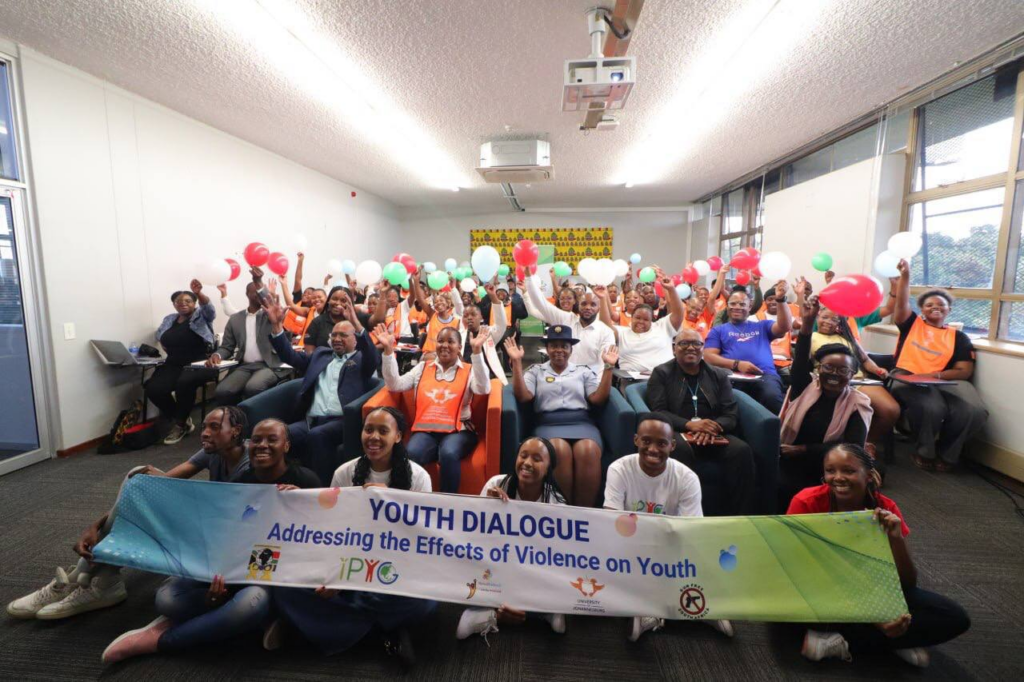
[Johannesburg, April 10, 2026] – The ‘Youth Dialogue,’ hosted by the International Youth Peace Group (IPYG), was held on April 10 at the Wole Soyinka Auditorium, Auckland Park (APB Campus), University of Johannesburg. The International Youth Peace Group (IPYG), an affiliated youth organization of HWPL (Heavenly Culture, World Peace, Restoration of Light), is an international NGO that promotes peacebuilding and conflict prevention initiatives led by youth worldwide.

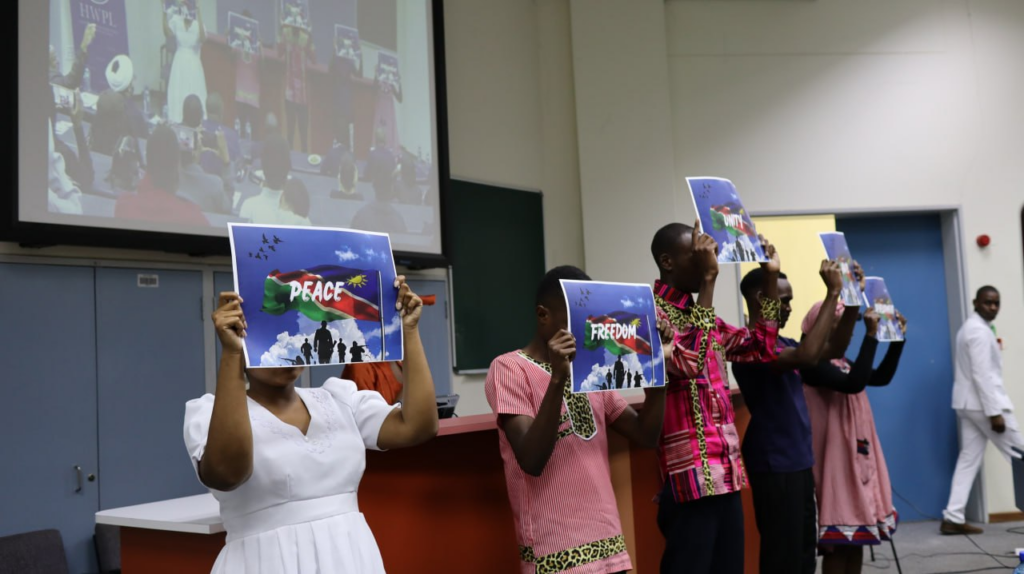
The event was organized in collaboration with Gun Free SA (GFSA), the South African Youth Council (SAYC), and the Ahmed Kathrada Foundation, and was attended by approximately 150 young people. It aimed to provide a platform for youth to recognize the violence they face and take the lead in developing practical solutions for peacebuilding.

The event was held against the backdrop of severe levels of violence in South Africa and the growing need to highlight the role of youth in addressing these challenges. In particular, gender-based violence (GBV) has reached a national crisis level, and 56% of those accused of firearm-related murder are youth between the ages of 12 and 24.

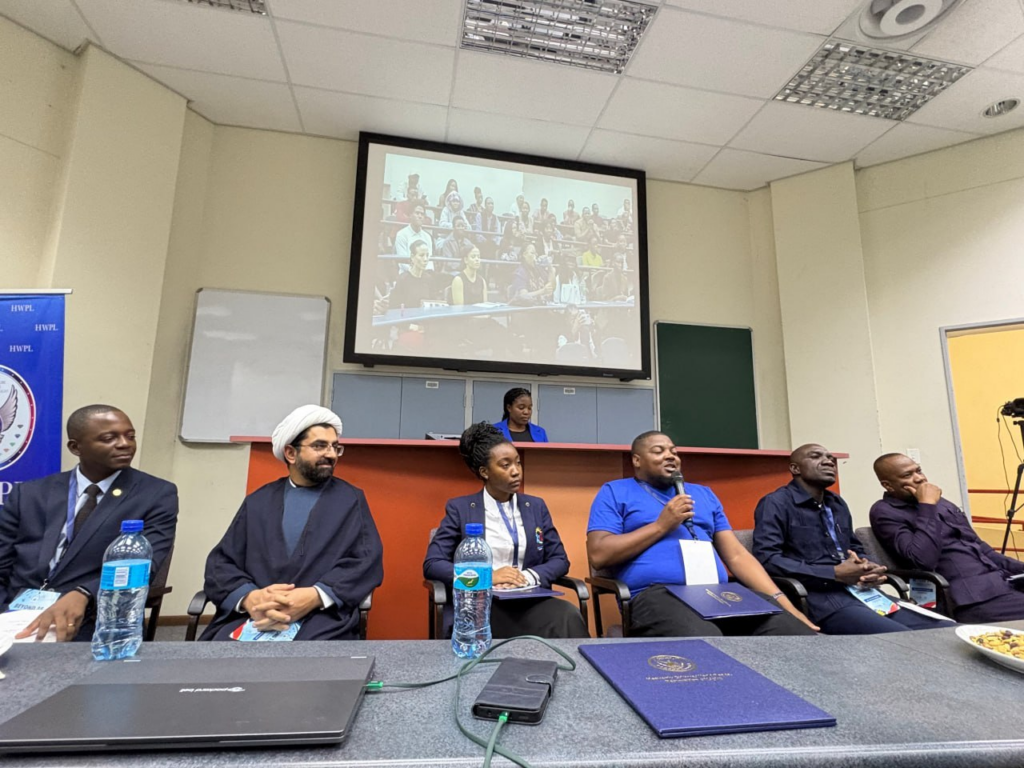
During the dialogue, Dr Sunshine Myende, Chairperson of the Board (National Youth Development Agency – NYDA) mentioned in her speech, “In many of our communities, violence does not begin with an incident, it begins with conditions. It begins with environments where inequality is deeply entrenched and opportunities are limited.”

Chairperson Honourable Bandile Masuku (Gauteng Provincial Legislature) explained, “One of the issues that needs to be addressed is how we can participate in policy formulation and develop intervention methods or programmes to deal with youth violence.” Furthermore, Constable Audrey Buthelezi (South African Police Service – SAPS) stated, “I’m pleading with you to take what that has been shared today and implement it in your communities. Don’t be afraid. You are the future; you are the present. Stand up! We will stand up and rally behind you.”

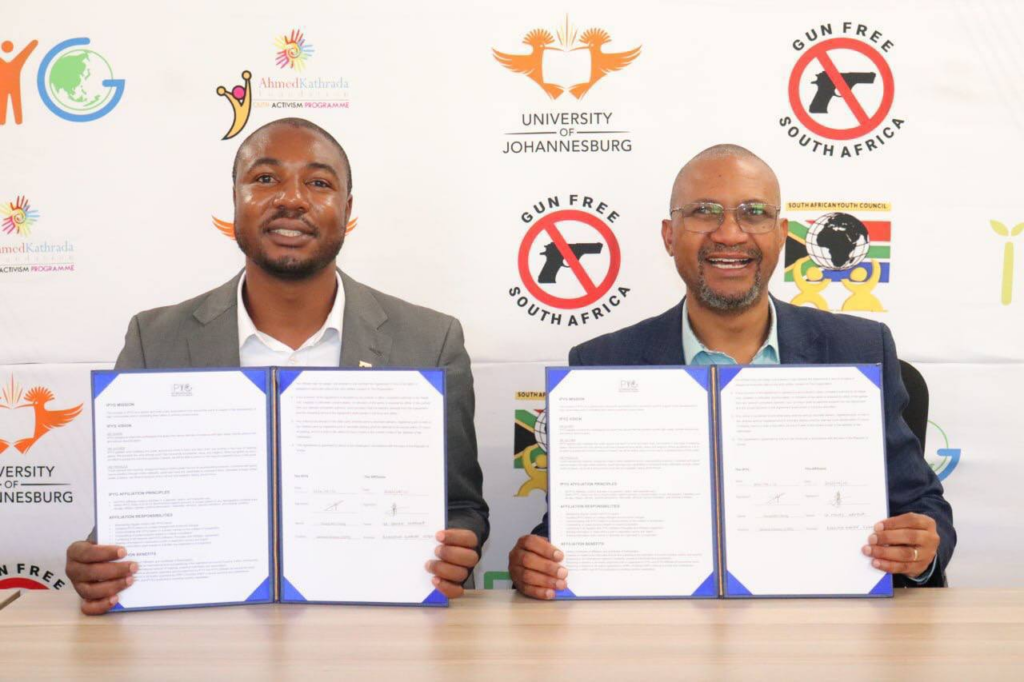
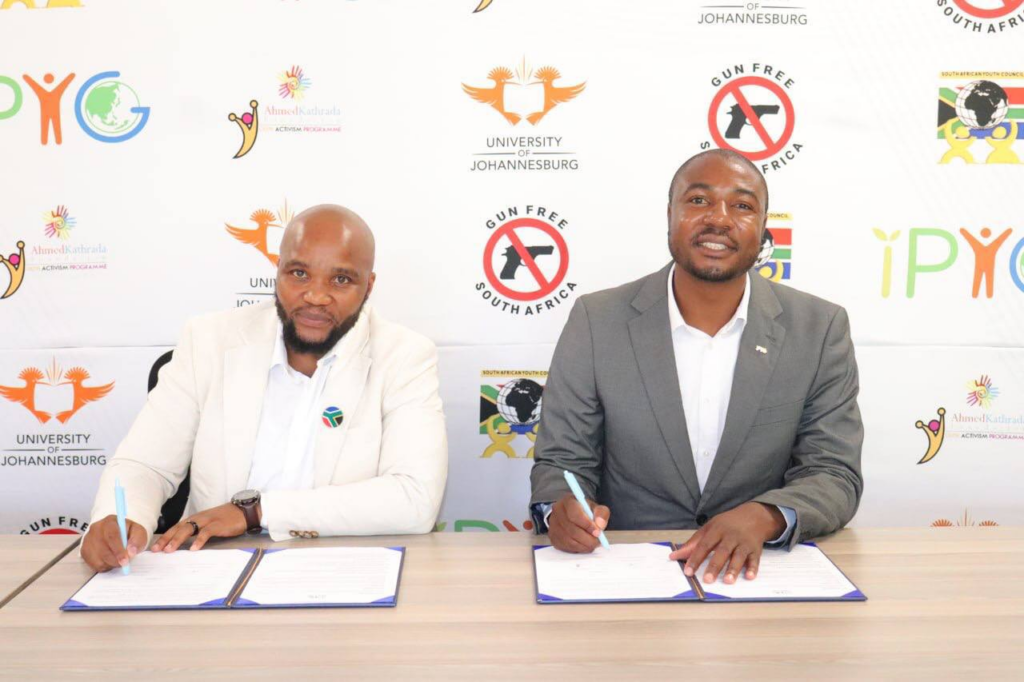
Dr Stanley Maphosa, Executive Director of Gun Free SA (GFSA), who signed a Memorandum of Understanding (MOU) with IPYG on the day, stated, “Young people are the majority in the country, and their voices are very critical. In spaces like this, such as youth dialogues, youth parliaments, and universities, IPYG is able to mobilise young people within peace discussions and encourage them to say, ‘Let us, as young people, say no to violence,’ and adopt strategies to keep our communities safe.”

Gun Free SA (GFSA) signed Memorandum of Understanding with the International Peace Youth Group (IPYG)

Mr Mosuli Cwele, General Secretary of the South African Youth Council (SAYC), who signed an affiliation with IPYG, stated in the closing address, “We are quite happy that young people have participated in this event. Our goal is to see young people involved. In everything that we say and do, we want young people to be at the forefront as a nation. Your (the youth) involvement, to us (SAYC), speaks volumes.” Furthermore, he added, “The SAYC and all partners involved will ensure that the discussions held here translate into practical solutions.”

South African Youth Council (SAYC) signs an affiliation with the International Peace Youth Group (IPYG)

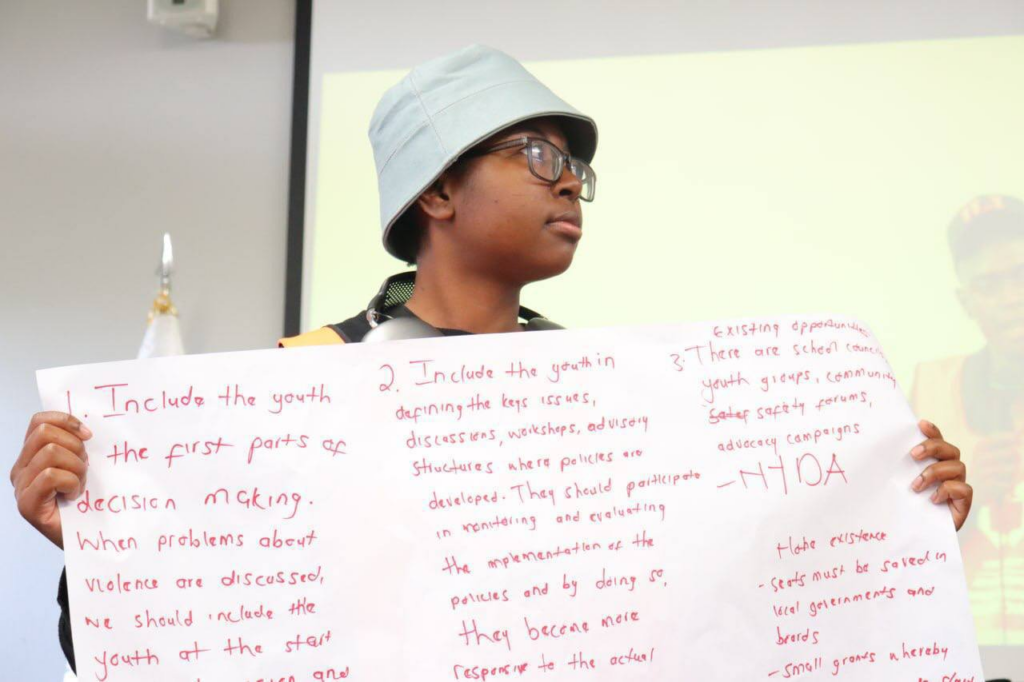
Participants focused on identifying the root causes of violence, including unemployment, poverty, and lack of access to education, while developing practical prevention strategies applicable to their communities. In particular, many youth committed to participating in the Youth Empowerment Peace Class (YEPC) and continuing their engagement through the Youth Engagement & Peacebuilding Working Group (YEPW) to translate dialogue into tangible action.

Youth participant presents potential practical solutions for the youth to implement

A youth participant shared, “Through this ‘Youth Dialogue, I came to realize that youth are key actors in preventing violence, and it was meaningful to build social solidarity and empathy by sharing our experiences. I hope to continue contributing to real change within my community.” An IPYG official also stated, “We plan to implement follow-up programs to ensure that the outcomes of this dialogue, driven by the active participation and collaboration of youth, lead to meaningful action within local communities.”

Youth Peace Dialogue Held at NUST to Commemorate Namibia’s 36th Independence Anniversary

[WINDHOEK – March 28, 2026] – On March 28, the “Beyond 35: 2026 Youth Dialogue for Peace and a Prosperous Future” was held at the Namibia University of Science and Technology (NUST) auditorium. The Dialogue was organized to commemorate the 36th anniversary of Namibia’s independence and to discuss the vital role of youth in the nation’s development.

The Dialogue was co-hosted by Heavenly Culture, World Peace, Restoration of Light (HWPL)—an international peace NGO under the UN Economic and Social Council (ECOSOC)—its youth affiliate, the International Youth Peace Group (IPYG), and the Namibia branch of the Rob Youth Foundation (RYF). The gathering brought together approximately 100 participants, including government officials and youth leaders.

In a keynote speech delivered by Mr. Boyson Ngondo, Deputy Director for National Heritage and Culture Programmes, on behalf of Hon. Dino Ballotti, Deputy Minister of Education, Innovation, Youth, Sport, Arts, and Culture, the Deputy Minister highlighted the role of youth as innovators despite ongoing challenges such as a 40% youth unemployment rate and the digital divide. “Peace is not merely the absence of conflict, but an environment where youth are guaranteed quality education, meaningful employment, and a platform to make their voices heard,” the Deputy Minister stated. He further emphasized that the youth, who make up over 60% of Namibia’s population, are the “heartbeat of our society” and the “architects of peace,” underscoring the critical importance of youth empowerment.

In addition, Mr. Muesee Kazapua, International Relations and Stakeholder Engagements Officer of the National Youth Council (NYC), participated as a panelist. Mr. Kazapua detailed how the NYC is supporting access to developmental opportunities for young people and shaping a prosperous future for social development beyond the 35th anniversary. He also provided guidance on the requirements for youth organizations wishing to affiliate with the NYC.

During the panel discussions and dialogue sessions, representatives from government ministries, youth organizations, and the educational and religious sectors shared their perspectives. Participants specifically discussed the necessity of establishing official platforms to reflect youth voices in the national development process and reviewed collaborative strategies to realize these goals.

The event concluded with the “Youth Pledge for Nation Building,” where participants committed to contributing to peace and social progress. An official from HWPL remarked, “This dialogue served as a momentum for Namibian youth to unite for the realization of peace. We plan to continue supporting youth-led peace activities through ongoing collaboration with local organizations.”

New Heaven New Earth Church Commemorates 42 Years of Transforming Nations through the Word and Service

On 14 March 2026, the New Heaven New Earth Church of Jesus marked a historic milestone, celebrating 42 years of unwavering dedication to global evangelism, humanitarian service, and transformative Bible education. Since its founding in South Korea in 1984, the church has evolved from a small gathering of believers into an international movement, now spanning over 100 countries including South Africa, Namibia, Malawi, Botswana, Mozambique, and Zimbabwe.

The core of this four-decade journey is a commitment the church made to fulfilling the will of God by providing believers with an in-depth understanding of the Bible’s prophecies and their fulfillment. This drew thousands of pastors and faith leaders from diverse denominational backgrounds seeking to guide their congregations with truth and clarity.

In Southern Africa, the church has successfully bridged cultural and religious divides by establishing deep-rooted connections with local religious communities through hosting extensive Bible seminars and interfaith dialogues platforms for unity and spiritual revival. Many of these leaders have publicly testified that the church’s teachings have deepened their faith and equipped them to guide their congregations with renewed conviction, allowing them to lead their local flocks with a newfound sense of purpose and biblical accuracy.

“The teachings provided answers to questions I had been wrestling with for a long time, and I found a sense of purpose and understanding that I hadn’t experienced elsewhere,” said Pastor Wilka Tuuenikelao Nahenda Shatiwa from Southern Africa. “The logical approach to interpreting scripture made me want to explore further.”

This anniversary serves as a testament to the church’s enduring mission to spread the gospel and provide a systematic understanding of the Christian scriptures to hundreds of thousands of people worldwide.

New Heaven New Earth Church of Jesus Head Pastor and Chairman: Speaking on Prophecies of Revelation


Beyond the pulpit, thousands of volunteers have mobilised to address critical societal challenges through large-scale blood donation drives to support struggling healthcare systems, disaster relief efforts in the wake of environmental crises, consistent food distribution programs conducted in partnership with local organisations, and environmental restoration projects, including large-scale clean-ups and tree-planting campaigns.

As the church enters its 43rd year, its influence continues to expand through stewardship that encompasses both the spiritual and physical, demonstrating the love of God and Jesus Christ. Through Bible seminars, interfaith dialogues, and educational programs, the church has united pastors, scholars, and believers in the pursuit of biblical truth and righteousness.

What Path Should Humanity Take?

– 10th Anniversary of the Declaration of Peace and Cessation of War (DPCW): From War to Peace –

War remains a reality of international politics. Conflicts and armed clashes continue to erupt, and despite the existence of international law, war has not disappeared. How long must humanity continue to endure this cycle? If conflict is inevitable, must war also be the way we resolve it? The Declaration of Peace and Cessation of War (DPCW), proclaimed on 14 March 2016, was presented as a proposal in response to these questions.

HWPL and the DPCW

The DPCW is not a document born from abstract ideals. Heavenly Culture, World Peace, Restoration of Light (HWPL), the organization that proclaimed it, is an international peace NGO established to protect lives lost in war and to build a sustainable peace order.

The background of its founding lies in the wartime experience of HWPL Chairman Man-hee Lee. As a student soldier during the Korean War, he experienced firsthand the devastation of war. The conviction that the cycle repeatedly sending young people to war must end with this generation later inspired international peace initiatives. The September 18th HWPL World Peace Summit, held in Seoul on 18 September 2014, became an important turning point. At the event, attended by a total of 1,933 participants from 152 countries, participants shared a consensus that international standards are needed not only to respond to conflicts after they occur, but also to prevent them and institutionalize cooperation.

To translate this vision into concrete form, HWPL launched the HWPL International Law Peace Committee (ILPC) in 2015, composed of international law experts from around the world. Through legal review and consultation, the committee completed drafting the DPCW, consisting of 10 articles and 38 clauses, which was officially proclaimed on 14 March 2016.

The Standards Proposed by the DPCW

The DPCW sets out standards on the use of force and procedures for the peaceful resolution of disputes. It also reinforces the principles of international cooperation and collective security, while incorporating the roles of religion and civil society within the institutional framework.

This document does not deny the existing international legal order. Rather, it focuses on clarifying already agreed-upon principles and structuring them so that they can operate effectively in practice. It is meaningful in that it represents an attempt to move beyond an order that presupposes war as a means of resolving conflict. The question raised by the DPCW is simple: even if conflicts exist, must they necessarily result in war?

Expansion of International Support

Since its proclamation, the DPCW has gained support from international organizations and national parliaments. Regional parliamentary bodies—including the Pan-African Parliament (PAP), the Central American Parliament (PARLACEN), and the Latin American and Caribbean Parliament (Parlatino)—have adopted resolutions endorsing the initiative, while about 900,000 endorsements have been collected from citizens in 178 countries.

This demonstrates that norm diffusion is taking place not only through state diplomacy but also through civil society. Yet reality remains complex. International conflicts persist, and power politics remains entrenched. The transformation envisioned by the DPCW is still unfolding.

Beyond the Era of War: Leaving Peace as a Legacy for Future Generations

For a long time, humanity has ended conflicts through war whenever they occurred. The pattern of determining order through superiority of power has been repeated.

The issue raised by the DPCW is structural. Even if conflicts do not disappear, the way they are addressed can change. The question is whether it is possible to build an order that manages conflicts within standards and procedures, cooperation and institutions, rather than through armed clashes.

The past decade has been a period of raising this question to the international community and accumulating institutional and social foundations. The task ahead is to ensure that these standards operate within the actual international order.

What Path Should Humanity Take?

Not toward a path where war remains a means of addressing conflict, but one that seeks to structure and institutionalize peace.

Conflicts may be unavoidable. However, whether they are allowed to escalate into war or addressed through a different standard ultimately depends on humanity’s choice. The DPCW represents an effort to give this transition a concrete institutional framework. The discussions and global expansion over the past decade have demonstrated that such a vision is possible. One question remains: Will these standards take root in the international order, or remain yet another declaration?

HWPL Holds Peace Education Teacher Graduation Ceremony’ with Lesotho DPE

Maseru, Lesotho – Heavenly Culture, World Peace, Restoration of Light (HWPL), an international peace NGO, successfully held the ‘DPE-HWPL Peace Education Teacher Graduation Ceremony’ in Maseru, Lesotho, on March 13. This event was jointly conducted with the Development for Peace Education (DPE), a civil society organization specializing in peace education within Lesotho.

The ceremony was attended by 51 teachers who successfully completed the peace education course, along with high-ranking officials from the Ministry of Education and Training (MOET) of Lesotho, education figures, and community leaders, totalling about 74 participants. In particular, this event served as an important platform for collaboration where government agencies, the international community, and local civil society united to integrate peace values into the national education system.

Mr. Tsepo Valentine Ntutu Mosoeu (Coordinator of DPE) stated, “The partnership with HWPL has brought new hope to the educational field in Lesotho. Beyond simple knowledge transfer, we are first transforming teachers so that students can grow into ‘peace citizens’ who resolve conflicts through dialogue and respect each other. This graduation ceremony is the beginning of that change.”

Honorable Ntoi Rapapa (Leader of the Alliance of Democrats and Minister of Education) emphasized, “Social conflicts and violence cannot be resolved solely through institutional changes; people’s values must change. If we do not teach peace to children, someone else will teach them violence, which is why the role of teachers in the field is more important than anything else. I hope that this education will be fully implemented within the public education system so that all children in Lesotho can grow up learning peace, and I will actively support this.”

Mrs. Puleng Nkaleche (Principal of Ribaneng High School) shared her thoughts, saying, “Having experienced the tragic pain of losing children in the past, I felt the desperate need for peace more deeply than anyone else. The peace education introduced after establishing a relationship with HWPL following the September 18 event in 2023 has become a light of healing and hope for our school and children. Now, our teachers will become messengers of peace and teach so that tears are never repeated on this land.”

Starting with this graduation ceremony, HWPL and DPE plan to expand the scope of peace education throughout Lesotho and regularize the teacher training process. The teachers who received certificates will play a key role in instilling peace values in students at all levels of schools, contributing to the establishment of sustainable peace and social harmony in Lesotho.

Klapmuts Community Celebrates Evolving Identity with Unveiling of New Town Signboard

KLAPMUTS, SOUTH AFRICA – Residents and community leaders gathered at the Klapmuts Multipurpose Hall on Saturday, 7 March 2026, to witness a landmark moment in the town’s history: the official unveiling of a new signboard that recognises the growing identity and shared heritage of the area.

The ceremony, which commenced at 10h30, served as both a celebration of recent progress and a reflection on the collaborative journey that led to this physical milestone. Located between Paarl and Stellenbosch, Klapmuts has seen a significant shift in its social landscape over recent years, increasingly becoming known as a “Shincheonji Town” through a deep-rooted partnership with the Shincheonji (New Heaven New Earth) Church of Jesus.

Community members gather around the newly unveiled Klapmuts town

The new signboard is the culmination of three years of community-led initiatives. From community welfare and volunteer service projects, to grassroots development initiatives, relief and outreach programmes, to pastoral leadership workshops, the journey defined by one goal; strengthening local relationships through unity and service.

During the course of the day, local leaders and long-term residents shared what this evolution means for the people of Klapmuts. Apostle Junette Engelbrecht, the leader of Church of Christ, commended the New Heaven New Earth Church’s intention and consistency that sparked this transformation, and highlighted the tangible impact on the town’s youth.

“I have seen that it is very good for the church to be here because they are helping the community,” she said. “It is very important for a church to understand the heart of the community and to support it. Currently many young people are struggling with drugs and gang involvement, and this kind of support is very much needed here for our youth.”

Klapmuts residents join together at the Multipurpose Hall to celebrate

The narrative of the town’s shift was further echoed by Daniel Jacobs, a resident of 60 years who has witnessed the area’s many phases. For Jacobs, the signboard represents more than a geographic marker; it represents a spiritual and social homecoming.

“Klapmuts is my heart. It is a part of me,” Jacobs said. “New Heaven New Earth Church came to unite us. United we stand, divided we fall. If the vision is to bring unity, then I will stand behind it. It is enriching to realise that I am also part of this spiritual journey.”

The event reached its climax with the official unveiling of the signboard. Addressing attendees, Ward Councillor, Alderman JC Anthony said, “With a tear in my eye, it is a heartfelt pleasure to do business with you. I, therefore, declare that Klapmuts is a new town. A Shincheonji town. A town of hope, a town of opportunity, and a town that will embrace you forever.”

Ward Councillor, Alderman JC Anthony, delivers a speech to address the attendees

Now standing as a permanent landmark, the sign serves as a symbol of the community’s resilience and its commitment to a strengthened, unified Klapmuts.

New South African Indoor Tug-of-War Team Officially Capped After More Than A Decade

The South African Tug-of-War Federation’s Indoor Tug-of-War Team, the President’s Team, was officially capped on Saturday, 21 February 2026, at a ceremony held in Cape Town.

The capping ceremony formally recognised the pullers selected while also acknowledging the collective efforts of coaches, partners, and communities who have contributed to rebuilding the indoor code in South Africa.

The President’s Tug of War Team who will represent South Africa

Speaking at the ceremony, Federation President Luther Anton Botha described the occasion as a significant milestone in the restoration of indoor tug-of-war in the country, “This is how our national team should truly represent South Africa, the rainbow nation; from every race, culture, and background. All together with one goal – to represent our country and to excel on the world stage.”

Mr Luther Anton Botha, President of South African Tug of War Foundation

Several pullers on the new national squad were part of a tug-of-war team established by their church, New Heaven New Earth Church of Jesus, highlighting the role community structures continue to play in supporting sporting development.

“It’s a big responsibility to represent the country and carry the nation. Fortunately, we have the support of our country,” said 24-year-old puller, Yolanda Tsele. “I’m excited to not only see South Africa on the international stage, but also bring back other types of sports forms that have perhaps died or disappeared into the background of bigger, global sports.”

Proud mother, Fundiswa Tsele expressed the excitement of seeing her daughter being capped, “I’m very happy. I know she’s going places. She had to divide herself between school, church, and practice, but she managed to put that together and make it work. I’m very proud.”

The Nation of South Africa uniting all together to support the President’s Tug of War Team

Member of the Mayoral Committee for Sport, Youth, and Culture in the Stellenbosch Municipality, Councillor Ndiphiwe Olayi, congratulated the team and reaffirmed the local government’s commitment to both grassroots participation and high-performance sport, “South Africa is behind you. The flag is behind you. And never forget, we have a whole generation looking forward and looking up to this national team. So good luck, we know you will bring back the gold.”

IWPG Empowers Global Peace Leaders Through PLTE Graduation

Global Region 6 honours 84 graduates from 8 nations, expanding international peace education networks

SEOUL, South Korea (Feb 7, 2026) — The International Women’s Peace Group (IWPG) Global Region 6, led by Regional Director So-yeong Park, celebrated the graduation of its ‘Peace Lecturer Training Education’ (PLTE) program.

A total of 84 graduates from eight countries—including South Africa, the United Kingdom, and Switzerland—successfully completed the curriculum. Among them, 24 individuals were recognized for finishing the specialized Peace Lecturer advanced course. 

Regional Director So Yeong Park stated in her opening remarks, “Through this education, you have cultivated the power of action to create peace starting within yourselves. We are living in an era that demands inclusion—where we must understand and respect one another beyond the boundaries of nationality, race, and religion. Therefore, today’s graduation is not an end, but a new beginning. I hope you will spread peace far and wide as messengers of peace.”

Patsy Daniel, a senior graduate of the PLTE program, offered her congratulations, saying, “PLTE graduates have chosen a calling beyond learning-to become carriers of compassion and peace. May they plant the seeds of IWPG peace education in their homes and communities, leaving a living legacy for the next generation.”

Mirriam Pooe, the Chief Director of DIRCO who completed the PLTE program, stated, “The PLTE program was a transformative journey that highlighted the importance of family-based peace and the role of the DPCW  in advancing a world without conflict through the collaboration of HWPL and IWPG.”

Graduate Soraya Crowie shared her thoughts: “My journey with IWPG highlights that peace is a creative process similar to weaving, where diverse threads must come together in harmony. Just as pulling a single thread causes a tapestry to unravel, neglecting our interconnectedness leads to global conflict and suffering. Therefore, we must act as weavers of peace by listening to each other and valuing every voice to create a resilient fabric of shared humanity.”

Graduate Gabriella expressed: “IWPG’s peace education taught me that peace is an intentional daily practice, not a matter of chance. Deeply inspired by their mission, I am now dedicated to sharing the message that peace begins with individual responsibility and expands to the world. We must all work together to nurture this shared responsibility from our homes to the global community.”

Peace My City Environmental Clean-Up Unites Youth and Community at Sunset Beach, Cape Town

As part of the HWPL Peace My City Campaign, youth leaders, environmental activists, and community members came together for a coastal environmental clean-up at Sunset Beach, Cape Town. The initiative was held on Saturday, 31 January 2026 from 09:00 to 11:00, reinforcing a shared commitment to peace, environmental protection, and community responsibility.

Hosted and organised by Hotlane Organisation in partnership with the International Peace Youth Group (IPYG), the clean-up responded to growing concerns around coastal pollution intensified by peak tourism season. Participants included youth volunteers, IPYG and HWPL volunteers, ECOP workers, and members of the general public, who actively participated in restoring the coastline.

The event was led by Mr Khotso Mogotlane, Founder of Hotlane Organisation, alongside Ms Marie Claire Tshizala, Project Coordinator at Africa Unite. Volunteers were guided through a structured programme that included an introduction to the Peace My City initiative, reflections on the importance of youth-led peacebuilding, and coordinated clean-up activities along the beach.

Aligned with the Biological Diversity Beyond National Jurisdiction (BBNJ) framework, the initiative highlighted the connection between environmental stewardship and peacebuilding. By protecting shared natural spaces, the project aimed to foster social cohesion, collective ownership, and long-term sustainability. The involvement of ECOP (Early Career Ocean Professionals) workers further ensured that the clean-up efforts complemented municipal waste management systems and supported ongoing environmental maintenance.

The clean-up was supported through meaningful partnerships, including Plastics SA, which donated trash bags, and Aquelle, which provided water for volunteers. Youth from IPYG, Africa Unite, and Hotlane Organisation worked side by side, demonstrating unity across organisations and communities. One of the participants, Lasconnie from Africa Unite volunteer (MARS movement) shared, “I’m very happy that I got to be a part of this initiative. This is my first time actually coming to volunteer and clean up the beach. It was a very good experience and I really enjoyed it. I think inner peace is the best peace ever. So once I have peace within myself, then I’m able to have peace with my community, my family and my environment.”

This Peace My City activity not only reduced litter and pollution along Sunset Beach but also promoted a culture of peace through action. The event strengthened relationships with local organisations, expanded youth engagement in volunteerism, and reaffirmed HWPL and IPYG’s commitment to grassroots peacebuilding in South Africa.

Through initiatives like these, Peace My City continues to show that peace is not only discussed, it is practiced through collective care for people, communities, and the environment.

South African Women Embrace Role as Peace Builders Through IWPG Program

SAWID Completes Transformative Peace Education Program with IWPG Johannesburg

The International Women’s Peace Group (IWPG) Johannesburg has announced the successful completion of an eight-session Women’s Peace Education program conducted in partnership with South African Women in Dialogue (SAWID).

The program was designed to guide participants through a comprehensive journey from understanding peace as a personal value to embracing it as a collective responsibility and global imperative. Throughout the educational sessions, participants developed a deeper awareness of the Declaration of Peace and Cessation of War (DPCW) and explored why women’s unity across borders is essential for global stability and the dignity and safety of every individual and community.

The curriculum covered sessions titled Peace and I, Virtues of a Global Peace Citizens, Culture and War, The 10 Articles and 38 Clauses of the DPCW, and The Role of Women. Participants explored how peace is not an abstract ideal but a daily practice rooted in empathy, justice, and courageous action. The program was intentionally designed to invite reflection on lived experience, identity, and agency, encouraging participants to see themselves as shapers of history rather than merely witnesses to it.

The impact of the program proved both moving and measurable, with many participants expressing new clarity, renewed purpose, and a deepened commitment to becoming active peacebuilders in their families, neighborhoods, and beyond.

One participant stated that the DPCW is more than a document but rather a promise of accountability, hope, and a world where war is no longer inevitable, expressing full conviction behind its realization. Another participant emphasized that peace education empowers women to speak with truth, act with courage, and lead with love, noting that they are not waiting for peace to arrive but are actively building it through conversation, community engagement, and individual action.

Faith Van Wyk, IWPG Peace Lecturer in Johannesburg, offered a reflection on the resilience and vision of African women. She noted that African women have long been the quiet architects of survival, holding families together, bridging divides, and nurturing hope amid adversity. She expressed her belief that when such resilience is intentionally channeled toward peace as active, organized, and unwavering commitment, the ripple becomes a wave that will reshape the world. IWPG—an international women’s NGO in Special Consultative Status with the United Nations ECOSOC and affiliated with the UN Department of Global Communications—currently operates in 122 countries through 115 branches and collaborates with over 800 partner organizations in 68 nations. Its mission is unequivocal: to grow women’s global solidarity, embed peace as a lived culture, equip women as peace educators and advocates, and realize the DPCW as enforceable international law.