NICSA Submits International Humanitarian Appeal Urging Fair and Dignified Treatment for 95-Year-Old Peace Leader Lee Man-Hee

An international humanitarian appeal submitted by the National Interfaith Council of South Africa (NICSA) has been submitted to the Judiciary of the Republic of Korea, calling for careful consideration of the age, health, and due process rights of Chairman Lee Man-Hee, the 95-year-old founder of Shincheonji Church of Jesus and representative of Heavenly Culture, World Peace, Restoration of Light (HWPL), amid ongoing legal proceedings.

The petition expresses full respect for the independence of the Korean judiciary while urging that humanitarian principles remain central to the proceedings. It asks the Court to ensure that Chairman Lee can participate meaningfully in his defense and that any measures taken reflect his advanced age, reported need for medical care, and longstanding public identity.

Chairman Lee was taken into custody in June 2026 in connection with allegations that Shincheonji members were mobilized to join the People Power Party between 2021 and 2024. Media reports state that the court cited concerns over possible evidence destruction when issuing the arrest warrant, while Shincheonji has denied wrongdoing and stated that Lee and the church representatives cooperated with investigators throughout the process.

The humanitarian concern has gained wider international attention because the case involves non-violent allegations and an elderly religious figure whose health may be placed at risk by prolonged detention. Religious freedom observers and scholars have raised questions about proportionality, particularly where pre-trial detention affects a person of advanced age and where less restrictive alternatives may still protect the integrity of legal proceedings.

Beyond the courtroom, the petition highlights Lee’s role in international peacebuilding through HWPL, an international peace NGO registered in the Republic of Korea and associated with the United Nations Department of Global Communications, with Special Consultative Status at the United Nations Economic and Social Council. HWPL’s work includes peace education, interfaith dialogue, youth engagement, and advocacy for a culture of peace across national, cultural, and religious boundaries.

A central example cited in the petition is the civilian-led peace initiative in Mindanao, Philippines. In January 2014, HWPL facilitated a peace agreement involving Catholic and Islamic representatives in a region affected by decades of conflict. The initiative helped inspire continuing commemorations such as HWPL Peace Day and remains a symbolic example of interfaith cooperation, civic peacebuilding, and reconciliation.

The appeal does not ask the Court to disregard the law or evidence. Instead, it calls for a balanced approach: one that protects the integrity of the judicial process while also safeguarding human dignity, health, and the right to a full and effective defense.

This petition respects the authority and independence of the Korean judiciary. At the same time, it appeals for humanitarian consideration so that age, health, dignity, and due process are fully protected while the legal process continues.

HWPL Hosts Forum for ‘Creating a Culture of Peace in Schools’ in Southern Africa

HWPL, an international peace organization, held an online ‘School Leaders Forum’ on June 6 with education experts from Southern Africa to establish a culture of peace within schools. This forum was organized to provide a platform for field experts to gather and derive sustainable action plans.

First, event participants watched a past presentation video of Uzair Rossier, a student from Bonteheuwel High School in Cape Town, an area where violence and shootings are frequent. In the video, Rossier shared his experience of losing a friend to a past shooting and said, “Through HWPL peace education, I realized the value of myself and others, and my perspective on my surroundings has changed. I hope that through a culture of peace within the school, violence and drugs will disappear,” garnering significant empathy from the participants.

Next, a case study on establishing a culture of peace at Morifi Community High School was introduced. This presentation drew attention by presenting an excellent precedent: moving away from a fragmented approach that relies on a few teachers, the positive changes in students become more certain when all school members share and regularly practice peace education.


The case presentation by Fazlin Kola, the Vice Principal of Zinniaville Secondary School, showed how the school took its first steps with a peace club. She expressed her determination stating that, “The biggest change since the introduction of peace education is the strong bond between teachers and students. As teachers have come to deeply understand students’ family environments, difficulties, and interests, student guidance and problem-solving within the school have become much easier. Furthermore, students’ enthusiasm for participation and their confidence have noticeably increased, and it is greatly contributing to the prevention of bullying and school violence. Based on these positive changes, we will expand participation so that more teachers can join us in the future.”


HWPL presented ‘principal leadership’ and ‘consistent messages from teachers’ as the key elements for creating a culture of peace in schools. The organization announced that it will continue to provide multifaceted support through the ‘Principal-led PET (Peace Education Training)’ course, which helps independent educational operations, and an upcoming ‘Advanced Programme’ in July. An HWPL official stated, “In the second half of the year, we will continue to host regular exchange platforms to share the actual growth stories of each school.”

Youth Mark Africa Day and HWPL Founding Day Through “Peace My Namibia” Community Campaign

Windhoek, Namibia – 6 June 2026 — Youth organisations, community members, and volunteers gathered today at the Otjomuise Informal Settlement for the “Peace My Namibia: Clean Environment, United Africa” Clean-Up and Awareness Campaign held in commemoration of Africa Day and the 25th of May Proclamation of the Declaration of Peace and founding day of HWPL (Heavenly Culture, World Peace, Restoration of Light).

Hosted jointly by HWPL, the International Peace Youth Group (IPYG), and Rob Youth Foundation Namibia, the campaign promoted peacebuilding, environmental sustainability, volunteerism, and active citizenship through practical community service.The event reflected the significance of the 25th of May not only as Africa Day, but also as a meaningful day for HWPL, marking the proclamation of the Declaration of Peace and the organisation’s continued commitment to fostering peace through community engagement and cooperation.

Volunteers participated in large-scale clean-up activities, environmental awareness engagements, and community discussions encouraging responsible waste management, unity, and sustainable development within local communities.

Peace My City initiative underway

In interviews conducted during the event, participants highlighted the importance of community unity and collective action in creating cleaner and safer communities. Alex Moses from the City of Windhoek’s Waste Management Department shared, “This cleanup is about working together as a community and taking responsibility for the waste that we generate. By joining hands, we can help keep our surroundings clean and create a healthier environment for everyone.” Siena Rautenbach, the Constituency Development Committee Leader for the Khomasdal Constituency, remarked, “What happened here today is truly historic. For a very long time, we have never had a cleanup campaign of this kind in our area.” She further praised the strong participation, adding, “I was truly impressed by the dedication of the youth volunteers.”

Honourable Cllr Wayne Sissing, Celine Mpereka of HWPL and Mr Alex Moses captured at the cleanup.

Participants also expressed that initiatives such as these encourage responsibility, cooperation, and a stronger sense of belonging among young people while demonstrating how collective action can positively impact communities.

Organisers highlighted that peacebuilding is not limited to conferences or dialogue alone, but can also be demonstrated through practical acts of service that improve communities and bring people together.

The campaign successfully strengthened youth participation, civic engagement, and environmental awareness while reinforcing the shared responsibility of building peaceful and sustainable communities across Namibia and the African continent.

For media enquiries:

Celine Mpereke
HWPL Coordinator Namibia
+264 81 428 3600

The Sacred Space of the “Pause”: Finding Peace in the Next Generation

There is a specific kind of magic that unfolds when women gather to protect the dreams of the next generation. It is what many describe as the “Maternal Heart” — not simply the act of motherhood, but the instinct to nurture, to shield, and to lead with a love that looks far into the future.

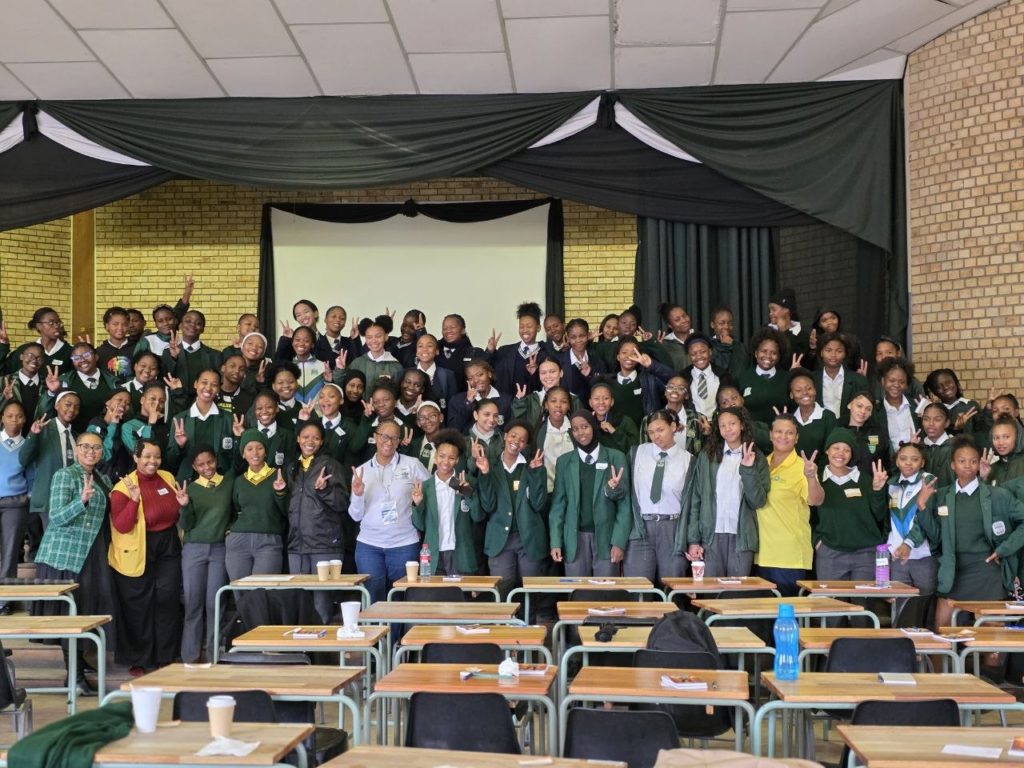
When Advocate Geraldine Dunn (Rotary Peace Fellow (Cohort 10), Makarere University 2026) first envisioned the Kimberley Girls Leadership & Peacebuilding Workshops as part of her Rotary International Peace Fellowship Social Change Initiative, her goal was to create a reflective space for young women from Kimberley Girls’ High Schools. The intention was to move beyond the theory of constitutional values and mediation and instead explore the heart of personal agency and positive peace.

To bring this vision to life, Dunn partnered with the International Women’s Peace Group (IWPG). The collaboration coincided with the organisation’s 4.26 event, a significant initiative created to unite women across the globe in the promotion of peace. What unfolded over the two days became a powerful “planting of seeds.”

With 120 learners from four schools in attendance, the workshops revealed something profound: the awakening of young girls beginning, perhaps for the first time, to believe in their own power.

Part of the programme included watching a deeply relatable video exploring how society subtly teaches girls to “shrink” — to run slower, to speak softer, to appear less confident, and to doubt their own strength. The familiar phrase “run like a girl” became a gateway into a much deeper conversation about identity and self-worth.

The atmosphere in the room shifted during discussions around the concept of the “Redo.” Learners listened as Soraya Williams, who found her voice through the Peace Lecturer Training Education (PLTE), shared her journey of reclaiming her narrative and rewriting her own story. It became more than a leadership lesson; it resonated as a moment of emotional awakening. In the eyes of many of the girls was a shared realisation that they did not have to accept the “noise” of the world as truth.

Among the most impactful moments of the workshops were the “Three Laws of Inner Peace” — practical principles intended to help young women navigate challenges within their communities and personal lives:

  • The Law of the Filter: Not every voice deserves a seat at the table.
  • The Law of the Pause: The sacred practice of creating space between challenge and reaction, allowing room for self-regulation.
  • The Law of Boundaries: The courage to protect one’s future self.

For Dunn, the IWPG 4.26 International Peace Day introduced a mission she had not previously encountered. Through the collaboration, she witnessed firsthand the organisation’s commitment to spreading seeds of peace among young women and future leaders.

The workshops ultimately encouraged the learners to understand that saying “no” to the pressures of today is a gift to the women they are becoming tomorrow. In many ways, this became the ultimate act of prevention — stopping the fires of conflict before they ever have the opportunity to ignite.

Leadership, the workshops demonstrated, is about planting a tree today so that someone else may sit in its shade years from now. Over the course of the initiative, young girls began embracing the idea that their peace is their power and their perseverance is their strength.

Dunn expressed gratitude to IWPG for partnering in the initiative and for contributing principles of peace to the lives of these future leaders. The experience, she reflected, was not simply about teaching peace, but about becoming it. And already, the seeds planted are beginning to bloom.

Gcinibandla Primary School in Majola Opens Technology Lab and Signs MOU for Peace and Digital Education

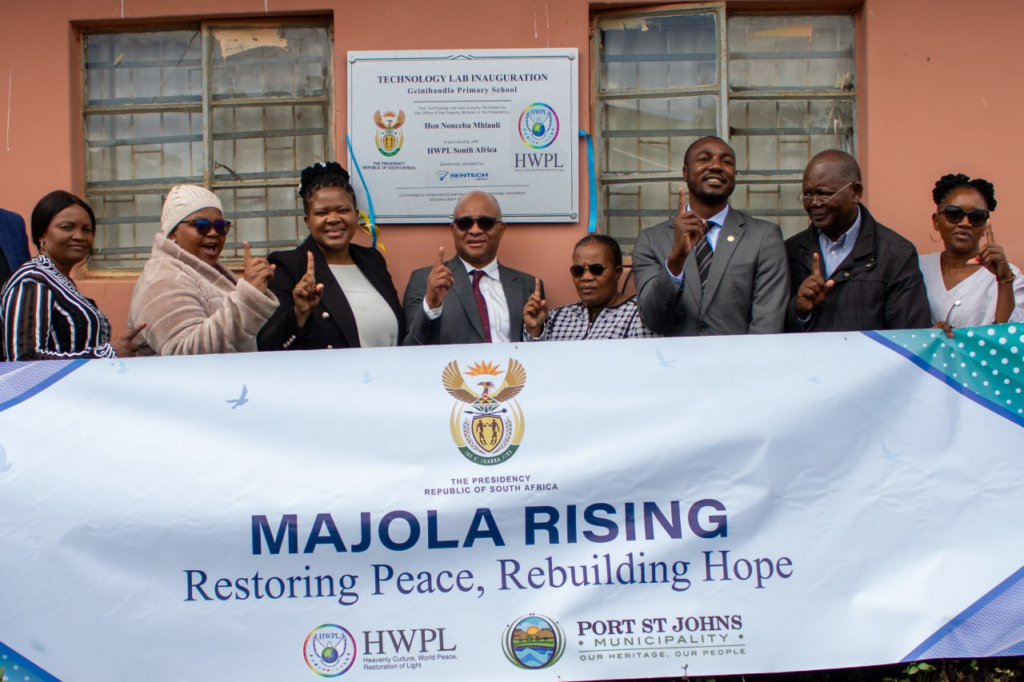
On April 14, 2026, the official handover ceremony for the Technology Lab was held at Gcinibandla Primary School in Majola, Port St. John’s, South Africa. This project was spearheaded through a public-private partnership involving Honorable Nonceba Mhlauli, Deputy Minister in the Presidency, Heavenly Culture, World Peace, Restoration of Light (HWPL)—an NGO in special consultative status with the UN Economic and Social Council (ECOSOC)—the International Women’s Peace Group (IWPG), and local partners.

The Majola region has long faced economic challenges due to geographical isolation, limited resource accessibility, and a history of local conflict.

In 2024, Deputy Minister Mhlauli, then a community activist, collaborated with both organizations to implement a welfare initiative distributing dignity packs to women and girls in Majola. Reflecting on the impetus behind the project, Deputy Minister Mhlauli stated, “Following the local unrest, I recognized the urgent need to address the aftermath and social responsibilities faced by unemployed women who must care for children in our communities.”

These individual support initiatives have since evolved into the expansion of educational infrastructure, driven by the Deputy Minister’s sustained administrative focus and robust public-private cooperation. This culminated in the inauguration of the Technology Lab at Gcinibandla Primary School on April 14, 2026.

During the ceremony, a Memorandum of Understanding (MOU) was signed to provide ongoing support for the lab’s operation and the integration of peace and digital education. This measure aims to institutionalize the educational system rather than remaining a one-off contribution.

Furthermore, with the administrative support of Mayor Cllr. Cebisa Mazuza of the Port St. John’s Municipality, HWPL’s “Peace Education Curriculum” has been introduced. This program is designed to provide learners in conflict-affected communities with practical tools for conflict resolution and the development of empathy.

Deputy Minister Mhlauli emphasized the importance of sustained partnership, stating, “Change and progress is not an event but a journey. By working together, we can definitely do more.”

In alignment with this vision, a representative from the HWPL South Africa Branch remarked, “Based on active administrative support and policy backing from the government, we will strengthen our public-private cooperation to ensure that the modernization of education and the establishment of peace in the Majola region are implemented effectively.”

Youth Peace Dialogue Held at NUST to Commemorate Namibia’s 36th Independence Anniversary

[WINDHOEK – March 28, 2026] – On March 28, the “Beyond 35: 2026 Youth Dialogue for Peace and a Prosperous Future” was held at the Namibia University of Science and Technology (NUST) auditorium. The Dialogue was organized to commemorate the 36th anniversary of Namibia’s independence and to discuss the vital role of youth in the nation’s development.

The Dialogue was co-hosted by Heavenly Culture, World Peace, Restoration of Light (HWPL)—an international peace NGO under the UN Economic and Social Council (ECOSOC)—its youth affiliate, the International Youth Peace Group (IPYG), and the Namibia branch of the Rob Youth Foundation (RYF). The gathering brought together approximately 100 participants, including government officials and youth leaders.

In a keynote speech delivered by Mr. Boyson Ngondo, Deputy Director for National Heritage and Culture Programmes, on behalf of Hon. Dino Ballotti, Deputy Minister of Education, Innovation, Youth, Sport, Arts, and Culture, the Deputy Minister highlighted the role of youth as innovators despite ongoing challenges such as a 40% youth unemployment rate and the digital divide. “Peace is not merely the absence of conflict, but an environment where youth are guaranteed quality education, meaningful employment, and a platform to make their voices heard,” the Deputy Minister stated. He further emphasized that the youth, who make up over 60% of Namibia’s population, are the “heartbeat of our society” and the “architects of peace,” underscoring the critical importance of youth empowerment.

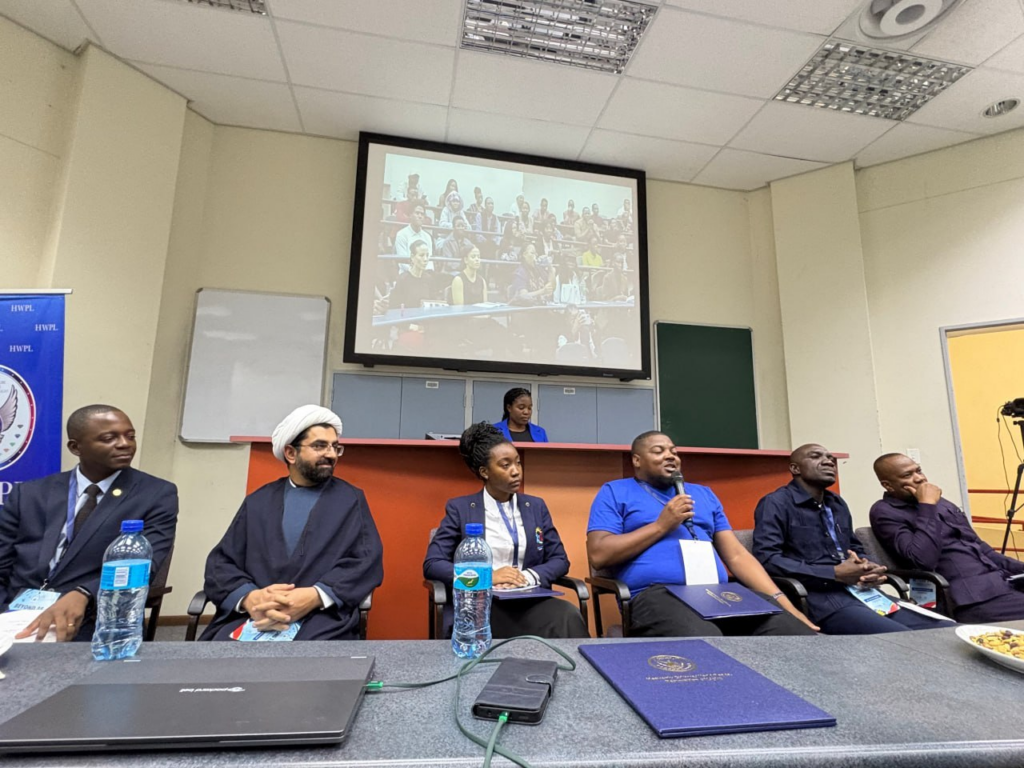
In addition, Mr. Muesee Kazapua, International Relations and Stakeholder Engagements Officer of the National Youth Council (NYC), participated as a panelist. Mr. Kazapua detailed how the NYC is supporting access to developmental opportunities for young people and shaping a prosperous future for social development beyond the 35th anniversary. He also provided guidance on the requirements for youth organizations wishing to affiliate with the NYC.

During the panel discussions and dialogue sessions, representatives from government ministries, youth organizations, and the educational and religious sectors shared their perspectives. Participants specifically discussed the necessity of establishing official platforms to reflect youth voices in the national development process and reviewed collaborative strategies to realize these goals.

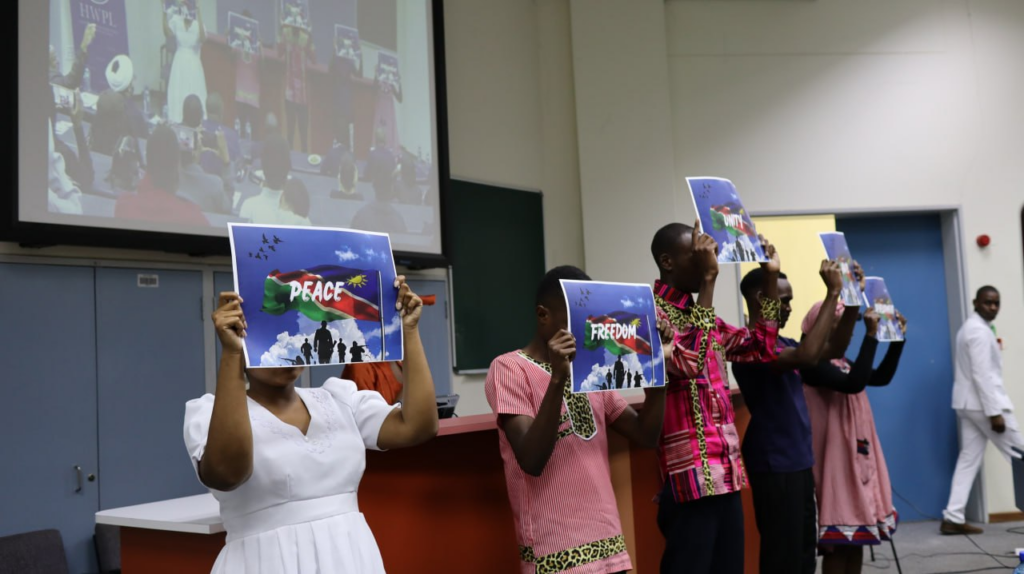
The event concluded with the “Youth Pledge for Nation Building,” where participants committed to contributing to peace and social progress. An official from HWPL remarked, “This dialogue served as a momentum for Namibian youth to unite for the realization of peace. We plan to continue supporting youth-led peace activities through ongoing collaboration with local organizations.”

Eswatini Opens a New Path to Community Peace Through Interfaith Unity

On November 27, 2025 a gathering marked by interfaith collaboration was held at Lidwala Lodge in Eswatini. More than 30 religious leaders from across Southern Africa participated in the Bible Experience Program (BEP), hosted by an international peace NGO (HWPL), to explore interfaith harmony and discuss practical approaches to fostering community peace.

The event brought together leaders from Christianity, Islam, the Bahá’í Faith, Latter-day Saints, Brahma Kumaris, and traditional religions, along with a representative of the International Peace Youth Group (IPYG). The participants shared insights based on their respective scriptures and theological perspectives and emphasized the need for peaceful coexistence through respectful dialogue and efforts to resolve interreligious misunderstandings. One attendee remarked, “If we continue this journey together, we will not only speak of peace but ultimately live in peace.”

The main session of the event, themed “The Moral Voice in Governance,” explored the influence religious leaders have in shaping social values. Participants reaffirmed the importance of inclusive religious education, expanded interfaith dialogue to counter misinformation, and strengthened cooperation among faith communities to promote reconciliation. They further agreed that the BEP—comparative scripture study initiative designed to promote reflection and mutual understanding—provides a foundation for cultivating a culture of peace among youth.

Christian leader Kolani Magongo, Chairperson of the Church Forum, expressed appreciation, stating, “I am deeply grateful to have experienced the harmony among religions. I look forward to continuing my participation in the BEP and sharing this program widely with local pastors and congregations.”

An international seminar followed, presenting real cases in which the BEP has contributed to resolving community conflicts around the world. Many participants expressed optimism that the program would play an essential role in addressing long-standing religious tensions within Eswatini.

Bahá’í representative Modison Magagula emphasized, “It is important to restore diverse religious education in Eswatini’s schools. The BEP provides young people with a valuable opportunity to engage with various scriptures in a balanced and respectful manner.”

During the event, participants were introduced to HWPL’s various peace initiatives, including the WARP Office interfaith dialogue platform, the International Religious Peace Academy (IRPA), and the BEP program. Following the formal presentations, the gathering continued with further engagement among participants on peace-related topics.

Bheki Kunene, Chairperson of the CCM Religious Council, stated, “We hope HWPL will host a national peace inauguration ceremony to unite influential religious leaders. Spreading knowledge rooted in peace and shared values is more urgent now than ever.”

Renewing the Friendly City through Peace: Nelson Mandela Bay Unites Against Violence

Gqeberha, South Africa – November 15, 2025 –Community members from Nelson Mandela Bay gathered at the Walmer Town Hall for the final regional event commemorating the 11th Anniversary of the September 18th HWPL World Peace Summit. Hosted by the international peace NGO, HWPL, in collaboration with the IWPG and the IPYG, the event was held under the theme: “Renewing the Friendly City through Peace: Uniting Together to End Gun Violence, GBV, and Drug Abuse.”

The event took place against the backdrop of ongoing concerns in South Africa related to gender-based violence, crime, and substance abuse. Leaders from civic structures, faith communities, the youth sector, and women’s organisations spoke about the urgent need to revive a culture of empathy, respect, and accountability. They emphasised that peace is not only a global ideal but a local responsibility that starts in homes, schools, and neighbourhoods.

MMC Mkhuseli Jack urged residents to take an active role in reporting criminal activity, noting its impact on public safety resources. “We must not be quiet when we see crime taking place. We must report it to the police. When we don’t report, it affects the amount of money the government can give to the police budget to fight crime.” His statement highlighted the direct link between community involvement and stronger institutional support for safety, underlining that silence only strengthens the cycle of violence.

Member of the Mayoral Committee, Councillor Mkhuseli Jack, speaking during the HPWL event

The event showcased peace education as a vital preventative tool, demonstrating how teaching empathy, conflict resolution, and non-violence can transform the mind-set of future generations. Interfaith leaders offered reflections that highlighted unity across belief systems, while youth and women shared peace pledges emphasising the sanctity of life and the protection of the vulnerable.

The collaboration between global peace movements and local community actors created an environment that reflected both the aspirations and the challenges present in Nelson Mandela Bay. The event also took place against the backdrop of national discussions related to the upcoming Women for Change mobilisation linked to the G20 Summit. The event reinforced the shared conviction that South Africa needs long-term, preventative solutions that address the root of violence. Peace education, community cooperation, and consistent advocacy were highlighted as essential components in efforts to strengthen safety for women and children.

The event concluded with participants expressing willingness to continue collaboration. Organizers stated that continued partnerships and community engagement will remain important as Nelson Mandela Bay works to strengthen safety and social cohesion.

For media inquiries or collaboration opportunities, please contact: press_za@hwpl.kr | +27 76 963 7925

Community Unites for Peace and the Planet at the IWPG Bonteheuwel Peace Garden Event

Bonteheuwel, 18 October 2025 — In a heartfelt celebration of unity, peace, and environmental care, the Bonteheuwel Walking Ladies in collaboration with International Women’s Peace Group (IWPG), hosted a meaningful community event at the David Profit Peace Garden in Bonteheuwel.

The event brought together members of the Heavenly Culture, World Peace, Restoration of Light (HWPL), the International Peace Youth Group (IPYG), the Bonteheuwel Ambassadors, and the Bonteheuwel Neighbourhood Watch — all joining hands in service of their community and environment.

Serving as the chairperson of the Bonteheuwel Peace Committee, Mrs Soraya Salie shared with warmth and pride the story behind the Peace Garden and the joy it has brought to the people of Bonteheuwel. She reflected on its foundations as a space built on love, cooperation, and the belief that peace begins within communities.

The day’s activities included the cleaning and revitalising of the garden, accompanied by the planting of trees generously donated by Cape Gardens Nursery and Just Trees. Each tree symbolised hope, growth, and a lasting commitment to environmental stewardship.

This volunteer-driven initiative saw participants from HWPL, IWPG, and other partner organisations working side by side. Their collective efforts demonstrated the power of unity and compassion in action. Participants expressed gratitude for everyone involved and reflected on the shared responsibility to safeguard the planet — recognising that the well-being of future generations depends on the choices and care invested today.

Importantly, this event also formed part of the Legislate Peace (LP) Campaign by HWPL, expanding its message of peace through practical community involvement and environmental sustainability. The inclusion of this activity under the LP Campaign highlighted the interconnectedness of peace-building, civic responsibility, and climate action.

The event not only strengthened local partnerships but also showcased IWPG’s ongoing commitment to peace-building, sustainability, and women-led community empowerment. By maintaining the Peace Garden and engaging in climate-conscious action, participants reaffirmed the belief that peace and environmental care are deeply intertwined — both essential for a sustainable and harmonious future.